Finish your new concrete pool with a reinforced fibreglass interior
A new concrete pool needs a properly prepared interior before its final surface is installed. The concrete must be sufficiently cured and assessed for moisture, laitance, cracking, penetrations, construction joints and surface irregularities. The pool builder or designer may need to confirm that the shell is ready for surfacing.
Fibreglaze mechanically prepares and levels the concrete, treats identified defects and details fittings and joints according to the pool design. The prepared shell then receives a fully bonded ENDURATEC reinforced lining and selected AquaGuard colour finish. Movement joints or structural details that must remain active are treated separately in accordance with the project requirements.
The finished result
A continuous reinforced interior over the prepared concrete shell
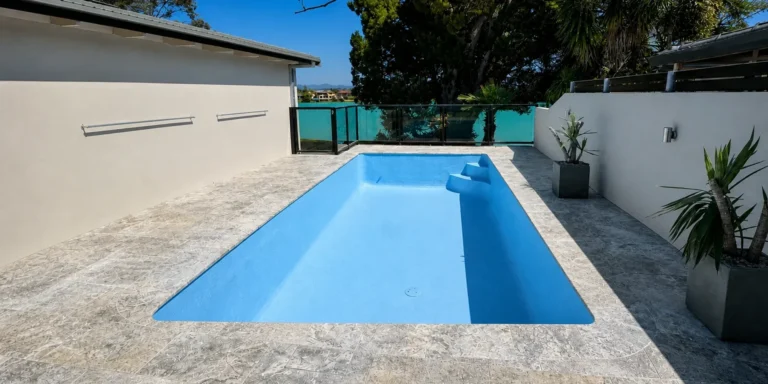
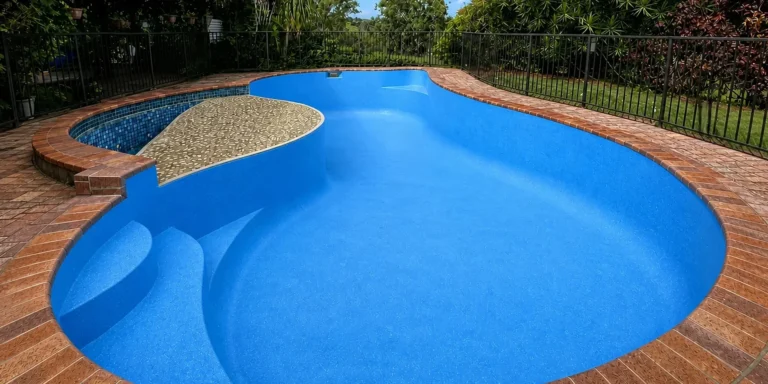
A smooth, cleanable surface in the selected AquaGuard colour
Fittings, penetrations and joints detailed for the pool design
Common signs your New Concrete Pool may need resurfacing
An inspection can determine whether local repairs are suitable or whether the pool would benefit from complete resurfacing.
Cracks
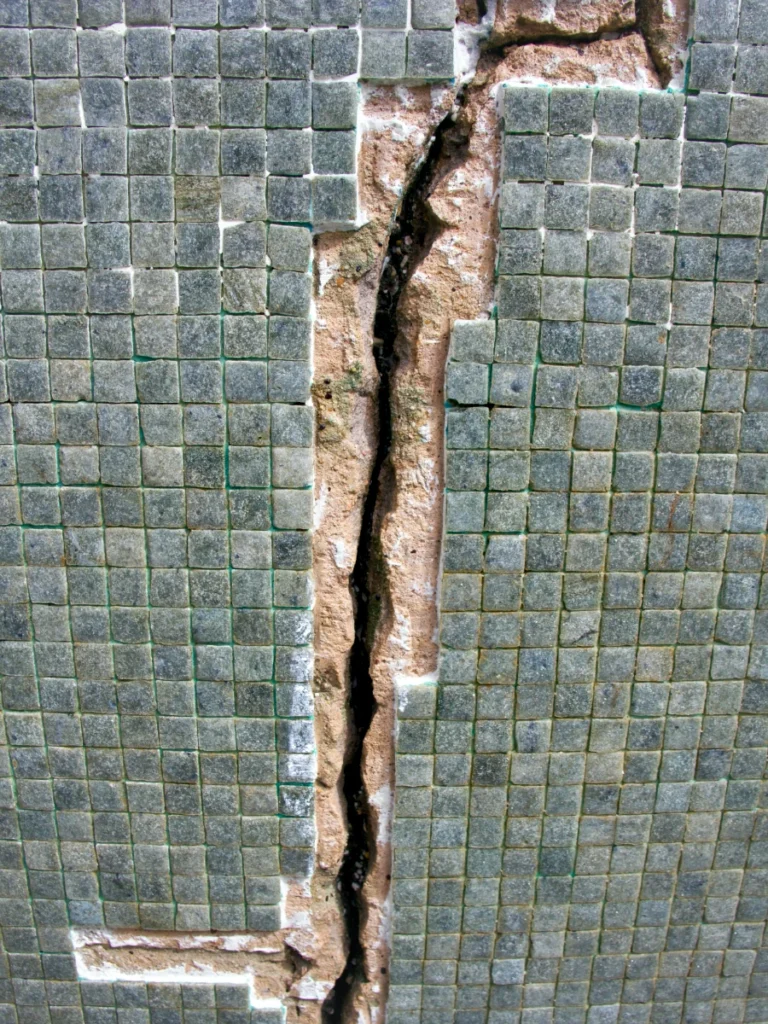
Pool cracks range from fine surface crazing to movement-related shell damage. An inspection is needed to identify the crack type, determine whether movement is continuing and select a repair that addresses more than the visible line.
Unexpected water loss can come from plumbing, fittings, cracks, tile joints, liners or the pool shell. Confirming the source before repair prevents resurfacing from being used where a plumbing or site solution is required.
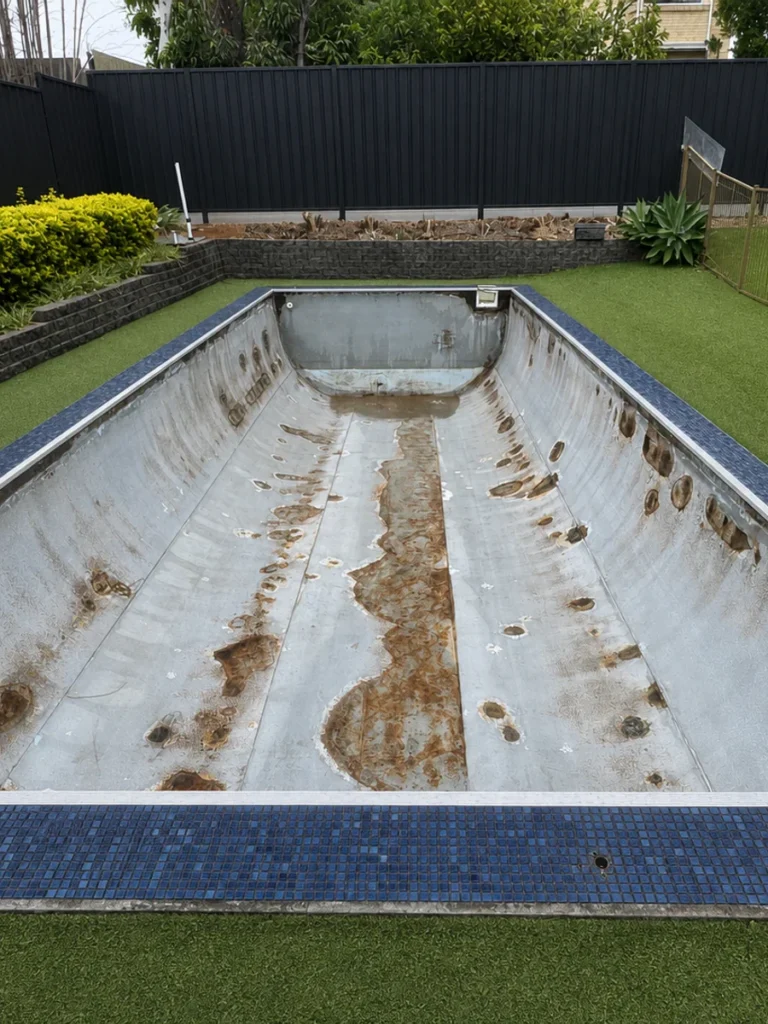
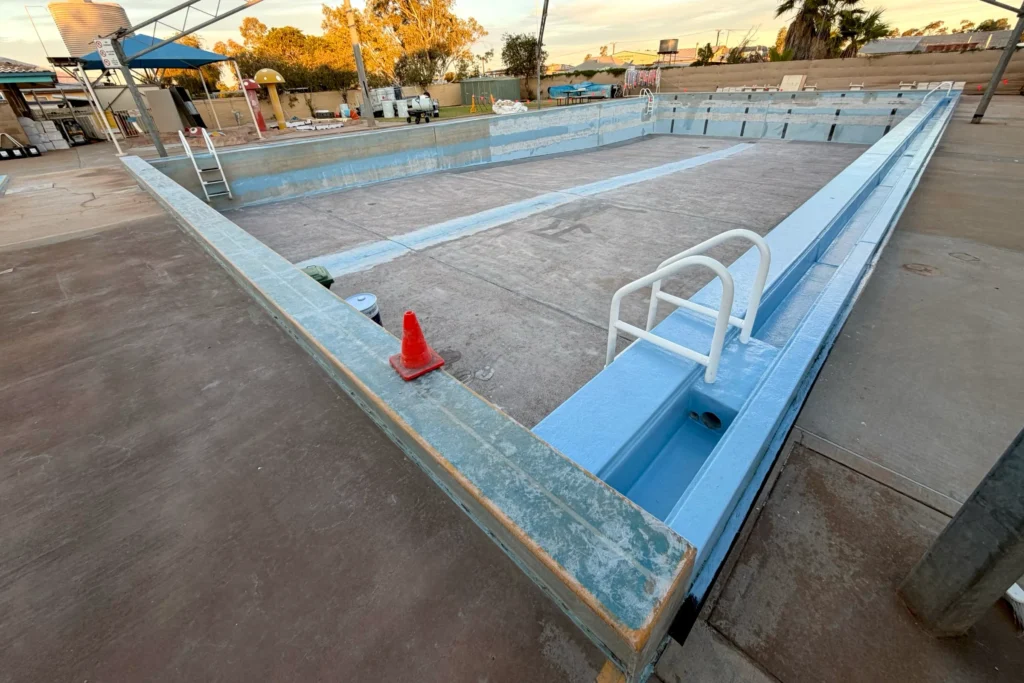
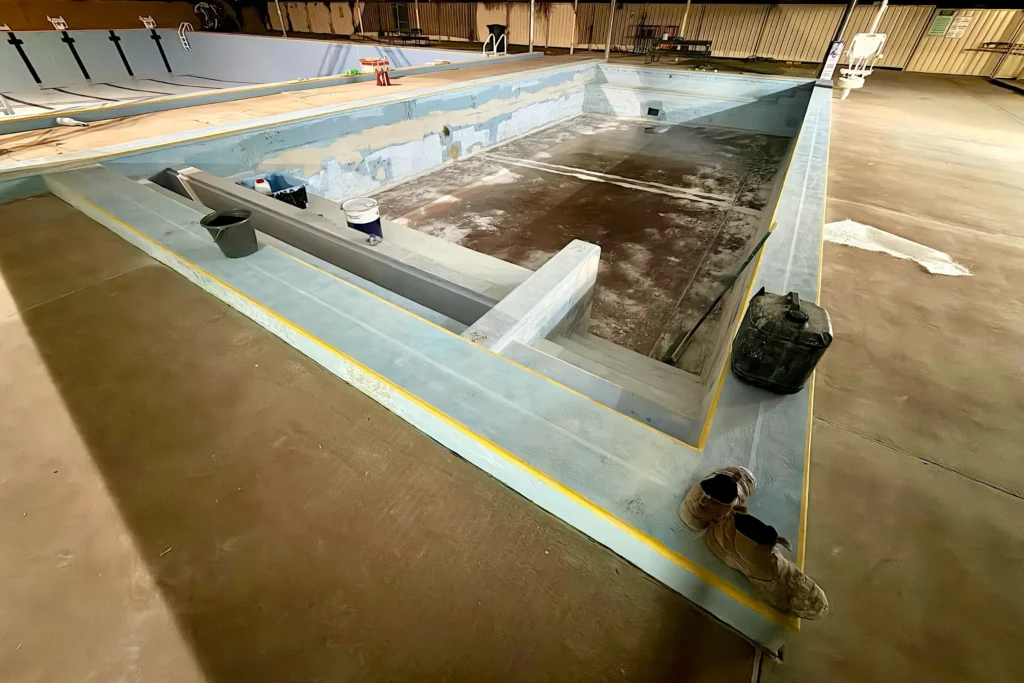
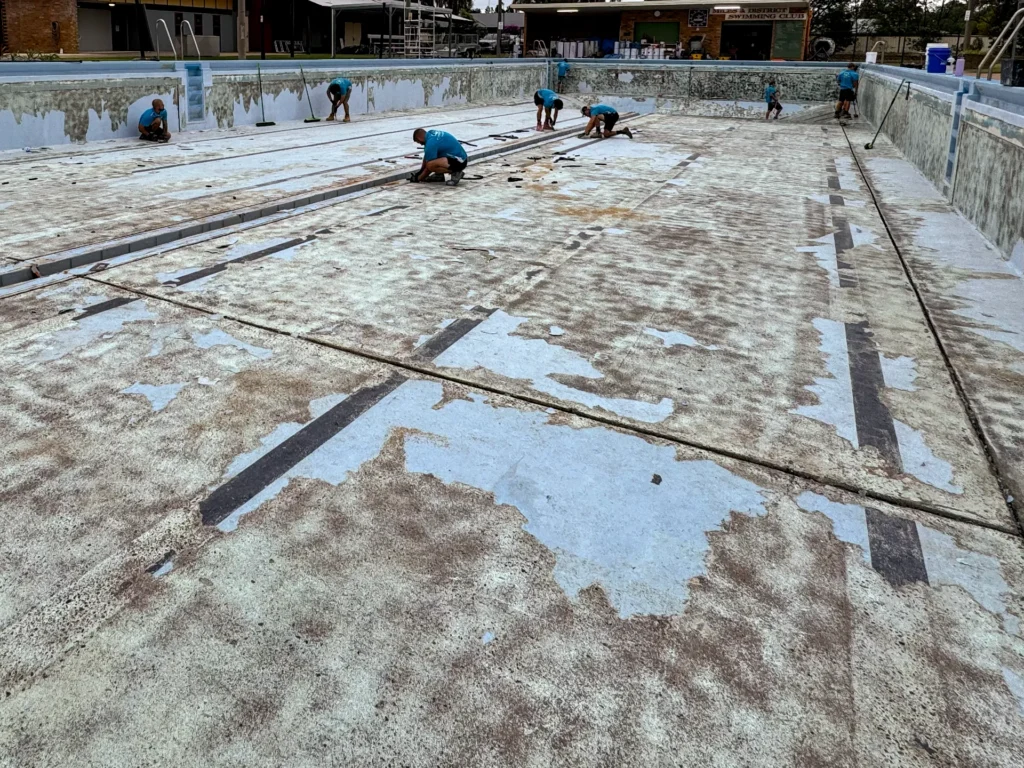
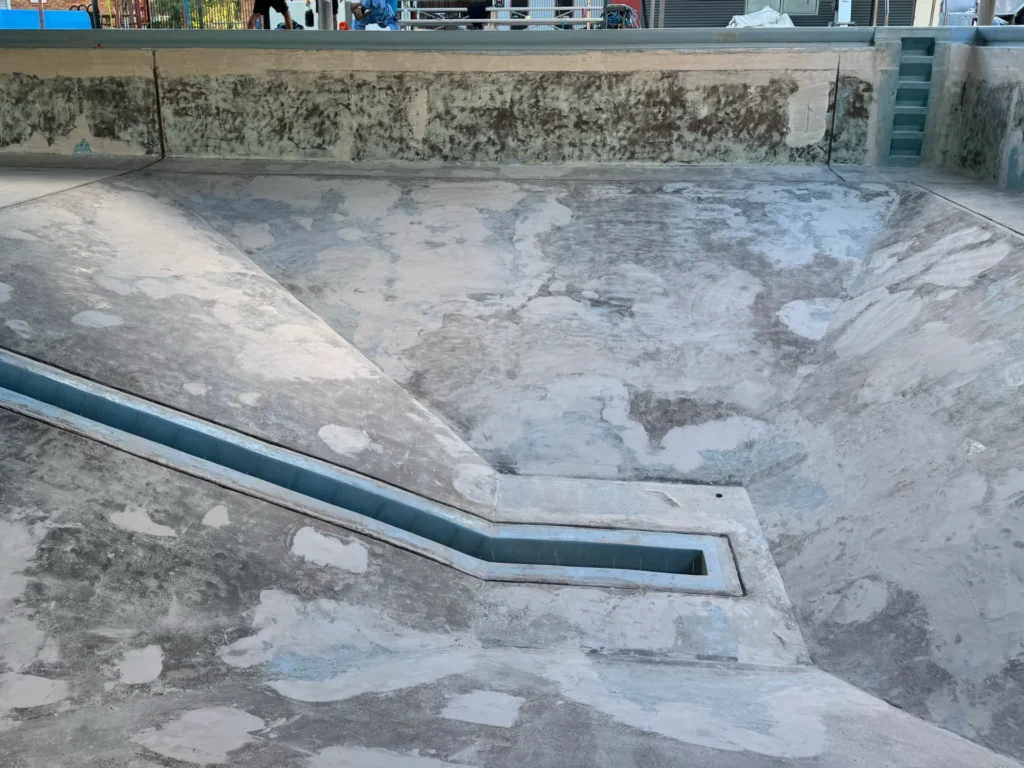
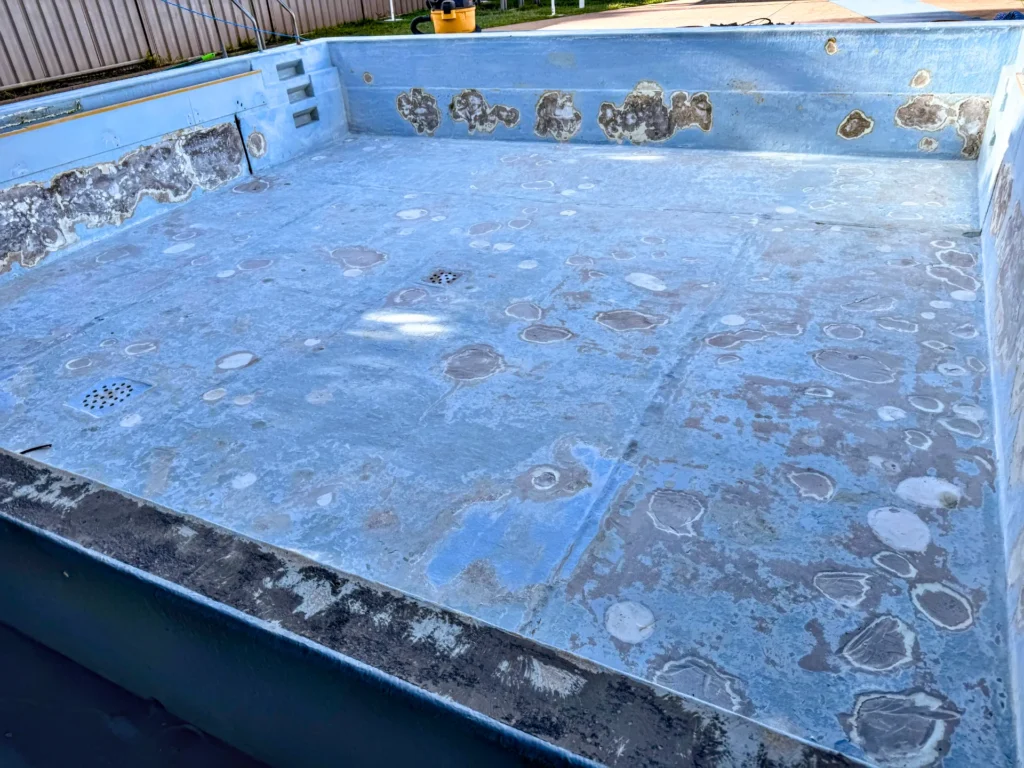
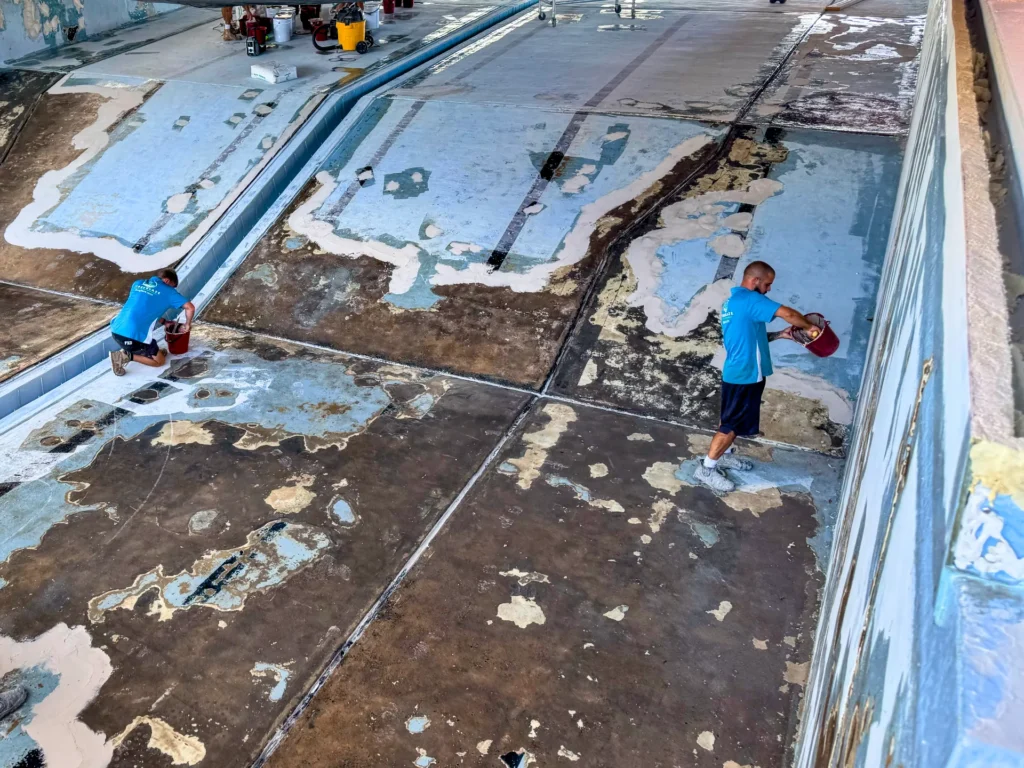
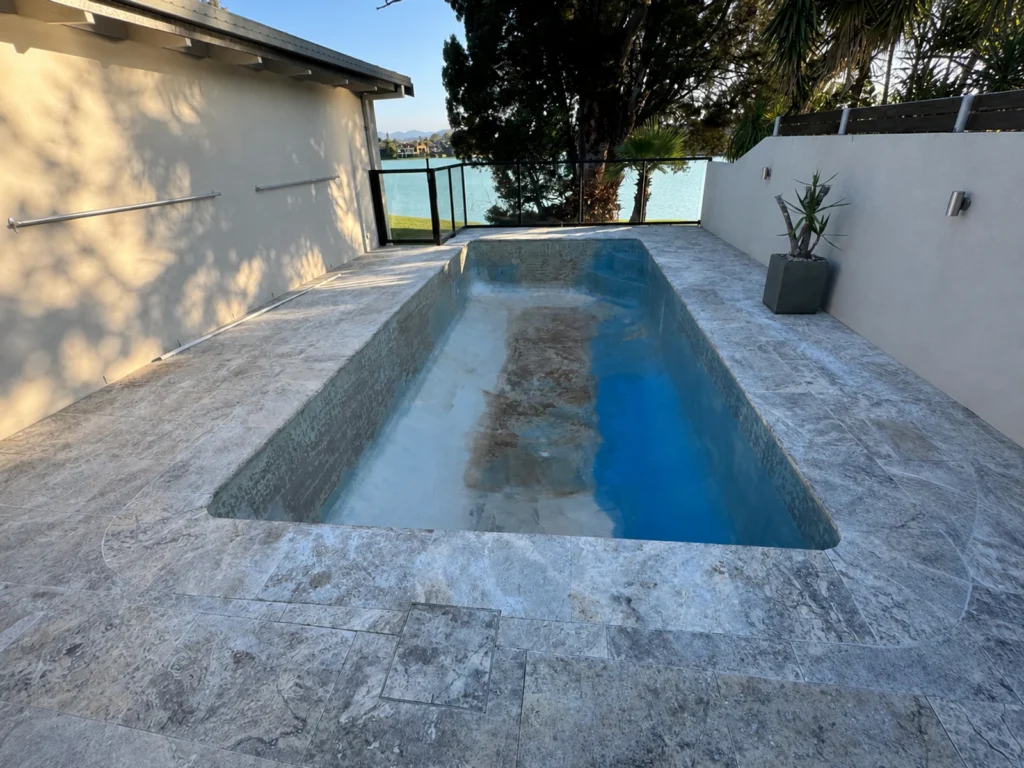
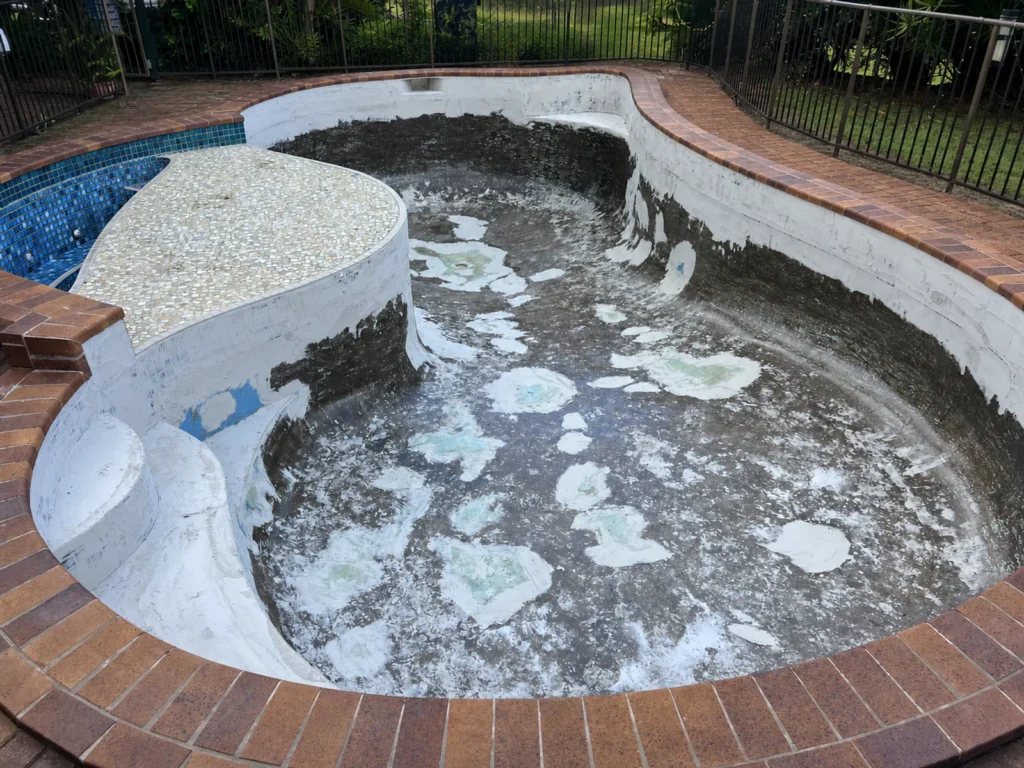
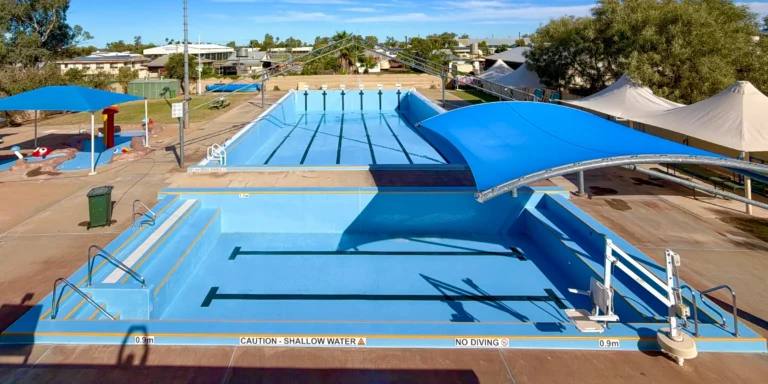
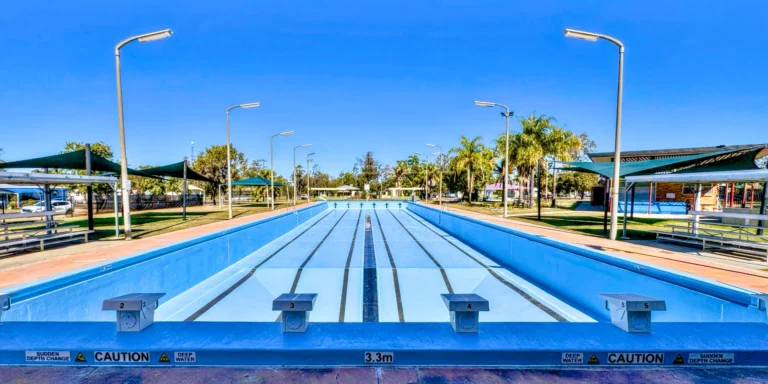
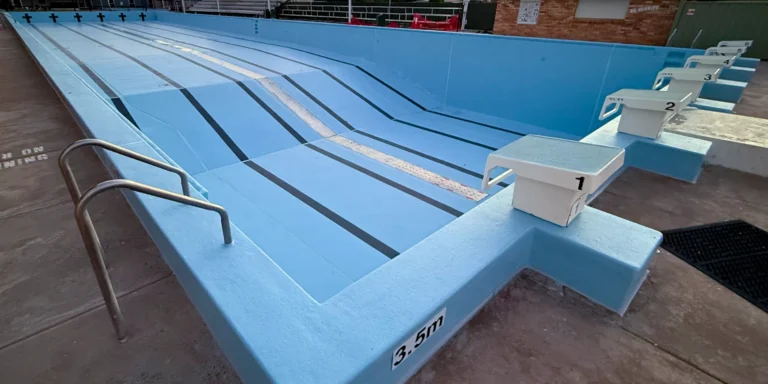
New concrete must be assessed rather than judged by age alone. Preparation removes laitance and surface contamination, corrects irregularities and exposes cracks, penetrations or joints requiring attention. These photographs show the shell condition and substrate work before the reinforced fibreglass lining is installed.
Our Resurfacing Process
How we resurface a New Concrete Pool
Every pool is assessed individually, but the work generally follows five stages—from confirming the scope and preparing the existing surface to installing the reinforced lining and applying the selected finish.
1
Assess and plan
We review the pool design, builder information and photographs, and arrange a site inspection where required. Concrete curing, moisture, laitance, cracks, joints, penetrations and surface tolerances are assessed. The shell must be released for surfacing, with the final preparation and repair scope confirmed before work proceeds.
2
Prepare the existing surface
Laitance, contaminants and weak surface material are removed, and the concrete shell is mechanically prepared to create a clean, properly keyed substrate. Steps, fittings, penetrations and construction details are checked, while cracks, voids and irregular areas are clearly defined for the repair stage.
3
Repair and level
Cracks, voids, honeycombing and surface irregularities are treated according to their condition and the pool design. The shell is repaired and levelled to a consistent profile, while movement joints or details that must remain active are addressed separately in accordance with the project requirements.
4
Install the reinforced lining
A fully bonded reinforced fibreglass lining is applied across the prepared concrete shell, following the pool’s walls, floor, steps and details to form one continuous interior. Additional reinforcement is incorporated where the design or repairs require it, creating the foundation for the selected finish.
5
Finish and handover
Two UV-stabilised AquaGuard top coats are applied in the selected colour, followed by the chosen speckle finish. Once cured, the new pool interior, fittings and penetrations are inspected. Guidance is then provided for filling, initial water balancing and ongoing care before the pool enters service.
Planning a fibreglass finish for a new concrete pool?
Share the pool location, dimensions, build stage and available drawings. Details about concrete curing, surface condition, joints, penetrations and the builder’s programme help us assess readiness and prepare for the first project discussion.
Pool dimensions, location and site access
Construction stage, intended timing and builder information
Plans plus photographs of the shell, fittings, penetrations and joints
YOUR PROJECT
Tell us about your new concrete pool
New concrete pool surfacing enquiry
New Concrete Pool Surfacing FAQs
Can a new concrete pool be finished with fibreglass instead of pebblecrete or tiles?
Yes. A purpose-built fibreglass lining can be installed over a suitably cured and prepared concrete pool shell. The concrete structure remains in place and the reinforced lining is formed on site to follow its shape, steps and details. The shell must first be assessed for moisture, laitance, cracking, penetrations, construction joints and surface irregularities. Defects and active movement details are treated before the fully bonded lining and selected colour finish are installed.
How do I know when a new concrete pool is ready for fibreglass surfacing?
Age alone does not confirm readiness. The concrete needs to meet the pool design and lining-system requirements, with moisture, curing, laitance, cracks, penetrations, joints and surface tolerances assessed before work begins. Weak, contaminated or excessively damp areas can affect the bond of an applied finish. Fibreglaze should coordinate with the pool builder or designer to confirm the shell is released for surfacing, then mechanically prepare and test the actual substrate rather than relying only on a nominal cure date.
Does a new concrete pool need separate waterproofing before fibreglass surfacing?
Not automatically. The reinforced fibreglass lining is intended to form the continuous water-retaining interior, but it still requires a suitably designed, cured and prepared concrete shell. Moisture, laitance, cracks, penetrations, construction joints and any active movement details must be assessed and treated for the project. Any membrane, sealer or waterproofing admixture already proposed should be disclosed because its compatibility and bond with the lining need to be confirmed. The pool builder or designer and Fibreglaze should agree on the substrate and junction details before surfacing starts.
What affects the cost of fibreglass surfacing or converting a swimming pool?
Pool size is only one part of the price. The existing surface, access, pool shape, fittings and amount of preparation can have a greater effect. Costs can increase where failed paint, tiles or a vinyl liner must be removed, or where cracks, osmosis, hollow areas, corrosion, movement or an uneven substrate need repair. A useful quotation should state what removal, preparation, repairs, lining, finish and clean-up are included so different proposals can be compared on the same scope.