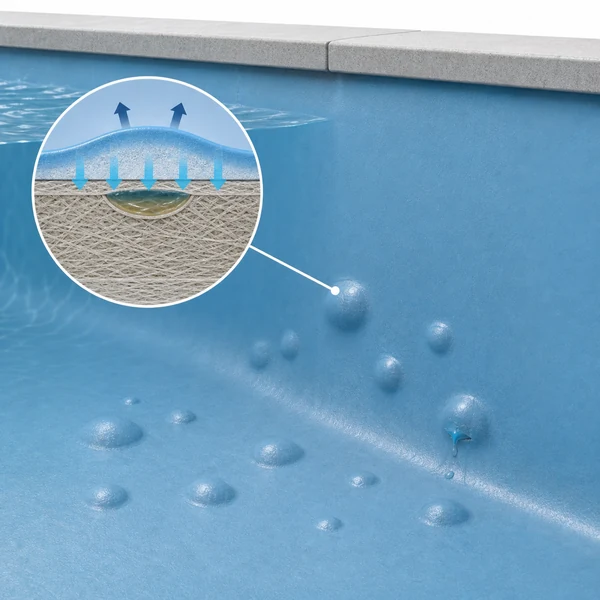
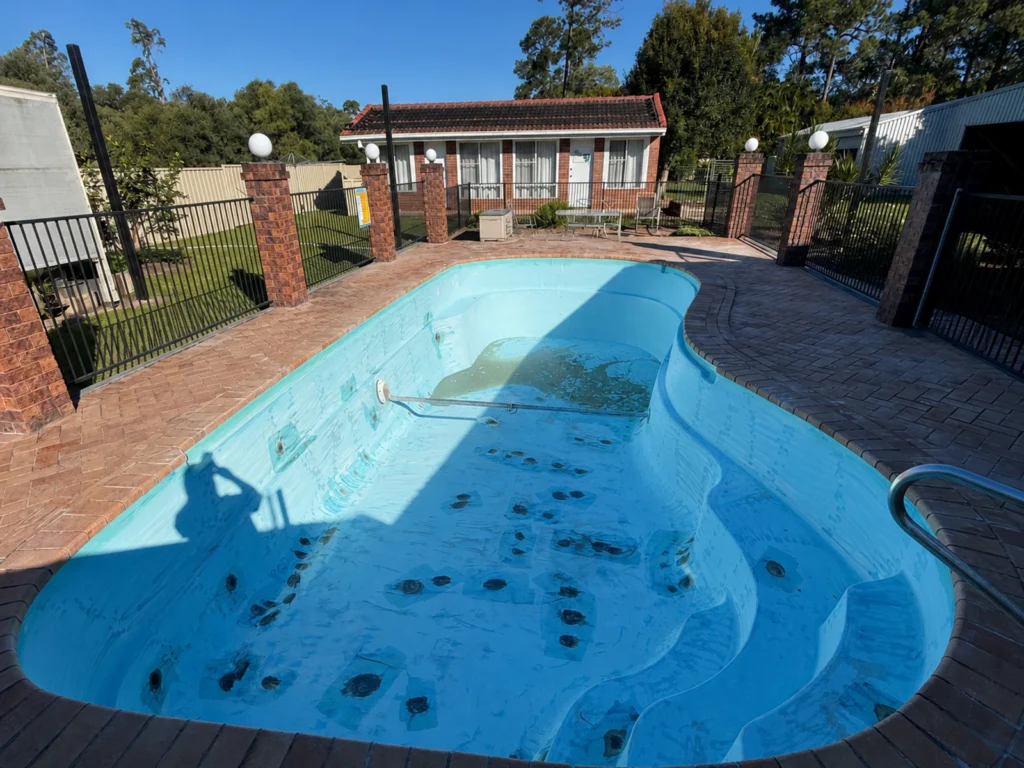
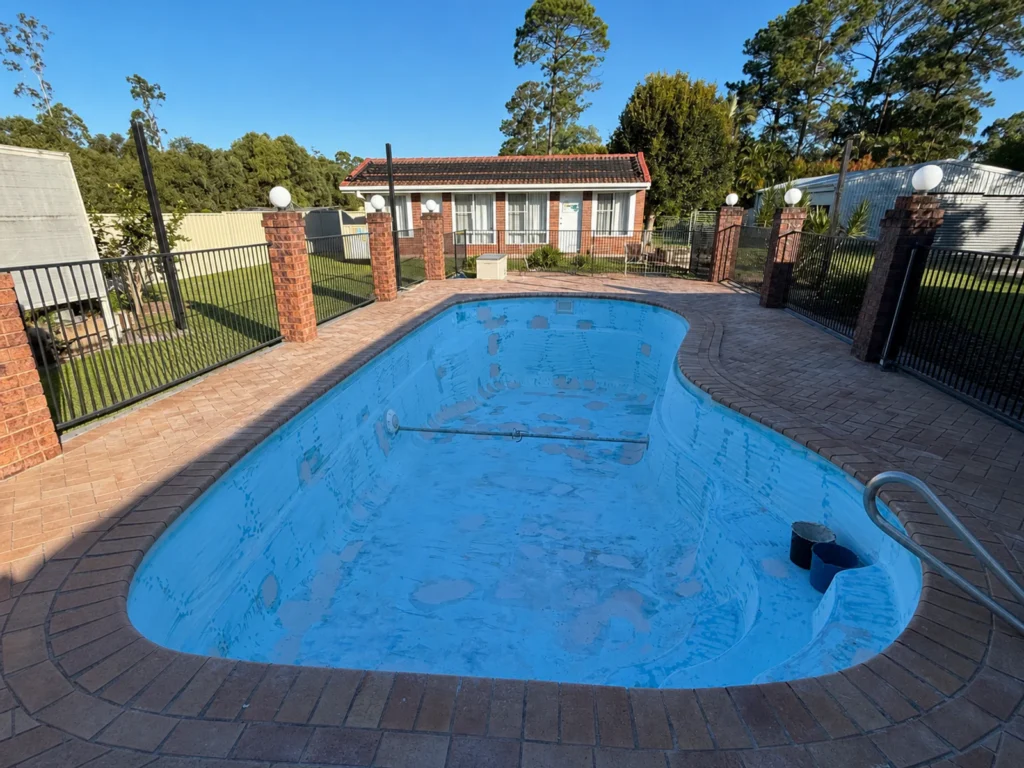
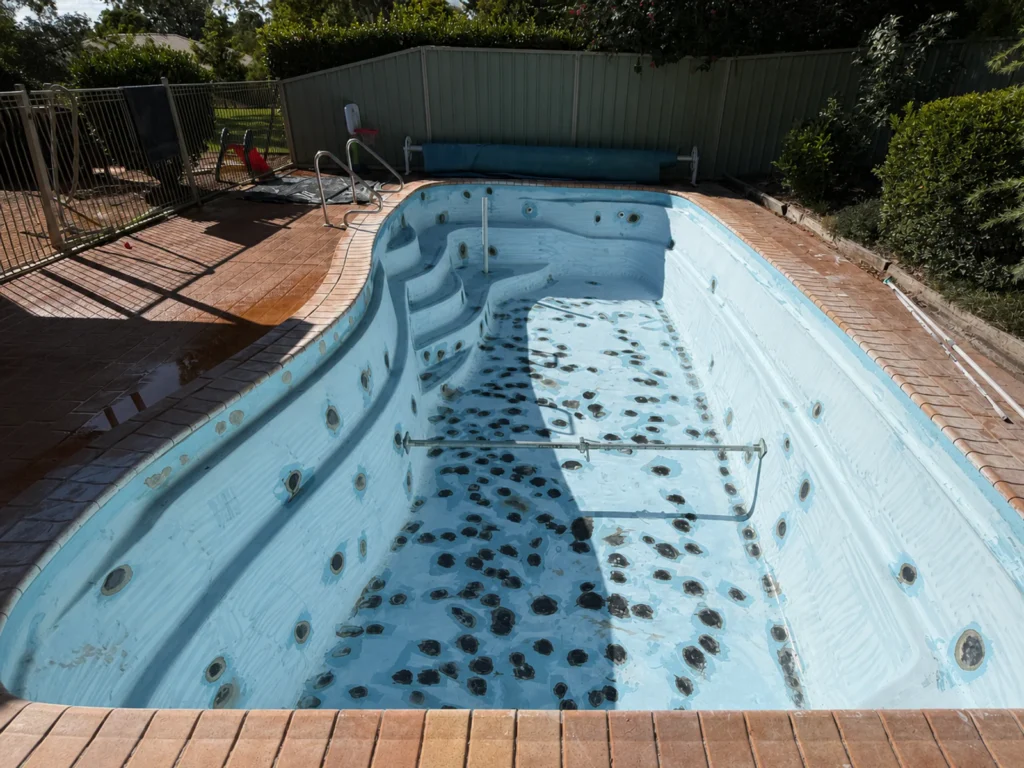
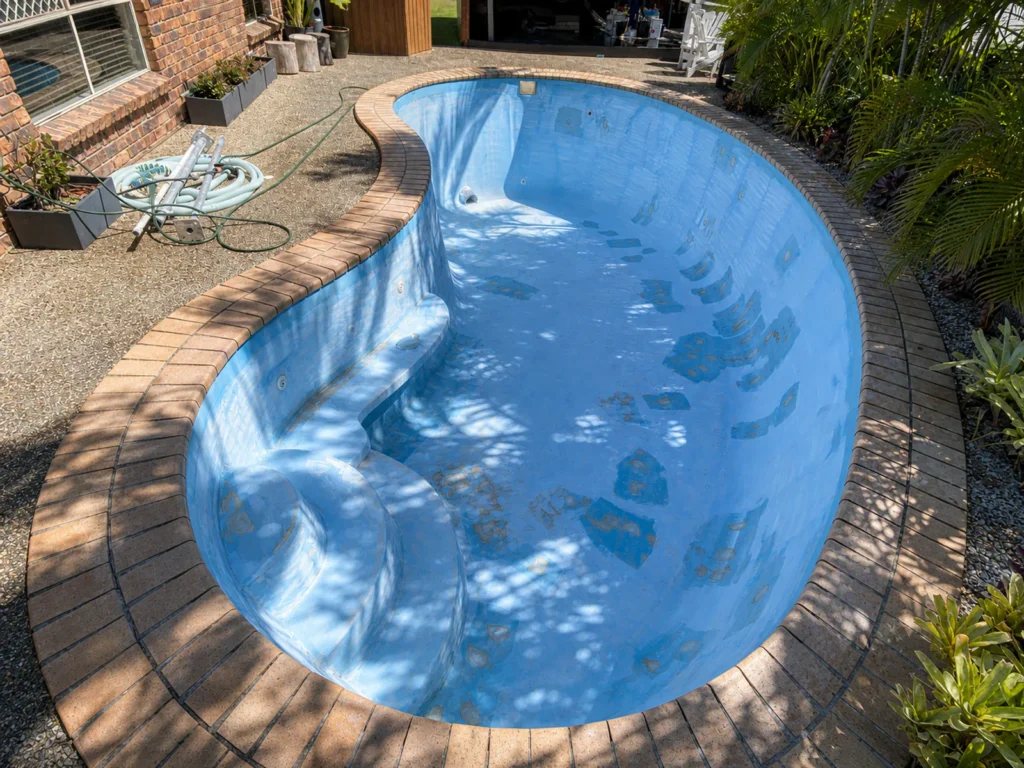
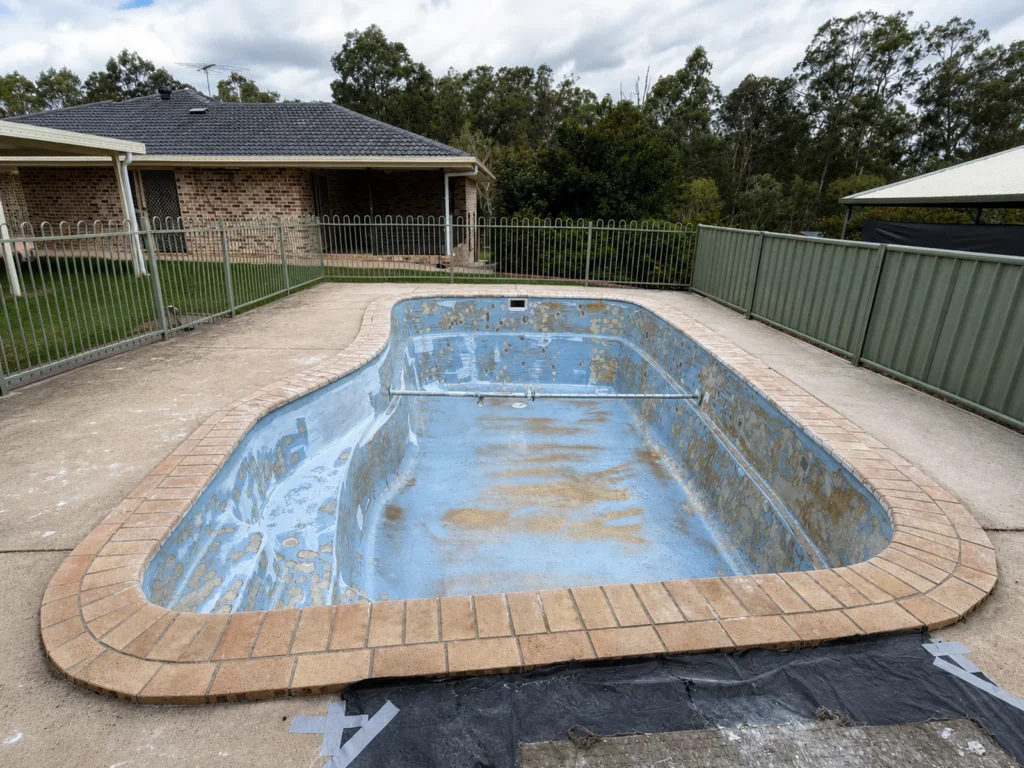
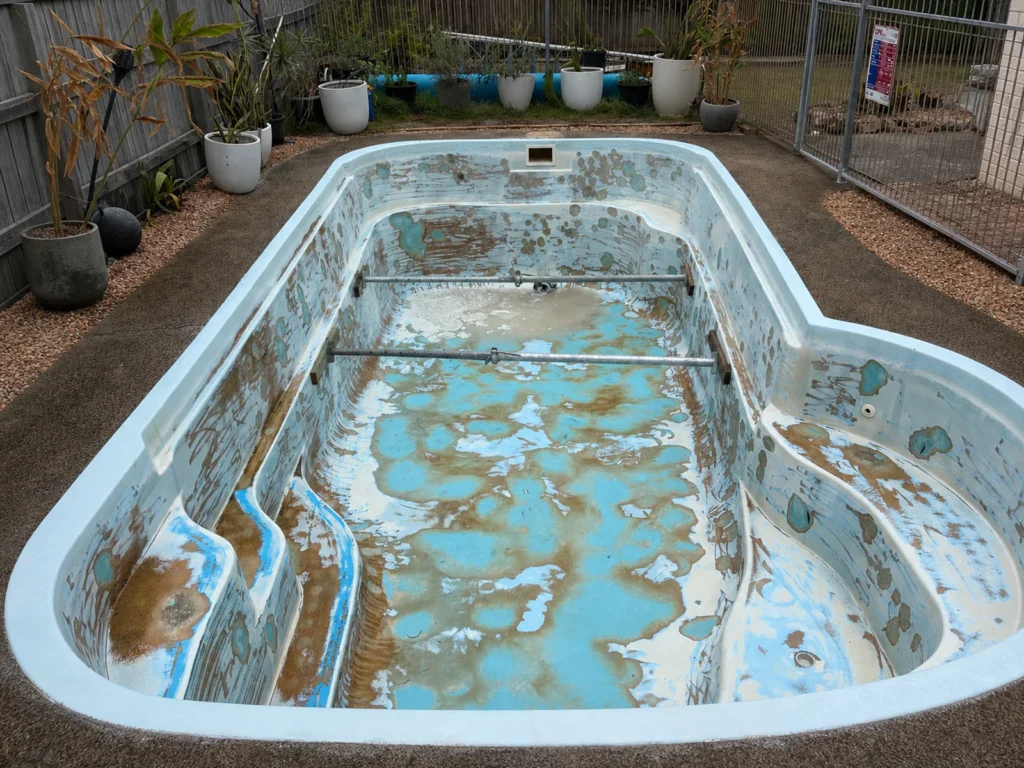
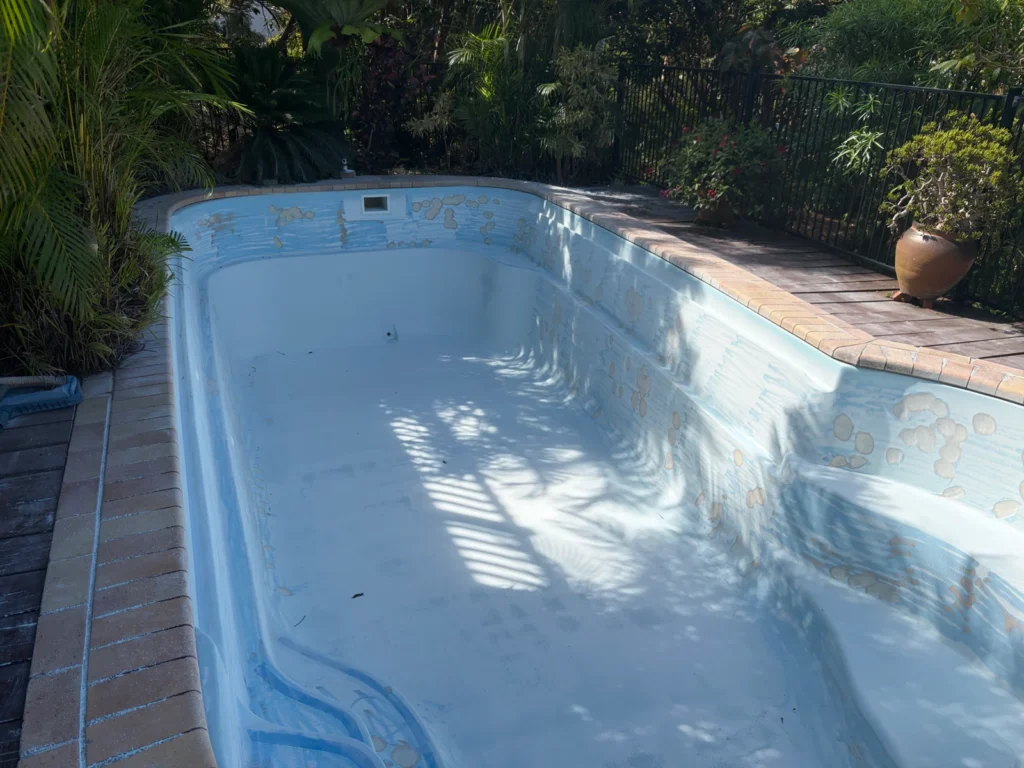
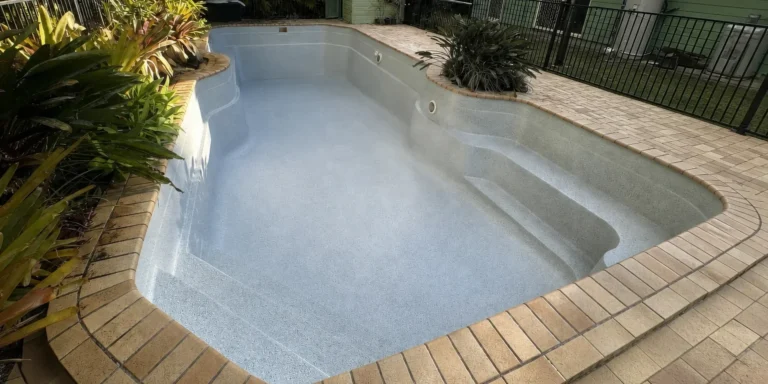
Osmosis usually appears as small bubbles or larger blisters across the floor, walls or steps. Some remain firm; others split, weep or expose damaged laminate. The visible bubbles are the surface expression of moisture and chemical activity within the original construction.
Grinding off the tops and filling individual blisters may improve appearance temporarily, but it can leave affected or permeable material elsewhere. Severity and depth vary, so representative areas need to be opened before the extent of removal and reconstruction is determined.
The extent and location of the visible problem
The condition of the surrounding pool surface
Likely causes and the most suitable repair approach
Osmosis develops when water moves through the pool’s surface layer and reaches water-soluble substances or poorly protected areas within the laminate. The resulting reaction draws in more water and creates pressure beneath the surface, forming blisters that may contain acidic or strong-smelling liquid.
Risk is greater where the original shell has a thin or porous gelcoat, trapped air, incompletely cured resin, contamination, poorly consolidated fibreglass or resin with limited long-term water resistance. Warm water and age can accelerate the process. Unbalanced water may damage the surface, but it is not usually the sole cause of true osmosis.

Fibreglaze removes the deteriorated surface and opens affected blisters until sound laminate is reached. Contaminated residues are removed, the shell is dried as required, and cavities are rebuilt and levelled. The whole pool is prepared so repairs form part of a continuous system rather than isolated patches.
The Enduratec System uses a vinyl ester primer and resin-reinforced fibreglass laminate selected for immersed service, followed by the specified finish. This removes known affected material and establishes a new protective lining designed to significantly reduce recurrence. No repair can account for every future site, shell or water-management condition without inspection.
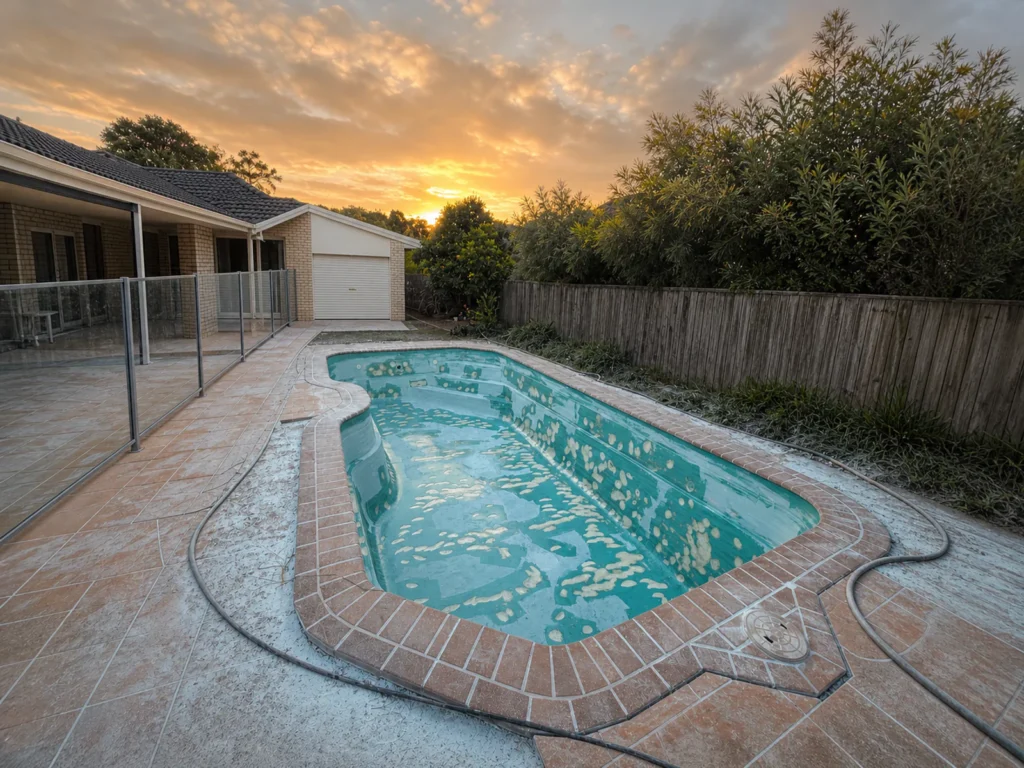
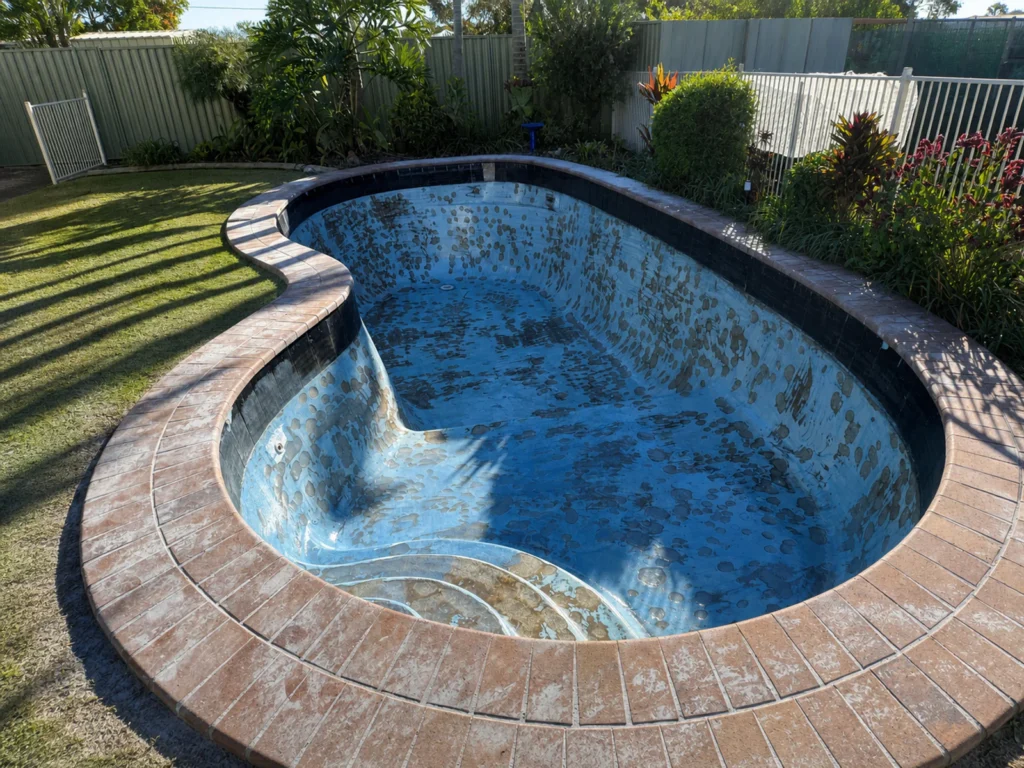
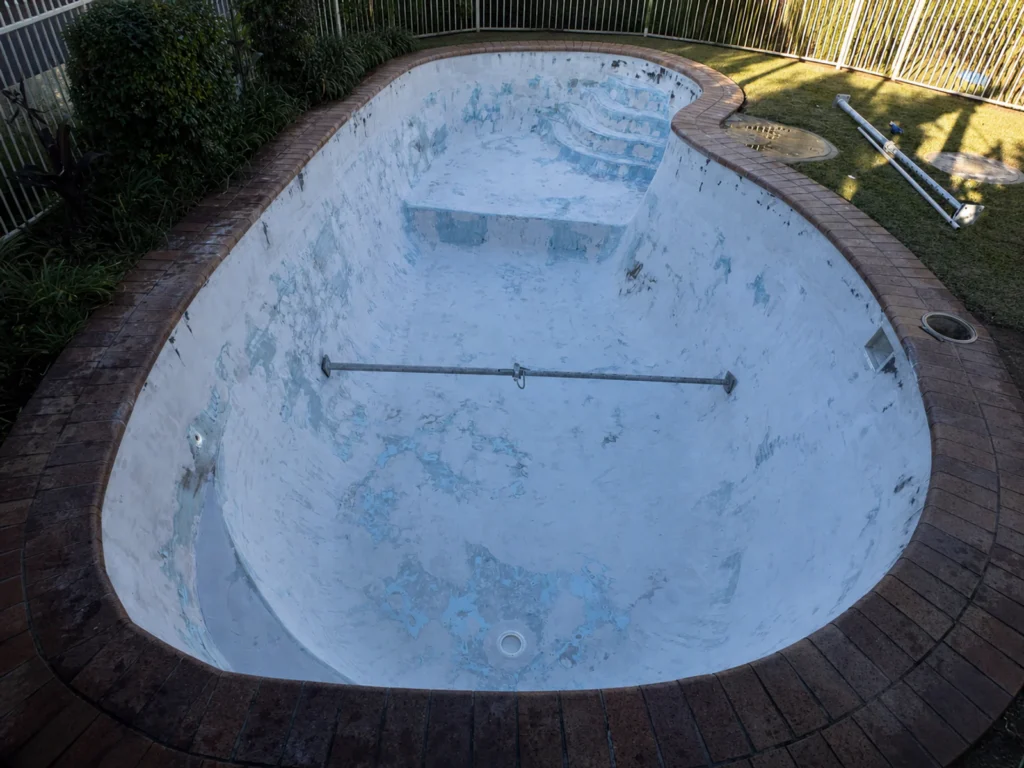
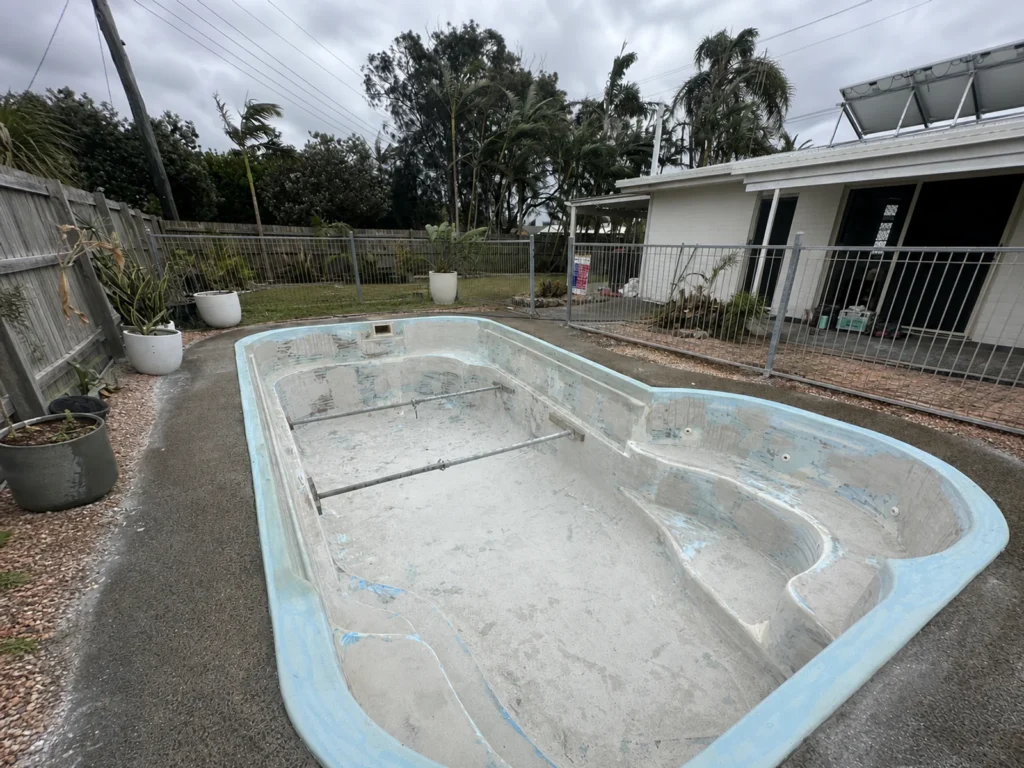
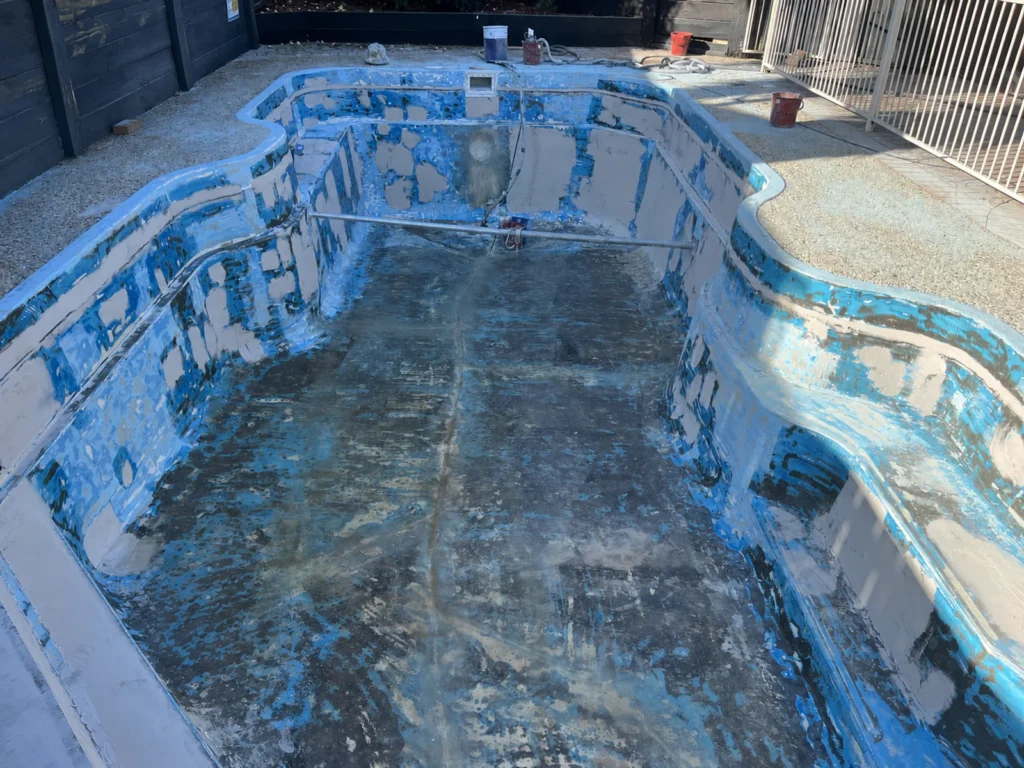
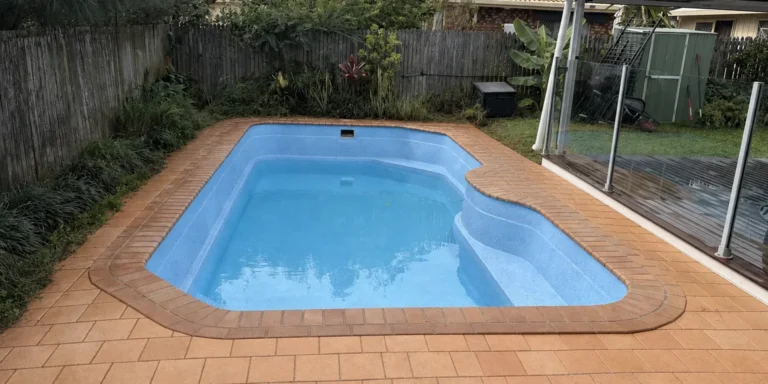
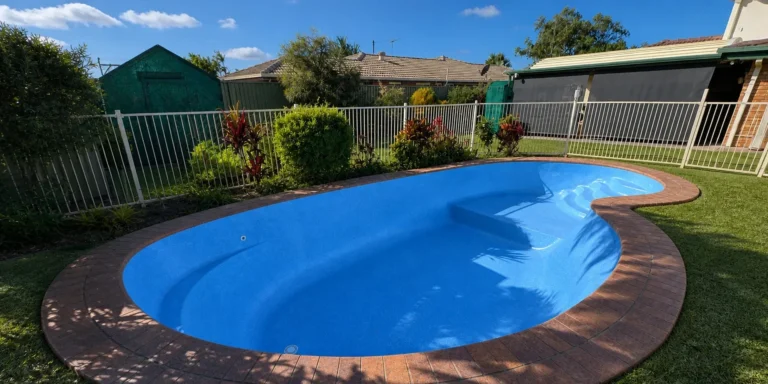
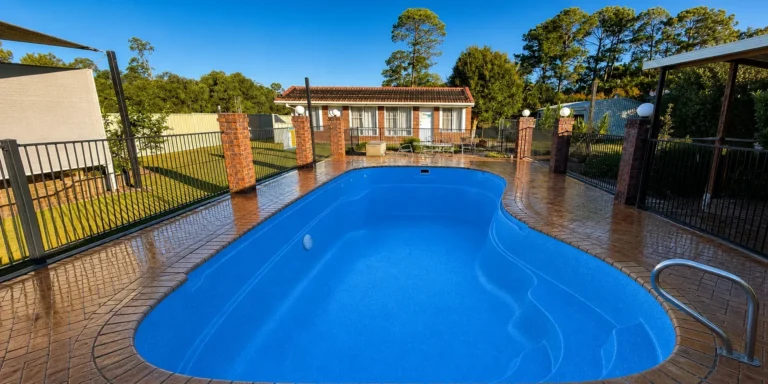
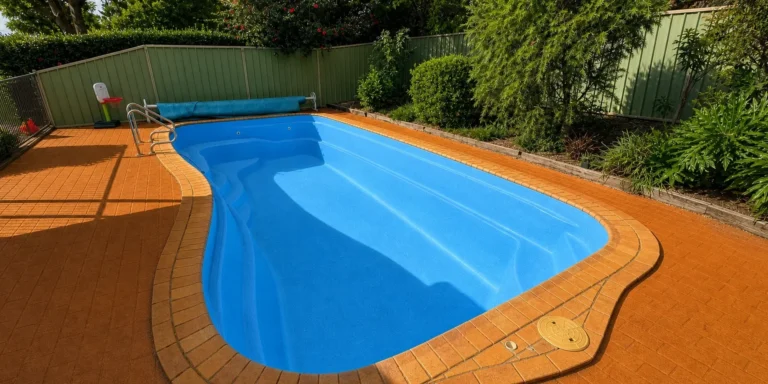
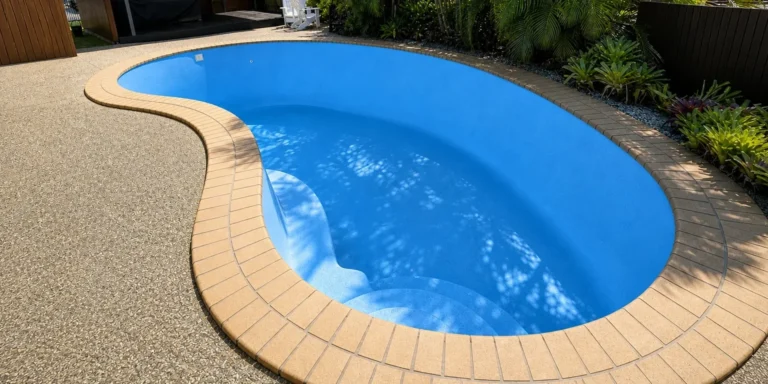
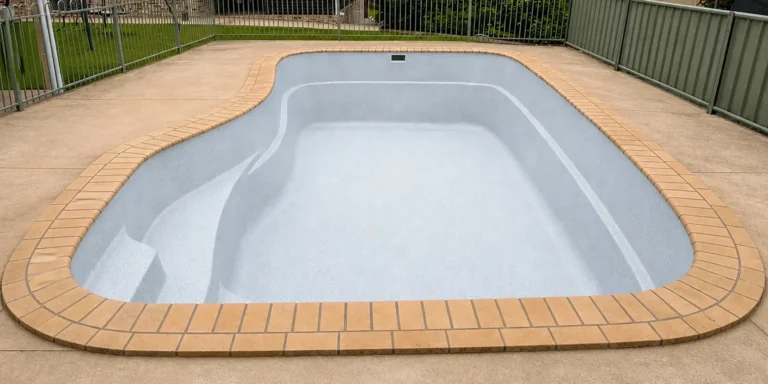
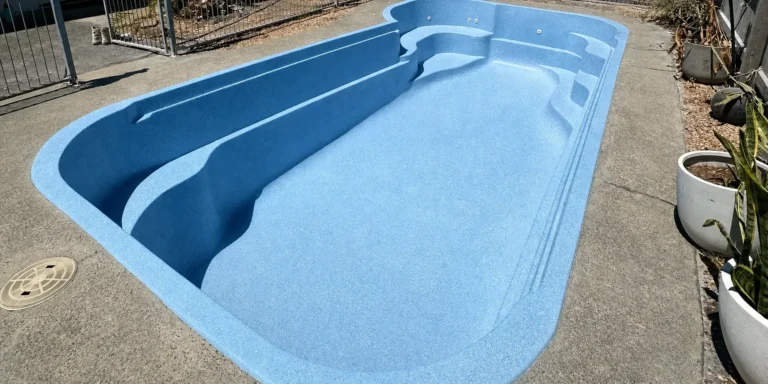
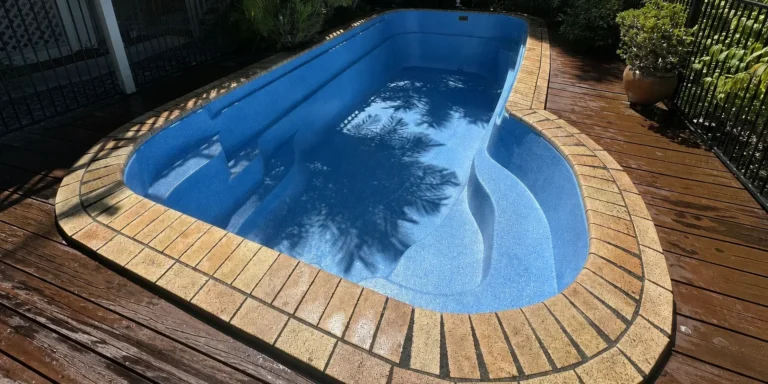
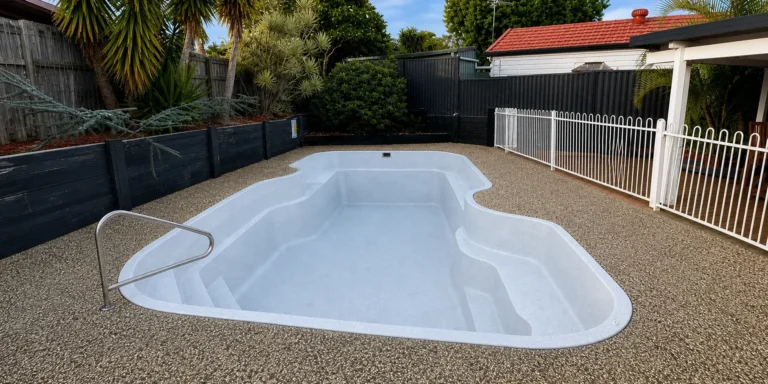
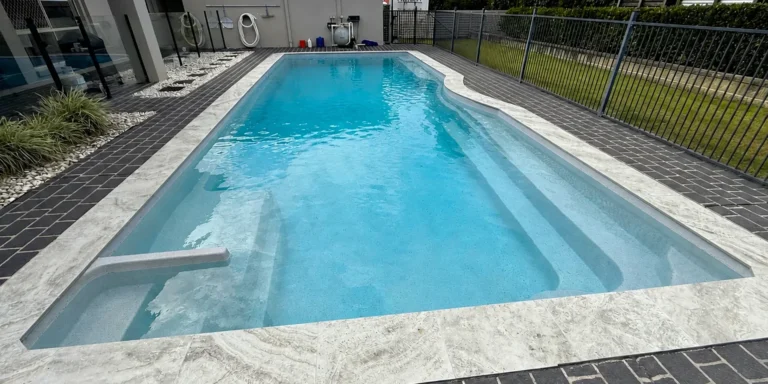
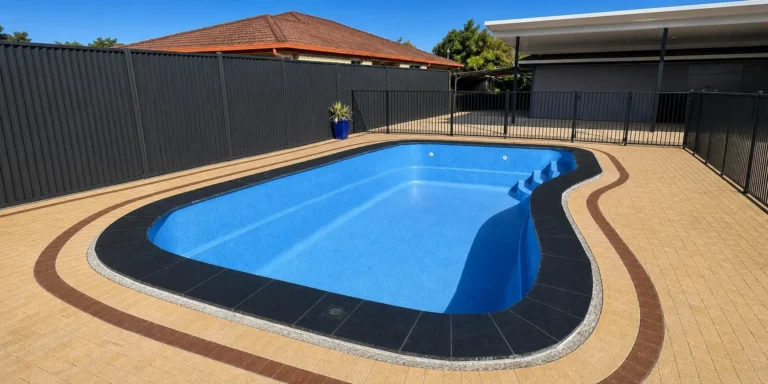
These photographs show preparation and repair stages from projects involving this pool problem. The exact approach is confirmed after inspection and once the pool has been emptied and the shell condition is exposed.
Every pool is assessed individually, and the precise repair depends on the shell, substrate and site conditions. Where repair is suitable, the work generally follows five stages—from confirming the scope through to the reinforced lining, finish and handover.
We review the pool details and photographs and arrange a site inspection where required. Blistering, surface breakdown, previous repairs and groundwater conditions are considered. Once the pool is safely emptied, the exposed shell can be checked in detail and the final osmosis repair scope confirmed.
The pool is emptied under controlled conditions after groundwater conditions are assessed. Degraded gelcoat is removed, and osmosis blisters are opened back to sound laminate. The shell is then checked for retained moisture, delamination and further deterioration, creating a suitable base for repair and relining.
Osmosis blister cavities and weakened areas are treated according to their condition and extent. The prepared sections are filled and levelled to restore a sound, even profile, ready for additional reinforcement during the lining stage and integration into the complete resurfacing system.
A reinforced fibreglass lining is applied across the prepared pool interior to form one continuous system. Additional reinforcement is incorporated over treated blister cavities and weakened areas where required. The completed lining integrates these repairs and creates an even foundation for the selected AquaGuard finish.
Two UV-stabilised AquaGuard top coats are applied in the selected colour, followed by the chosen speckle finish. Once cured, the completed surface is inspected, applicable fittings are refitted and the hydrostatic valve is replaced where required. Guidance is then provided for refilling, initial water balancing and ongoing care.
Tell us where the blisters appear, whether any have opened or wept, and how widespread they seem. Clear overall and close-up photographs help us review the visible condition; the depth and extent can only be confirmed after affected areas are opened.
Pool osmosis assessment enquiry
Osmosis bubbles, also called blisters, can develop when moisture reacts with standard general purpose resins beneath the pool’s gelcoat. They may appear as small raised bubbles on the walls or floor. During resurfacing, affected areas are prepared and repaired before the new more advanced fibreglass Enduratec System is applied.
A few small blisters do not automatically mean the pool is structurally unsafe, but they should not be ignored. Osmosis indicates that moisture and chemical activity are occurring beneath the visible surface. The seriousness depends on how many blisters are present, how deep they extend and whether the surrounding laminate is still sound. Widespread, split or weeping blisters generally require more extensive removal and reconstruction than a small isolated area. An inspection that opens representative blisters is the best way to determine the extent.
An isolated blister may sometimes be repaired locally, but that does not mean the surrounding surface is unaffected. Where blistering is widespread, repeatedly returns or is associated with porous or deteriorated material, individual patches can leave the same conditions elsewhere in the pool. The repair scope should be based on representative inspection of the laminate. For broader deterioration, removing the affected surface and incorporating the repairs into a continuous fibreglass lining is generally more reliable than treating each visible bubble separately.
A properly specified repair removes known affected material, rebuilds damaged areas and creates a new barrier using materials suited to permanent immersion. This can significantly reduce the risk of recurrence, but no repair can account for every hidden shell condition, groundwater influence or future water-management issue. The result depends on the original laminate, the extent of removal, preparation quality and ongoing pool care. Be cautious of any claim that osmosis can never recur without first assessing the individual pool.
Send us a few photos and our team can help identify the likely issue and the most suitable next step.