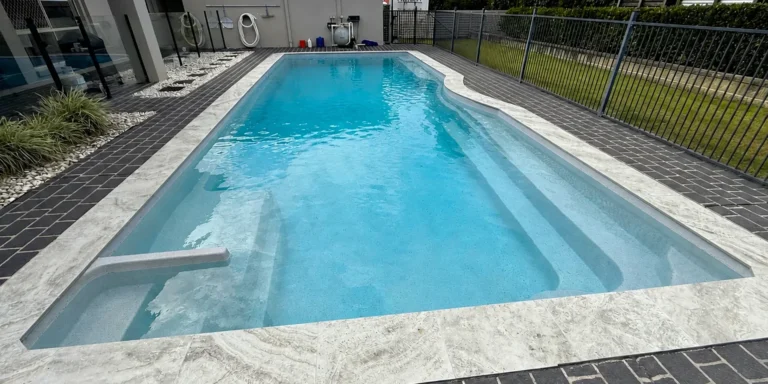
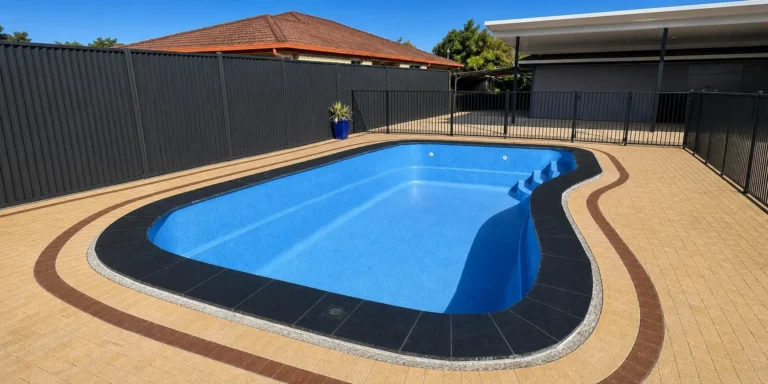
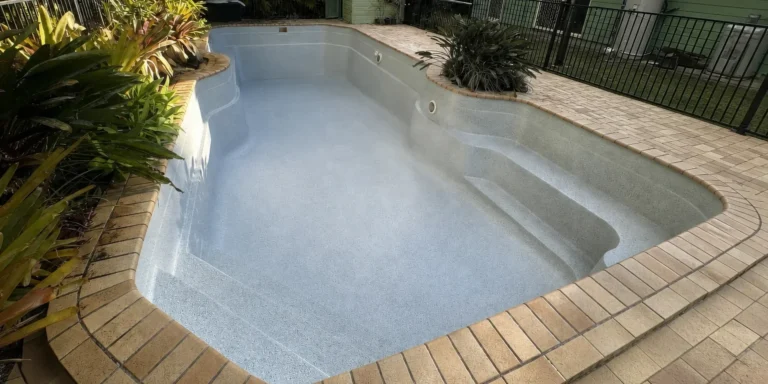
Restore a worn or damaged fibreglass pool with a seamless new finish
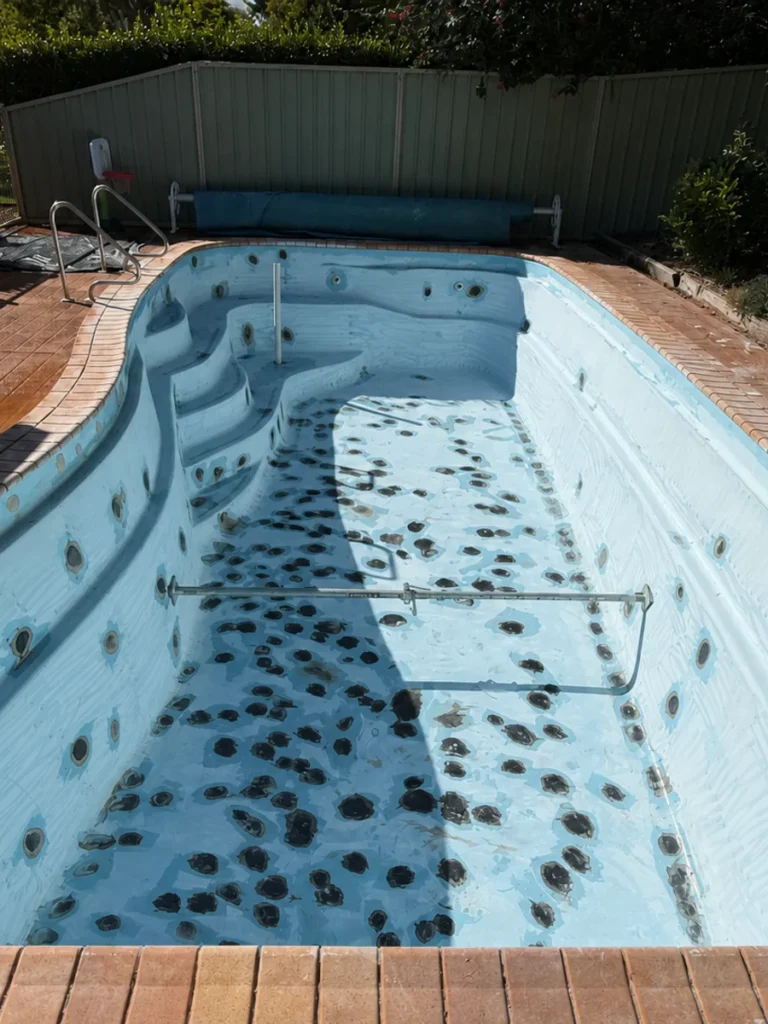
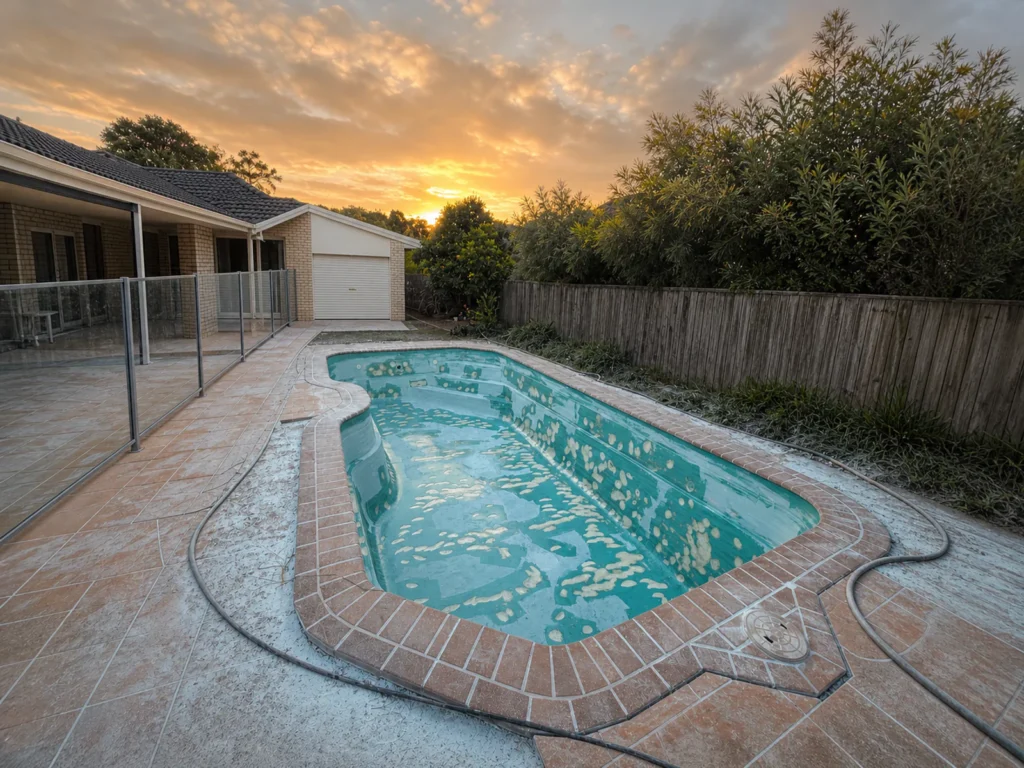
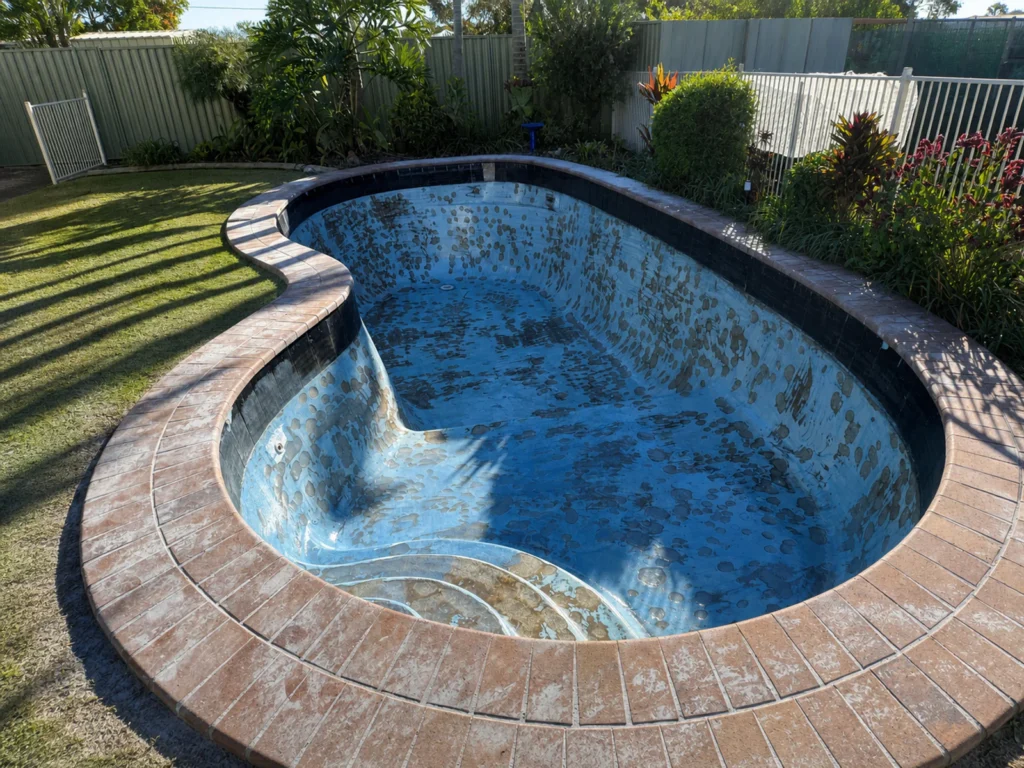
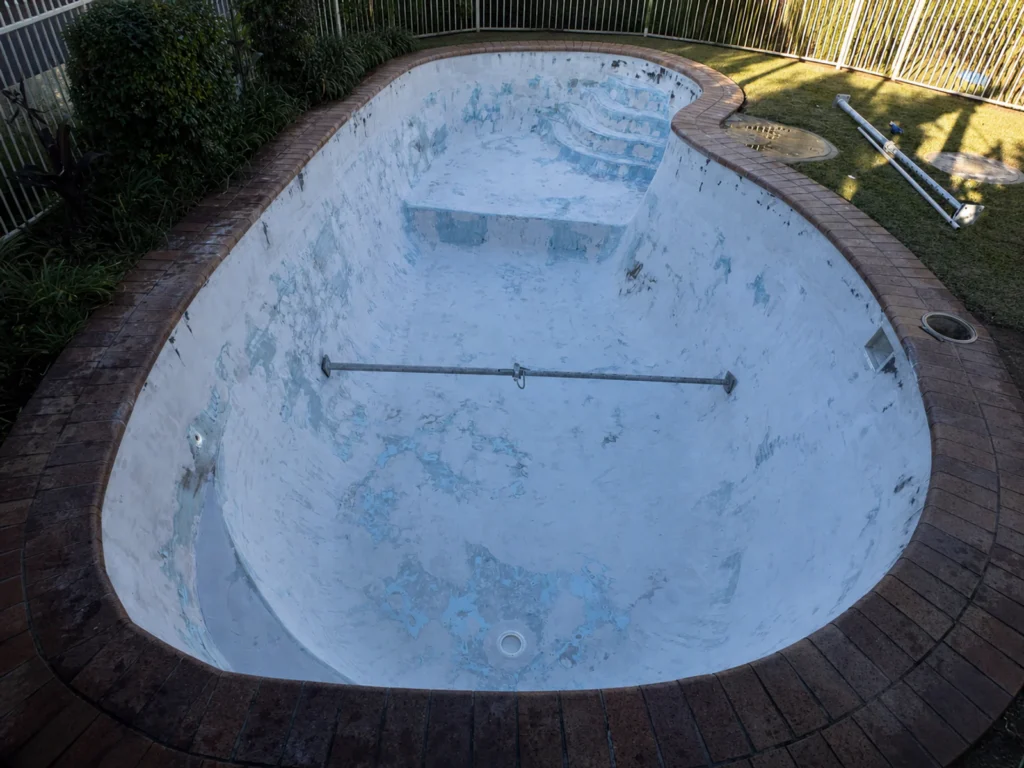
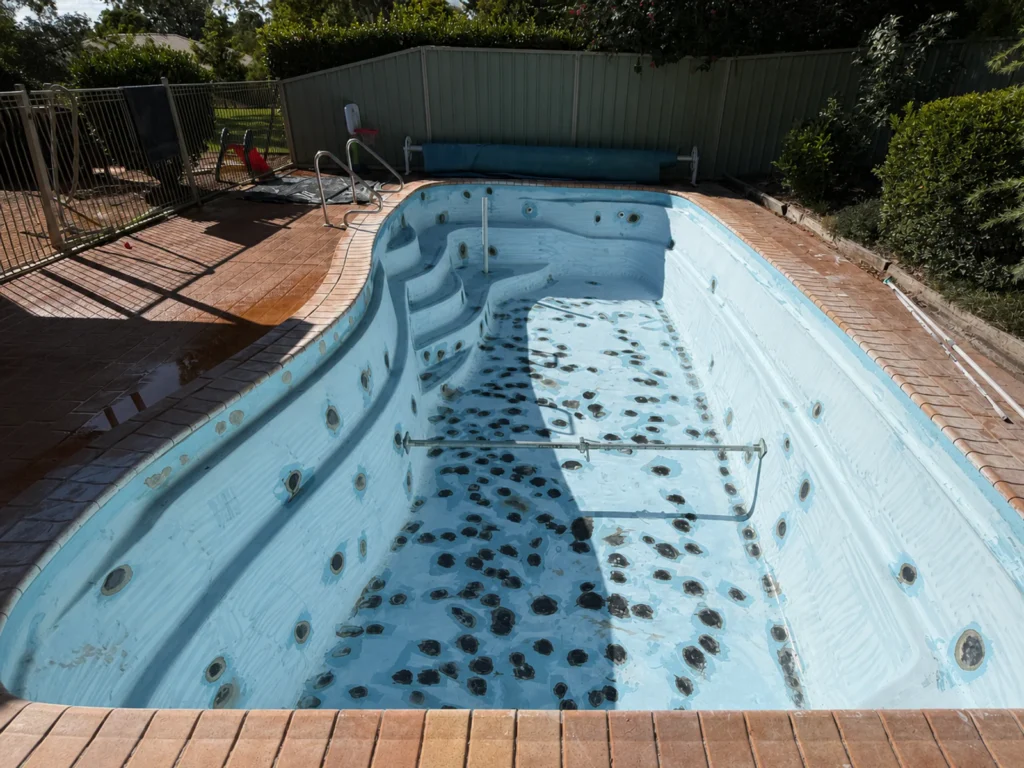
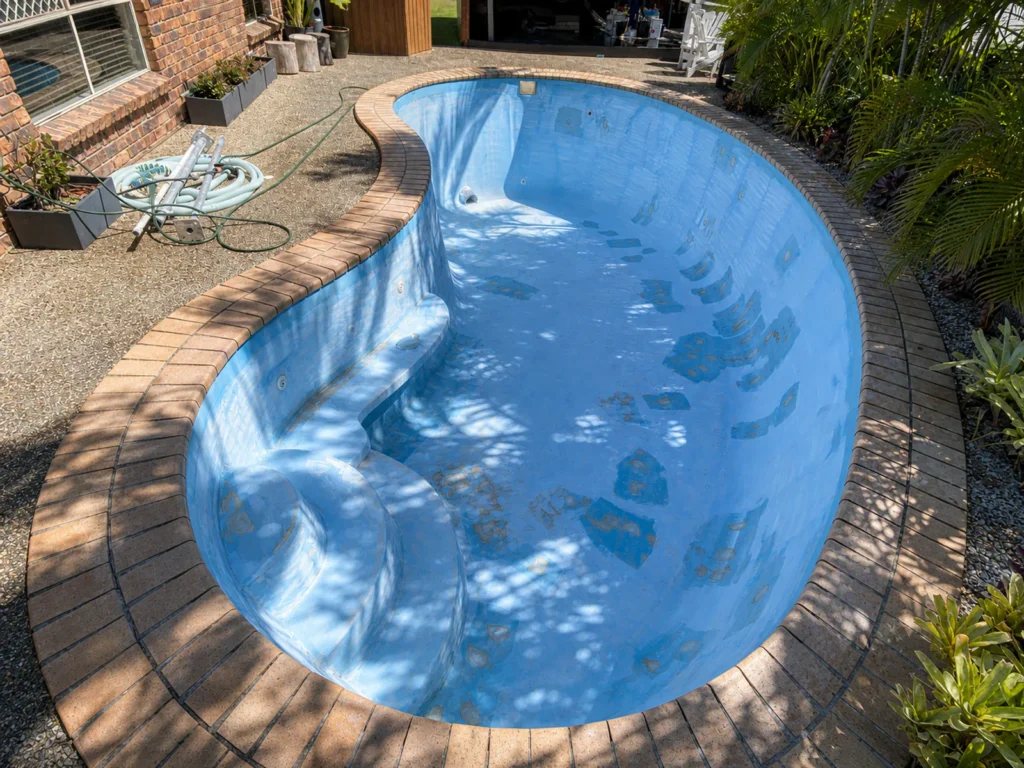
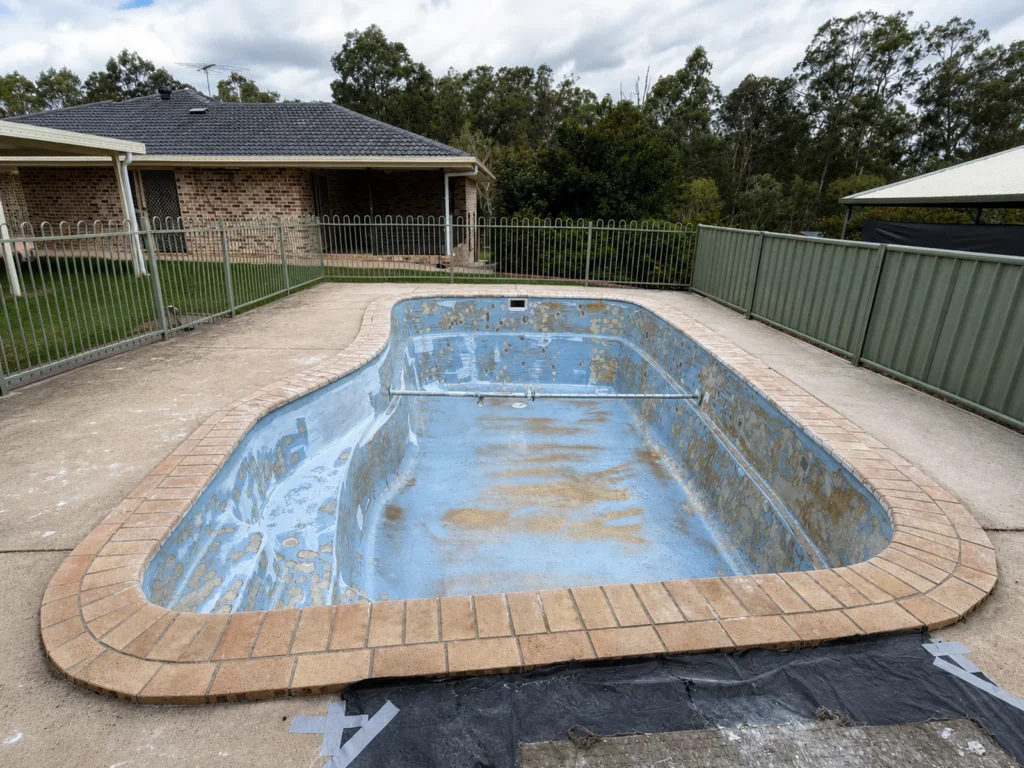
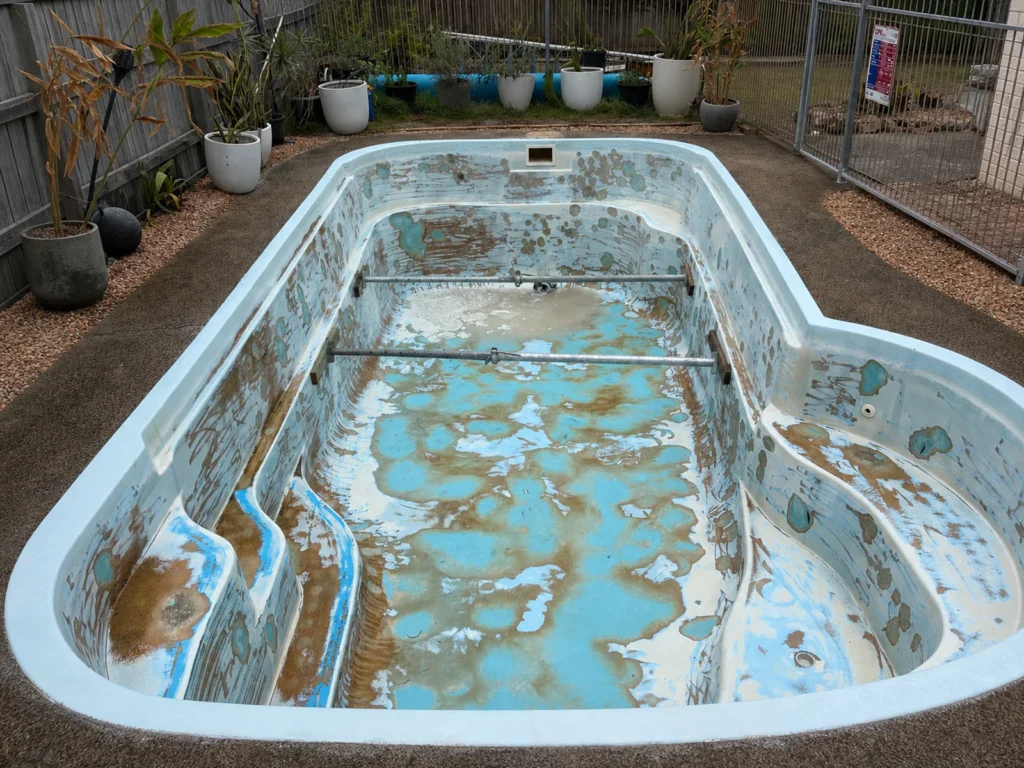
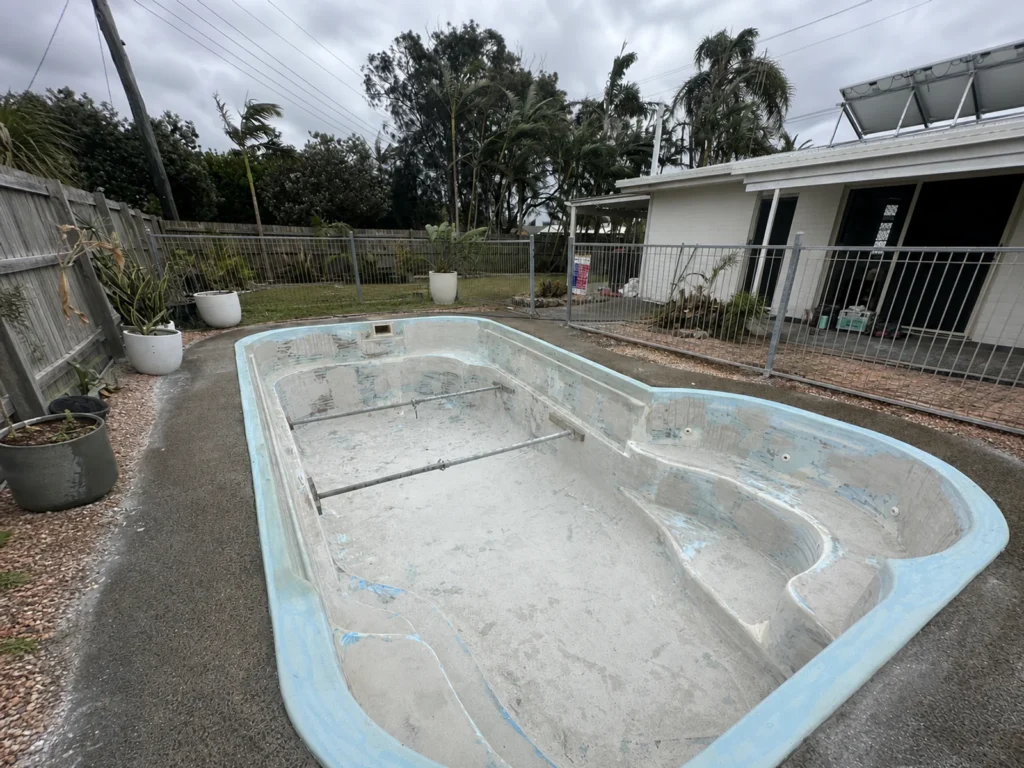
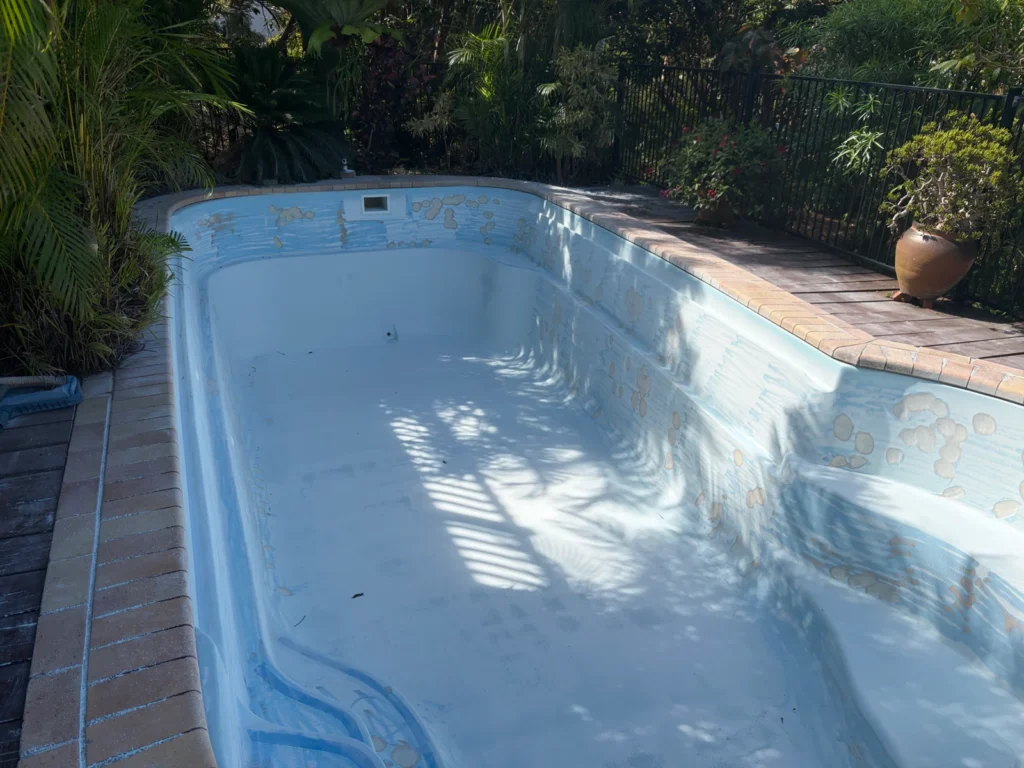
Moulded fibreglass pools can develop fading and oxidation, osmosis blisters, cracks, delamination or local distortion as they age. Because the shell relies on surrounding ground and backfill for support, groundwater conditions and controlled emptying are important parts of the assessment.
Fibreglaze removes deteriorated surface material, opens and repairs areas affected by osmosis, and treats cracks, hollow areas or localised shell damage where restoration is suitable. The prepared pool is then resurfaced with the ENDURATEC System as a continuous reinforced lining rather than a collection of isolated patches. The selected AquaGuard colour completes a smooth, seamless interior that is comfortable underfoot and easier to clean.
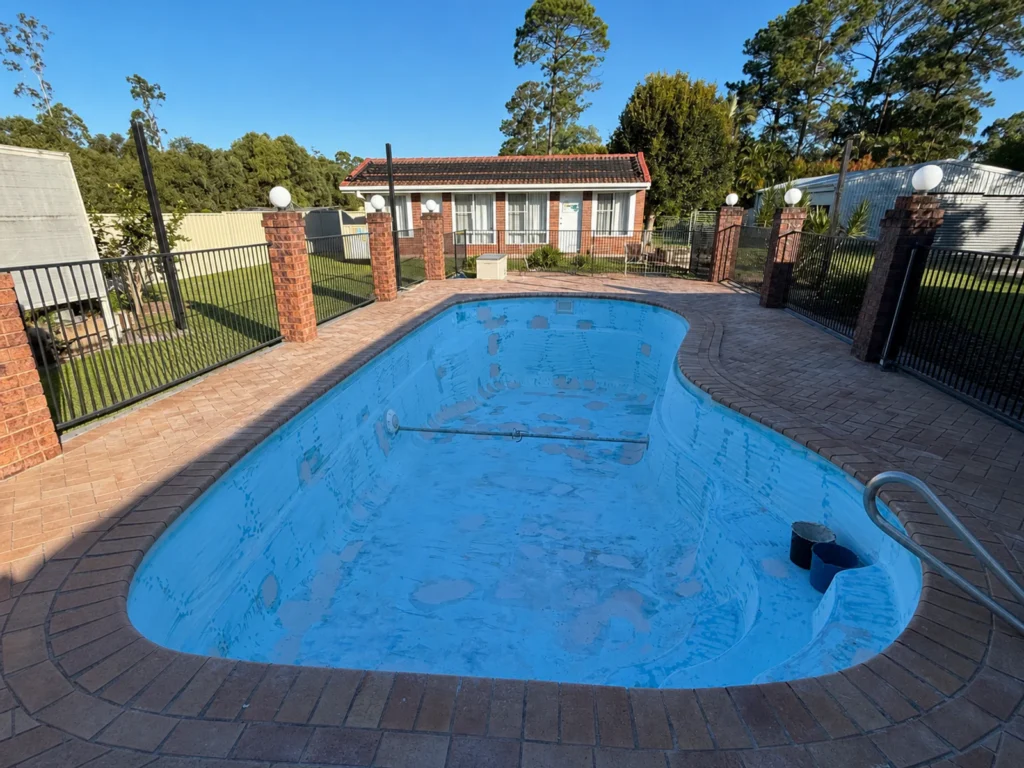
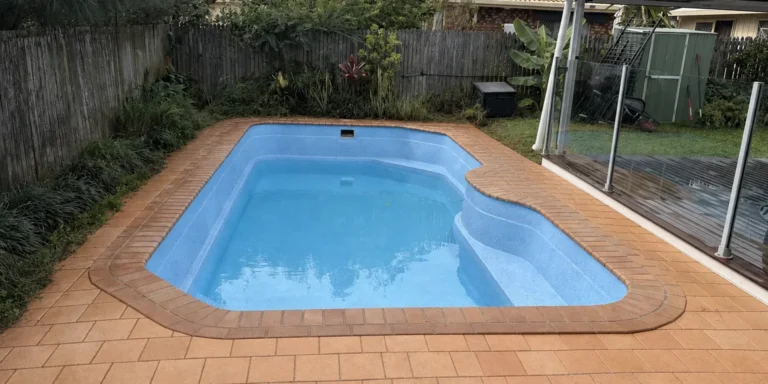
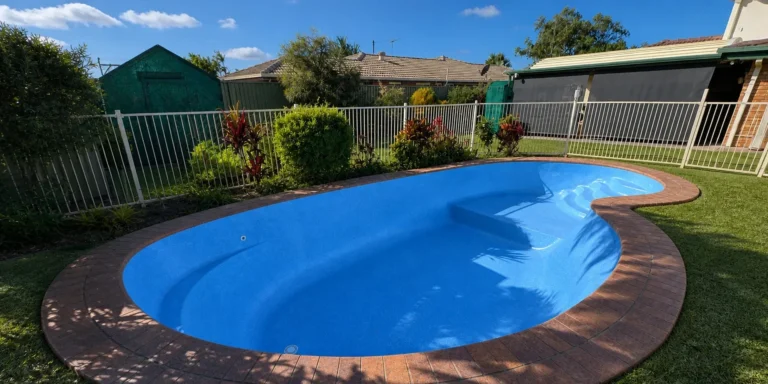
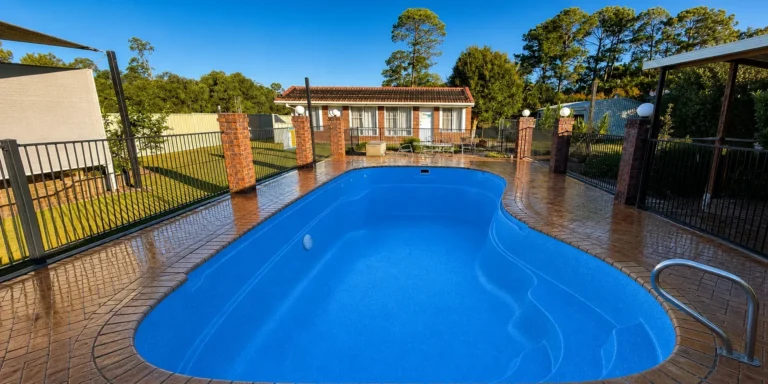
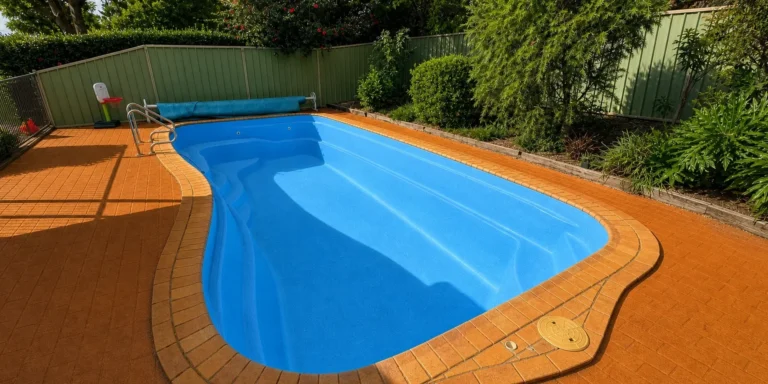
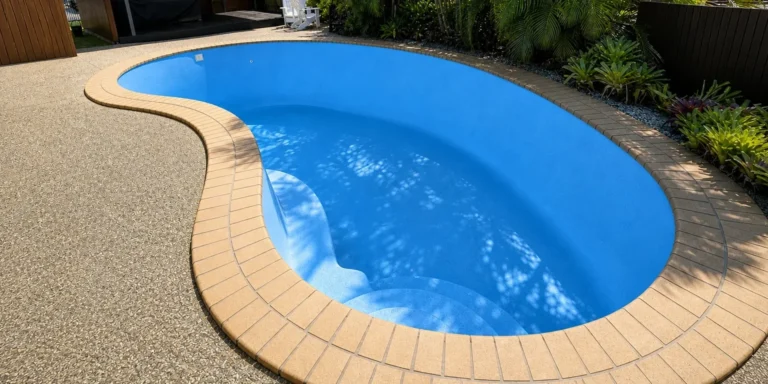
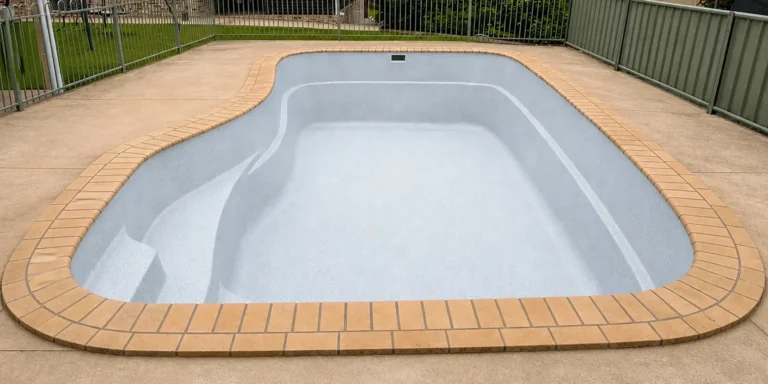
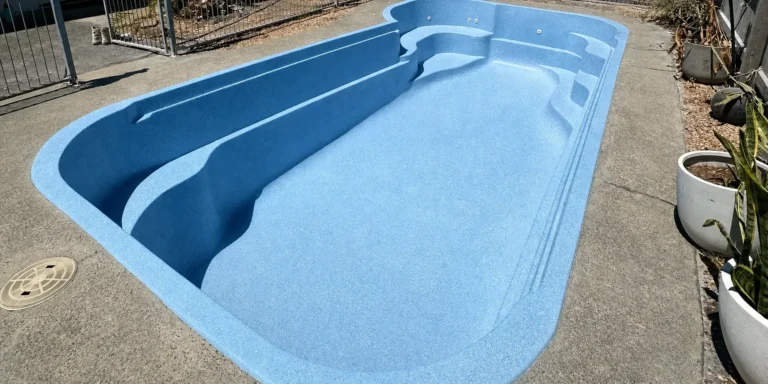
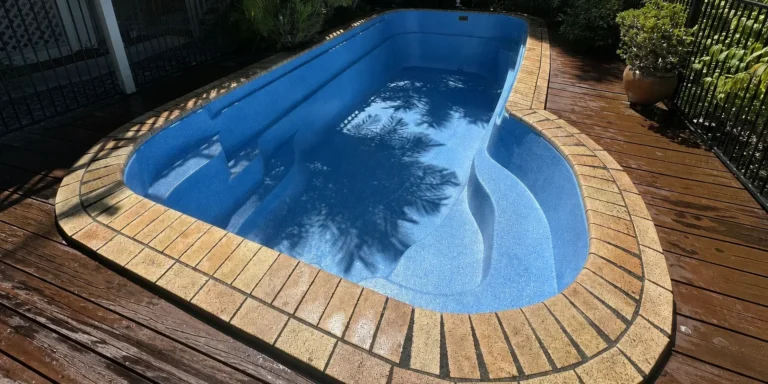
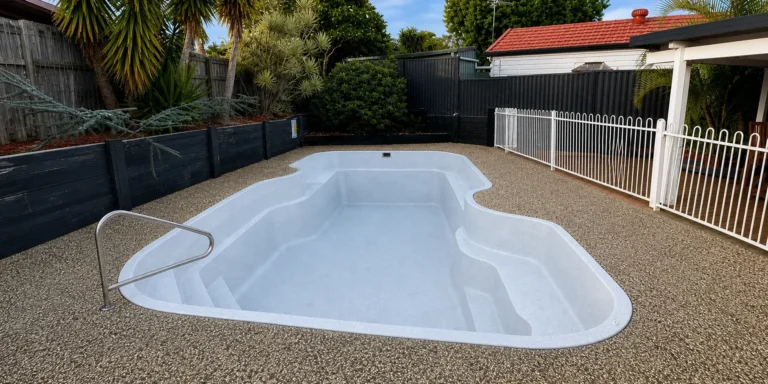
The finished result
Repairs integrated into one continuous reinforced lining
A renewed AquaGuard colour finish across the restored interior
A smoother surface that is easier to clean and maintain
Common signs your Fibreglass Pool may need resurfacing
An inspection can determine whether local repairs are suitable or whether the pool would benefit from complete resurfacing.
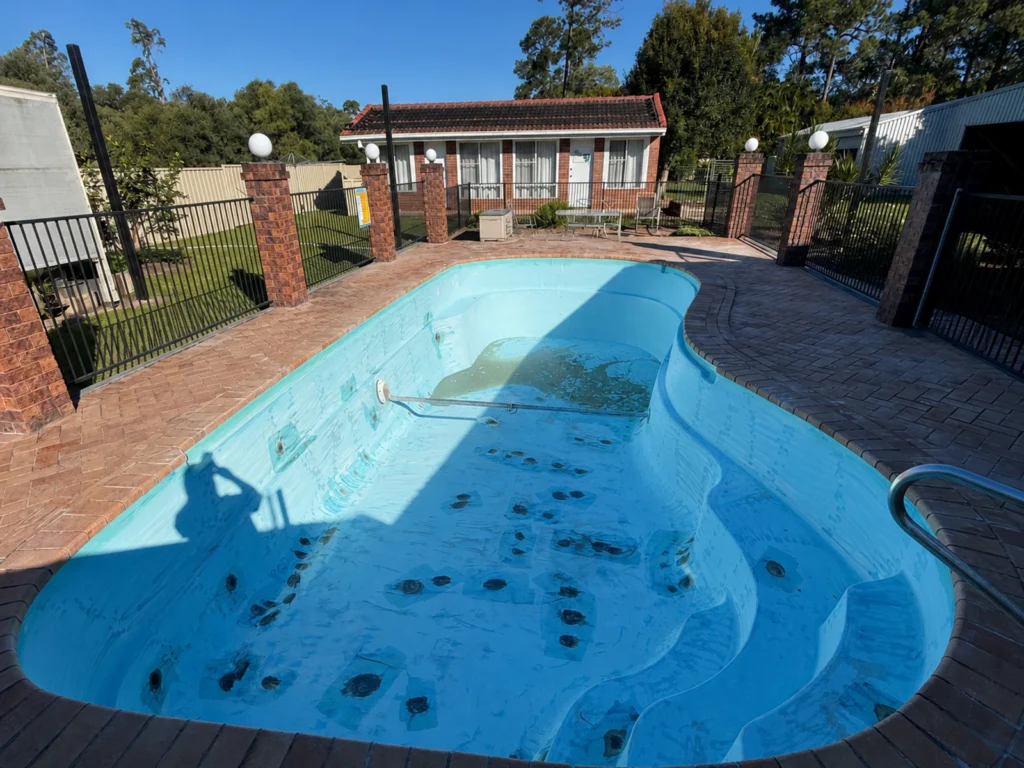
Osmosis
Osmosis can create raised blisters in a fibreglass pool when water penetrates the surface and reacts within the laminate. Proper treatment requires removal of affected material and reconstruction with an immersion-suitable fibreglass system.
Groundwater, lost support or prolonged movement can push a fibreglass floor upward and pull walls inward. Repair requires a detailed inspection of the shell, surrounding ground and the cause of the distortion.
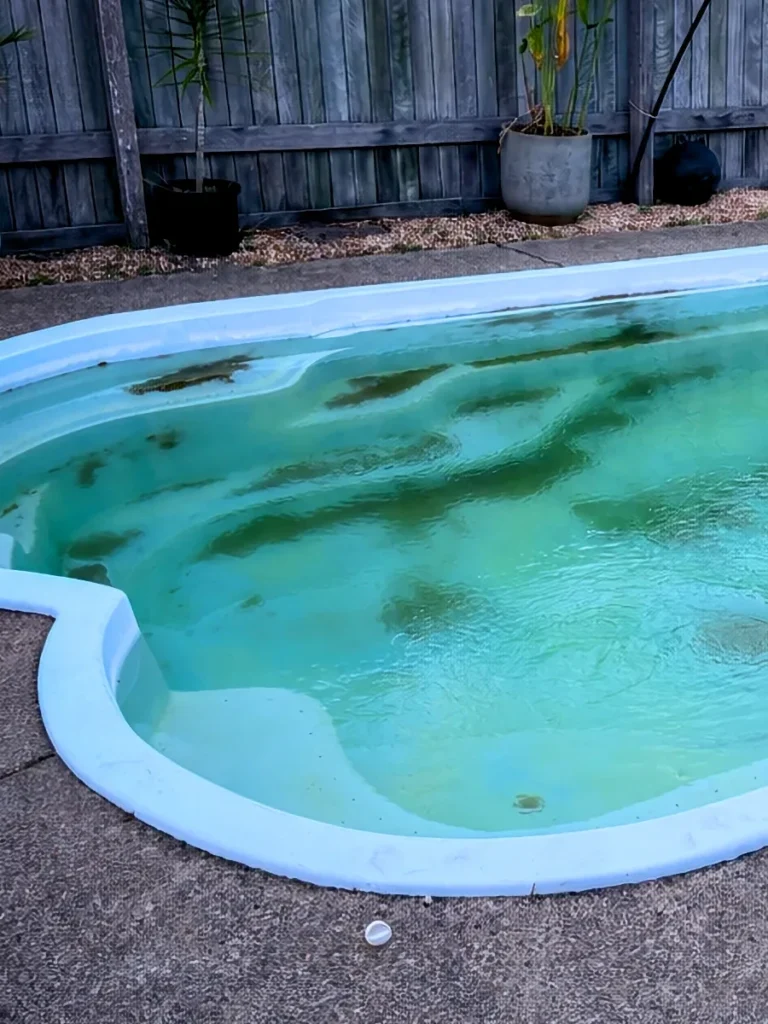
A faded, chalky or worn pool surface can become rough, porous and harder to keep clean. The condition should be assessed before resurfacing so weak material is removed and underlying defects are repaired.
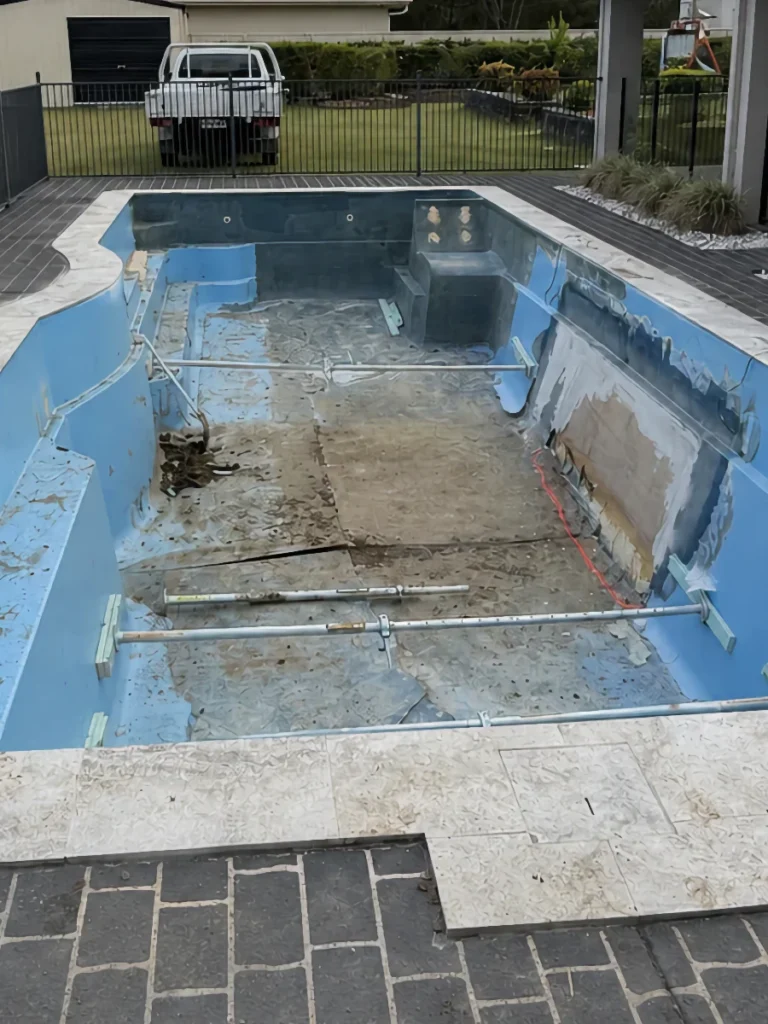
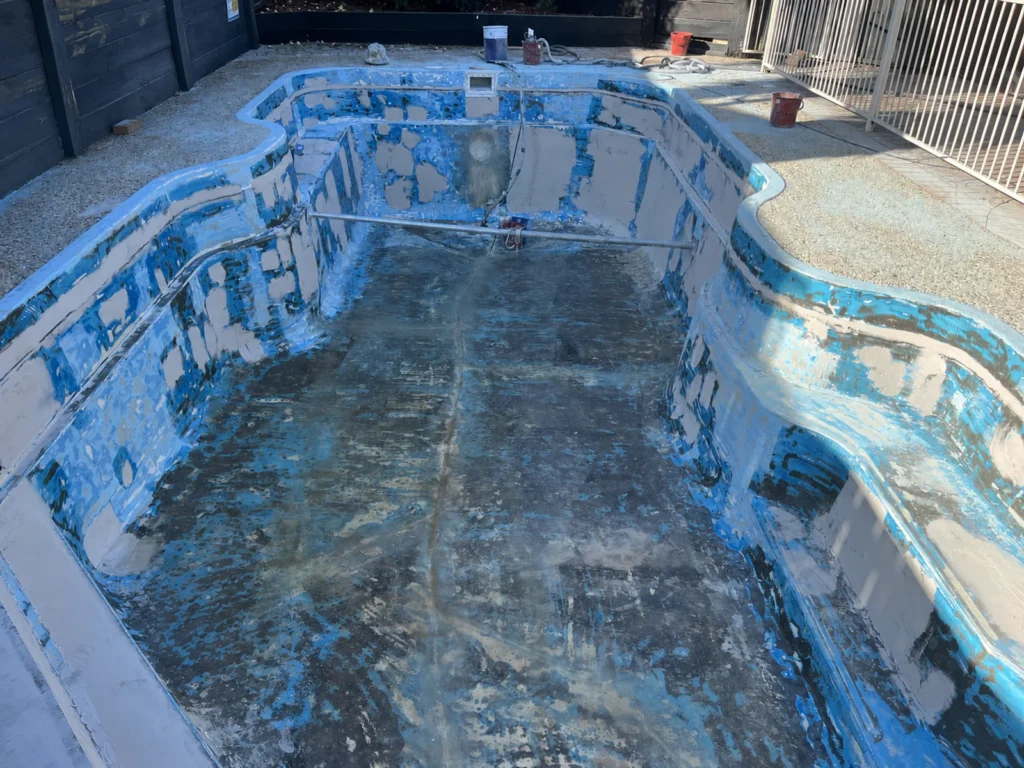
Before resurfacing, the pool is emptied under controlled conditions and the existing shell is assessed in detail. Oxidised or unsound material is removed, while osmosis, cracks, hollow areas and local distortion are prepared and repaired before the reinforced lining and colour finish are applied.
Our Resurfacing Process
How we resurface a Fibreglass Pool
Every pool is assessed individually, but the work generally follows five stages—from confirming the scope and preparing the existing surface to installing the reinforced lining and applying the selected finish.
1
Assess and plan
We review the pool details and photographs and arrange a site inspection where required. Fading, oxidation, osmosis, cracks, delamination, deformation and groundwater conditions are considered before emptying. Once the shell is safely exposed, its condition can be assessed in detail and the final repair scope confirmed.
2
Prepare the existing surface
Degraded gelcoat and loose or unsound laminate are removed, while firmly bonded areas are cleaned and mechanically prepared. Osmosis blisters and delaminated sections are opened where present, and the shell is checked for retained moisture, cracks and further deterioration requiring repair.
3
Repair and level
Cracks, osmotic damage, hollow or delaminated areas and local deformation are treated according to their condition and extent. Damaged laminate is rebuilt and reinforced where required, and repaired areas are levelled to restore a sound, stable profile before the complete lining is installed.
4
Install the reinforced lining
A reinforced fibreglass lining is applied across the prepared shell to form one continuous system rather than a collection of local patches. Additional reinforcement is incorporated over repaired or structurally affected areas where required. The completed lining creates an even foundation for the selected AquaGuard finish.
5
Finish and handover
Two UV-stabilised AquaGuard top coats are applied in the selected colour, followed by the chosen speckle finish. Once cured, the pool is inspected, applicable fittings are refitted and the hydrostatic valve is replaced where required. Guidance is then provided for refilling, initial water balancing and ongoing care.
Tell us what you can see, when the problem began and what you would like to improve. Details about fading, osmosis, cracking, distortion, leaks and previous repairs help us prepare for the first review; the final repair scope is confirmed after the pool is safely emptied and inspected.
Approximate pool size, location and access
Fading, blisters, cracks, distortion, leaks or previous repairs
Clear overall and close-up photographs
YOUR POOL
Tell us about your fibreglass pool
Moulded fibreglass pool resurfacing enquiry
Moulded Fibreglass Pool Resurfacing FAQs
Can my existing fibreglass pool be resurfaced?
Yes, older fibreglass pool shells can be renewed with a new fibreglass surface, including pools affected by fading, osmosis blisters, cracking, roughness or general wear.
What affects the cost of fibreglass surfacing or converting a swimming pool?
Pool size is only one part of the price. The existing surface, access, pool shape, fittings and amount of preparation can have a greater effect. Costs can increase where failed paint, tiles or a vinyl liner must be removed, or where cracks, osmosis, hollow areas, corrosion, movement or an uneven substrate need repair. A useful quotation should state what removal, preparation, repairs, lining, finish and clean-up are included so different proposals can be compared on the same scope.
Do I need to replace my fibreglass pool instead of resurfacing it?
In most cases resurfacing will be a far more practical and cost-effective alternative. An assessment will determine whether resurfacing is appropriate for your pool.
How long does fibreglass pool surfacing take, and when can the pool be refilled?
The programme depends on the pool type, condition, access and repairs found after it is emptied. Draining, preparation, drying, repairs, installation, curing and refilling are separate stages, and weather can affect several of them. Pools with osmosis, failed coatings, loose tiles or concealed damage usually need more time. The pool should not be refilled until the installed system has reached its required cure and the contractor confirms it is ready. Ask for a project-specific programme rather than relying on a generic number of days.