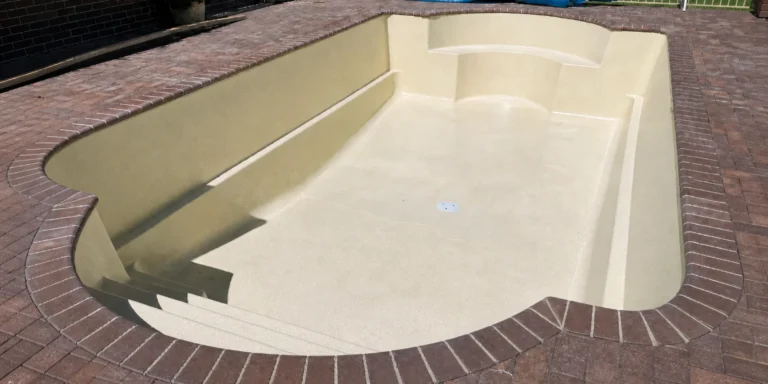
Deformation may appear as a raised or domed floor, inward-bowed walls, distorted steps, separated fittings or a pool that no longer holds its original lines. Cracks and delamination can develop where laminate remains under sustained stress.
These repairs are more involved than normal resurfacing. The shell must be assessed to determine whether it can be released and returned towards its original position, whether support work is accessible, and how much reinforcement is needed. Some sites require drainage, structural or excavation work beyond the lining.
The extent and location of the visible problem
The condition of the surrounding pool surface
Likely causes and the most suitable repair approach
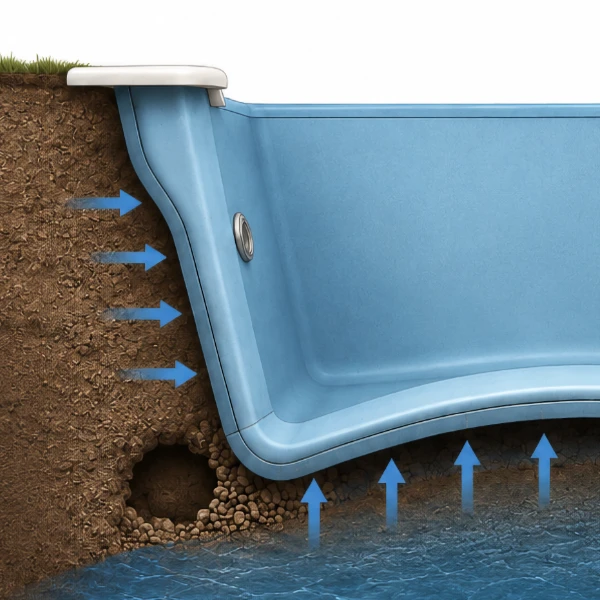
Fibreglass shells rely on surrounding ground and backfill for support. Groundwater beneath an empty or ageing pool can create hydrostatic pressure that lifts the floor; as it rises, it can pull adjoining walls inward and distort steps, corners and fittings. Settlement, washed-out or poorly compacted backfill, prolonged empty periods and weakened laminate can contribute.
The shape is only part of the problem. Groundwater, drainage, hydrostatic relief and support outside the shell must be considered, because forcing a pool back into shape without addressing the cause can create further damage.
Where the shell is suitable, Fibreglaze relieves built-up stress in controlled locations so the distorted floor and walls can be repositioned. Selected sections may be cut to allow movement rather than forcing the laminate, and accessible voids or support conditions are addressed as the project permits.
Cut and weakened areas are rebuilt with multiple structural fibreglass layers extending into sound laminate. The shell is resurfaced with the Enduratec System so repairs form part of a continuous reinforced interior. The exact approach is set after site inspection.
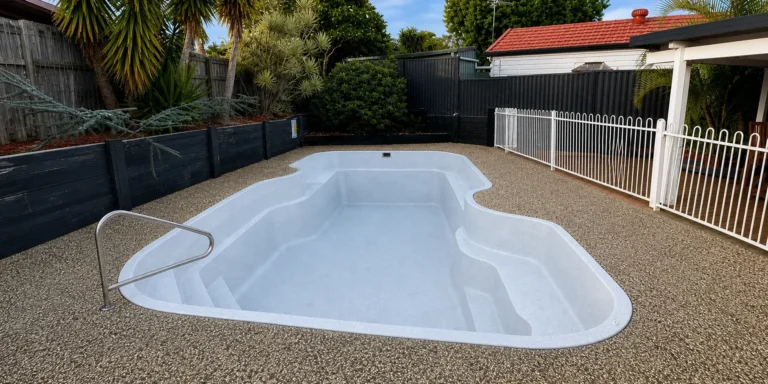
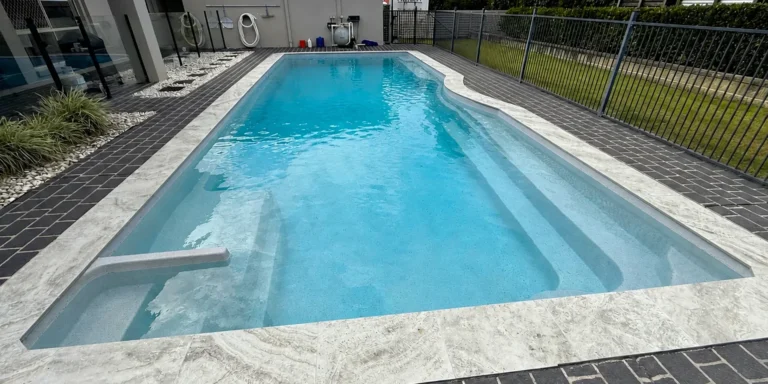
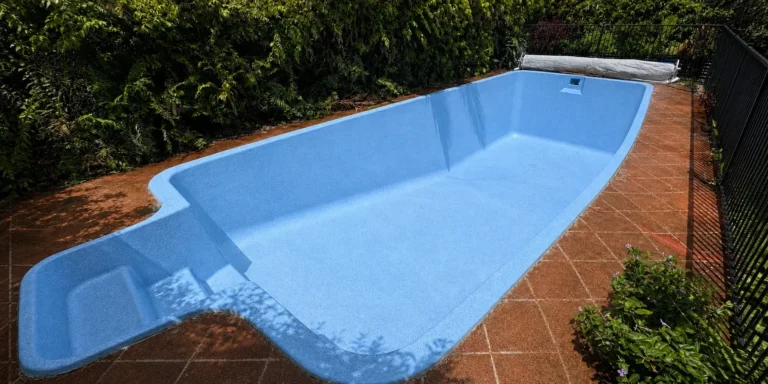
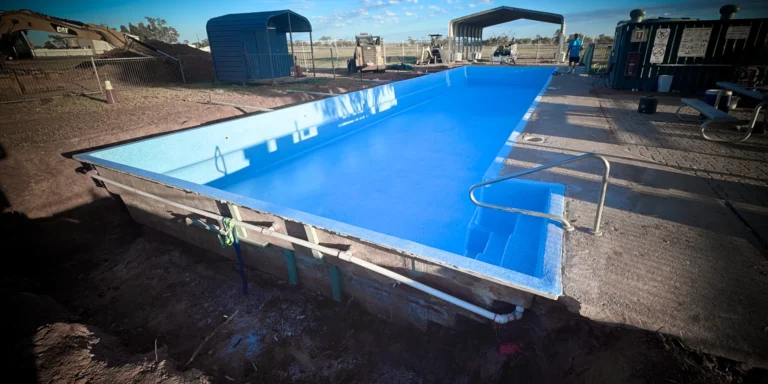
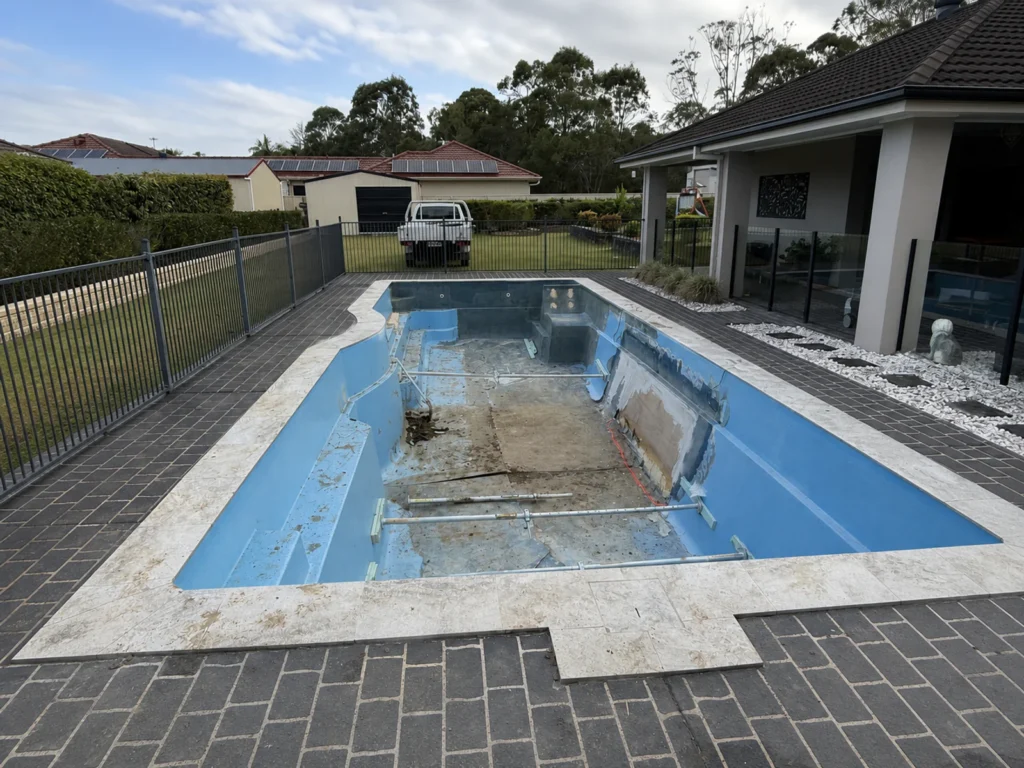
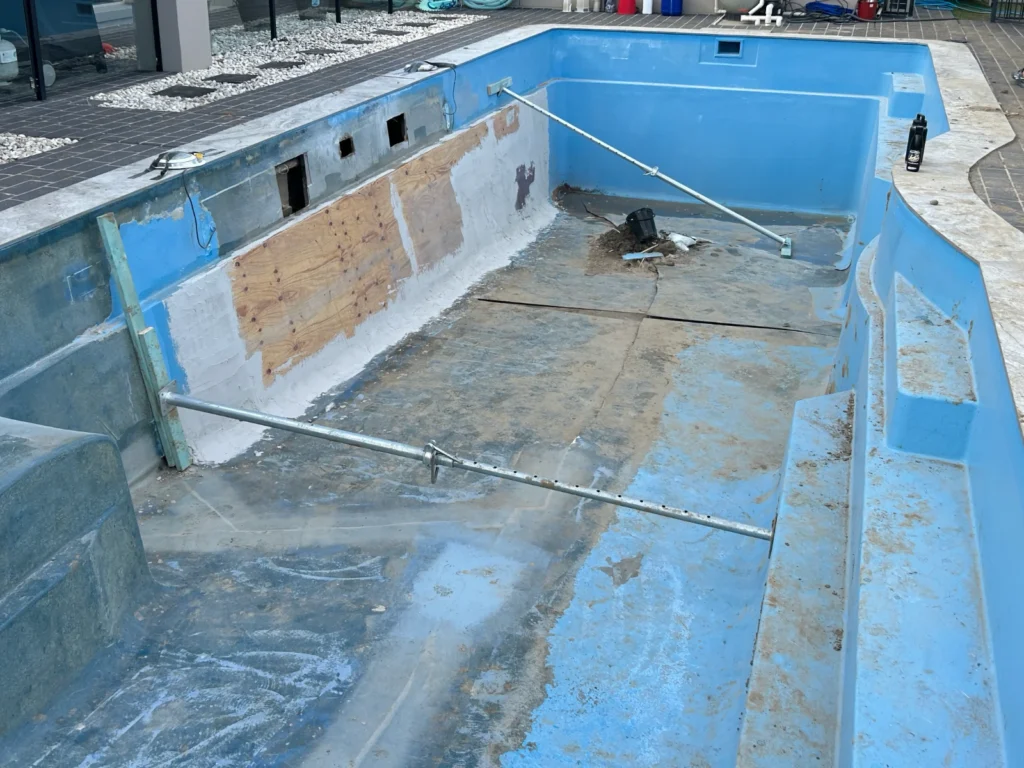
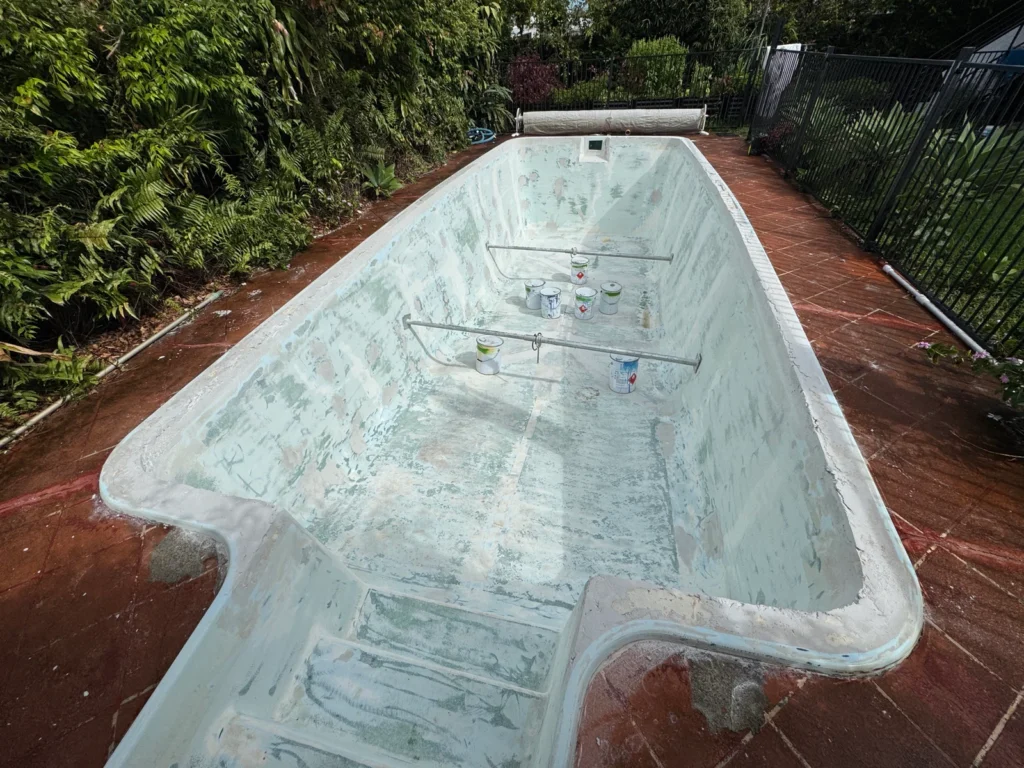
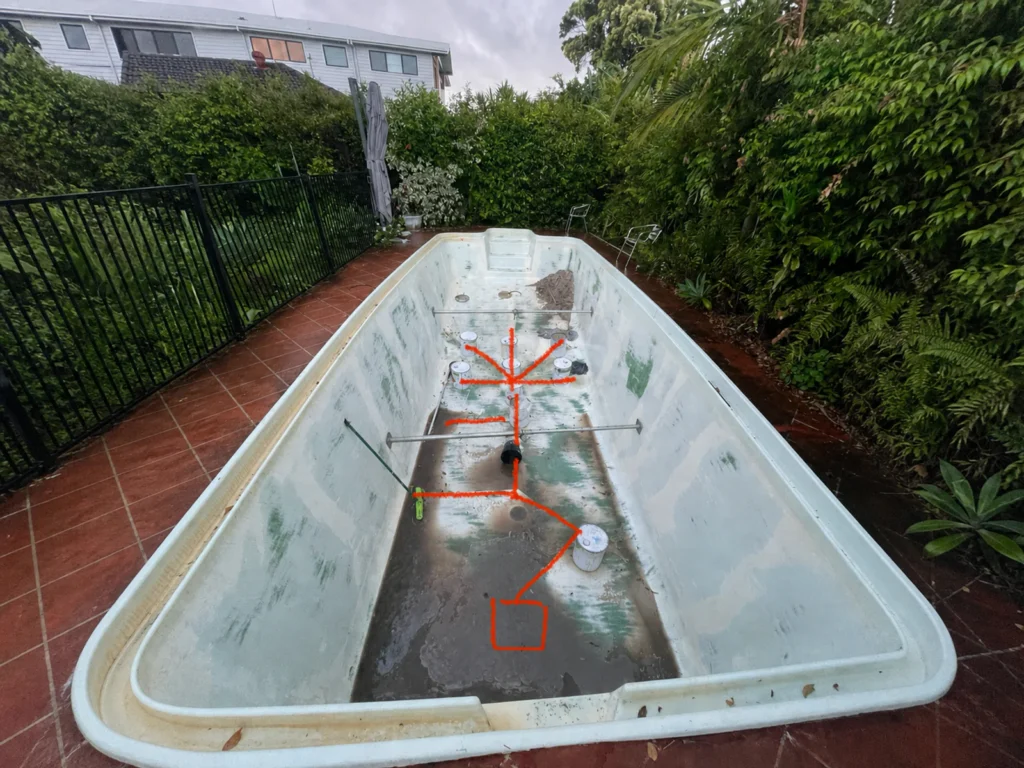
These photographs show preparation and repair stages from projects involving this pool problem. The exact approach is confirmed after inspection and once the pool has been emptied and the shell condition is exposed.
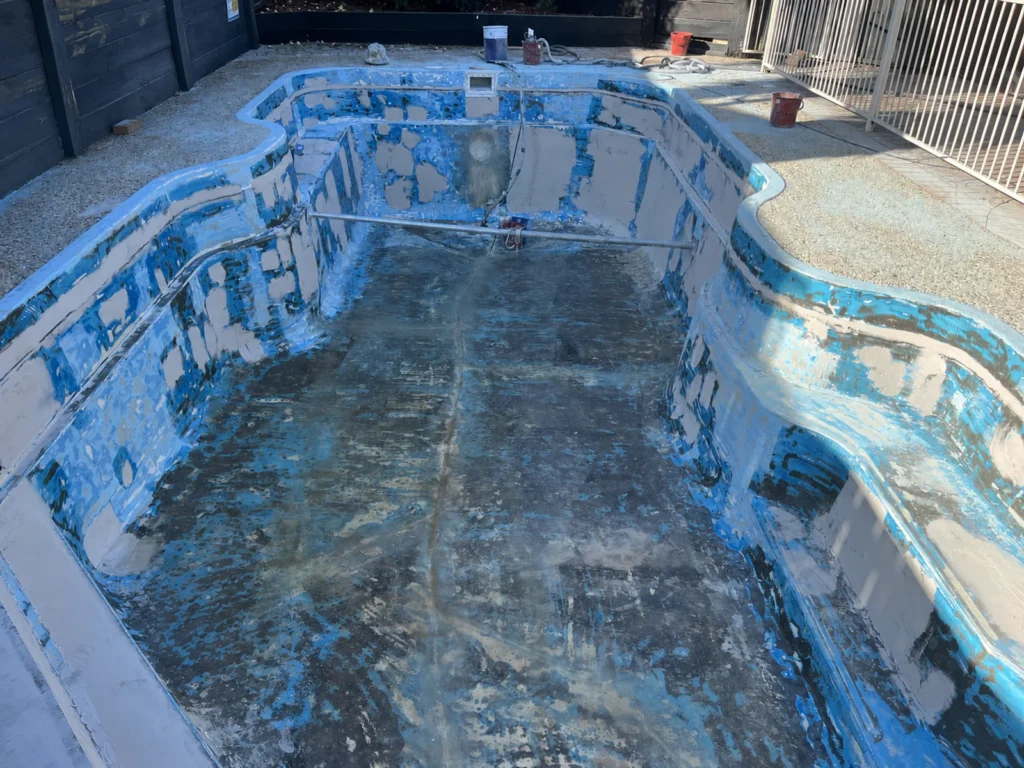
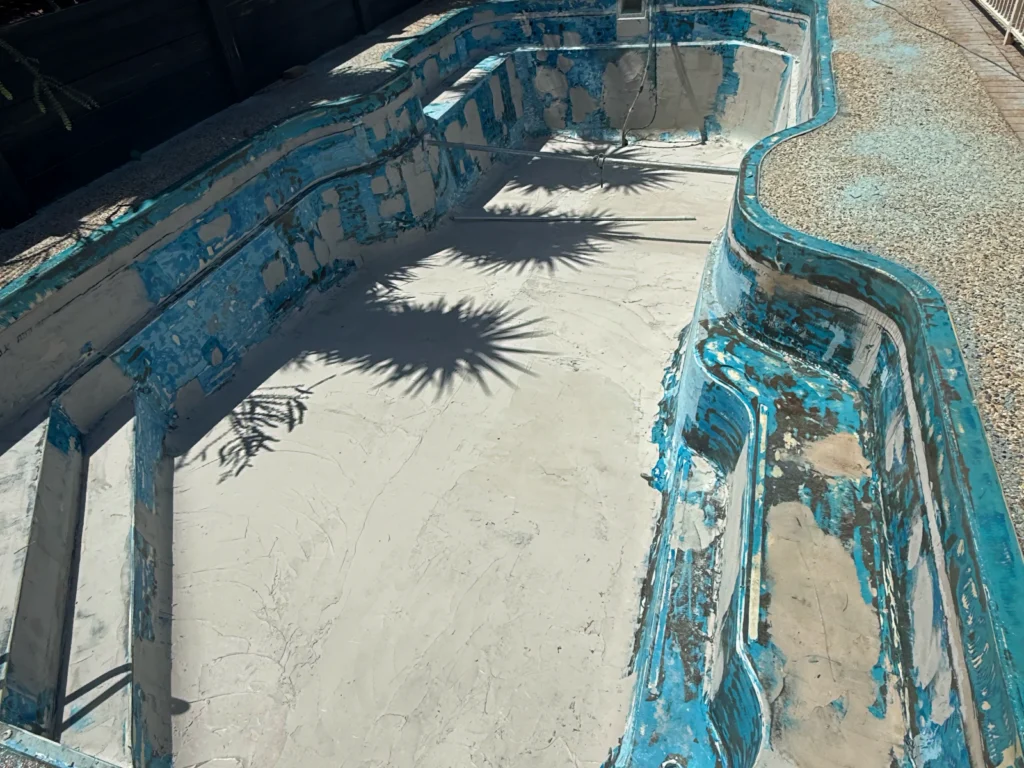
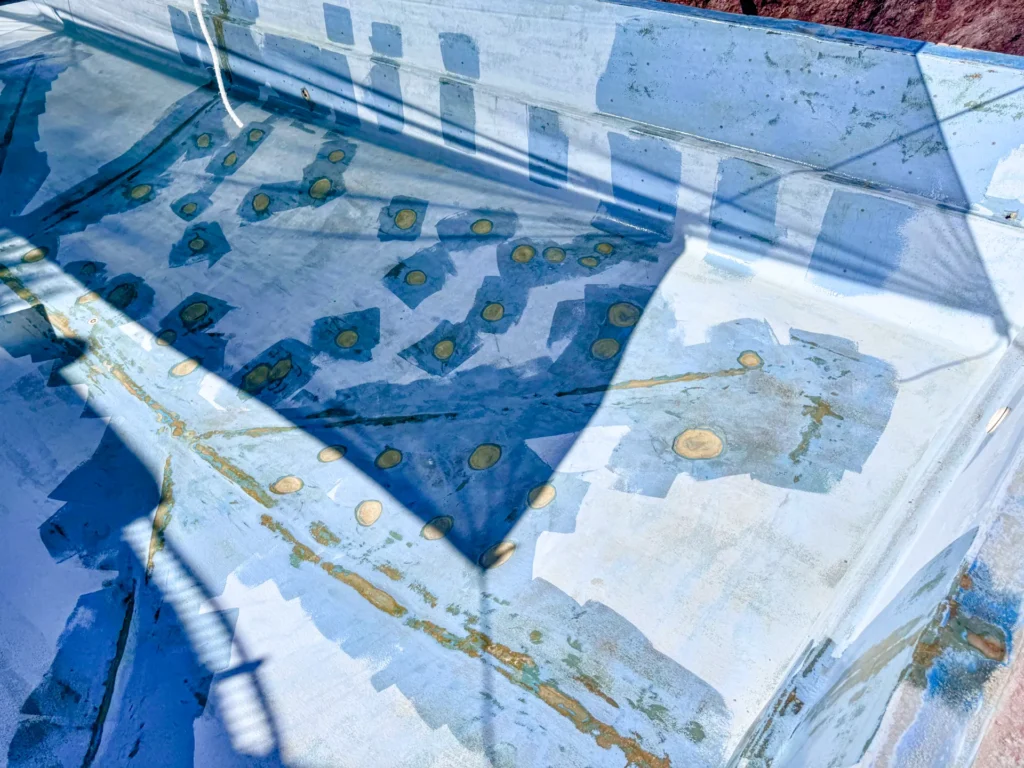
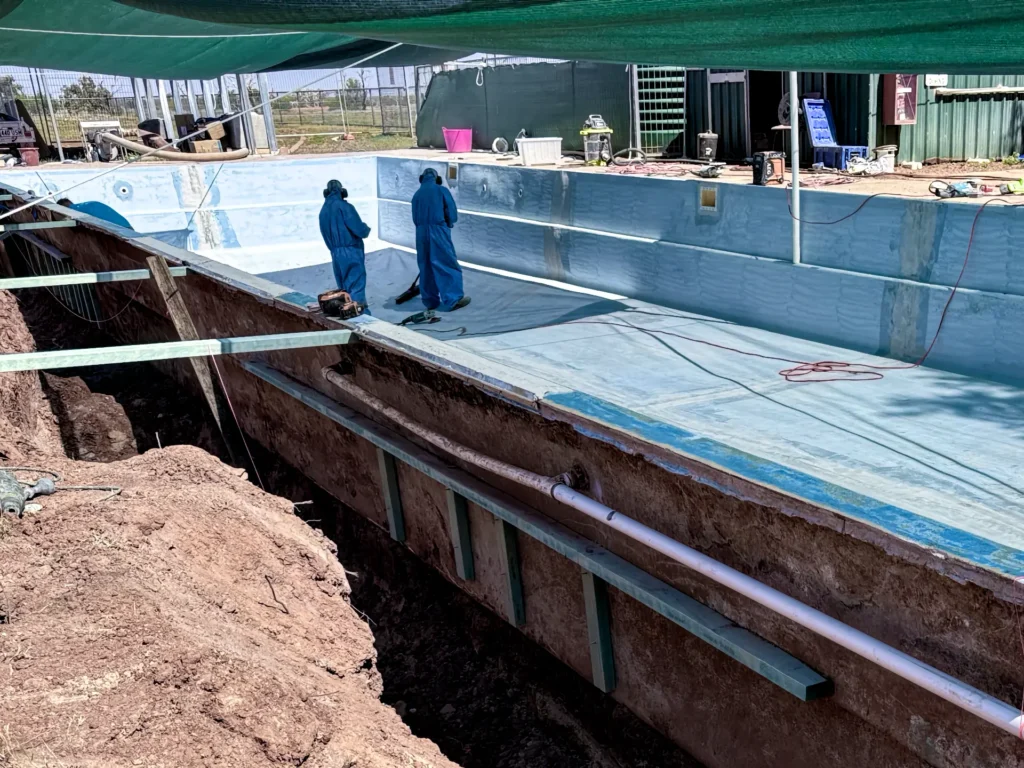
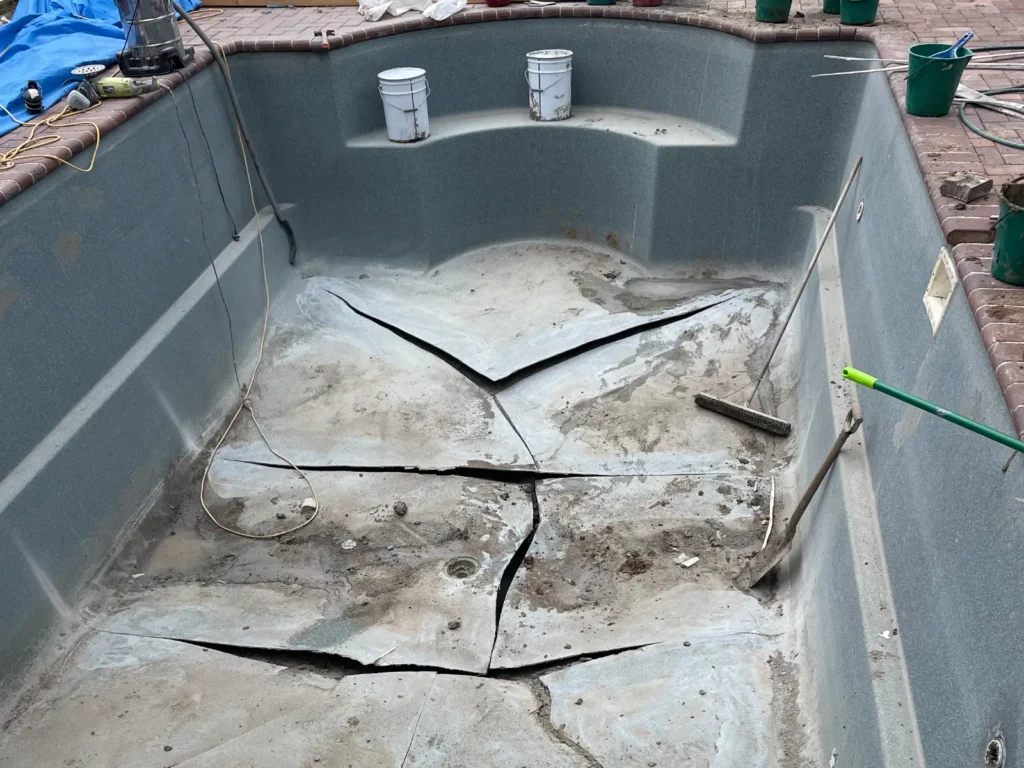
Every pool is assessed individually, and the precise repair depends on the shell, substrate and site conditions. Where repair is suitable, the work generally follows five stages—from confirming the scope through to the reinforced lining, finish and handover.
We review the pool details and photographs and arrange a site inspection where required. Shell distortion, groundwater, drainage, surrounding support and access are considered before emptying. Once the pool is safely exposed, the extent and likely cause of movement can be assessed and the final repair scope confirmed.
The pool is emptied under controlled conditions and temporarily braced where required. The extent and likely cause of deformation are assessed, and affected floor or wall sections are opened, repositioned and supported. Underlying voids and unstable areas are identified so the shell can be rebuilt to a stable profile.
Accessible voids beneath or behind the shell are addressed, with support installed as required to help maintain the restored shape. Repositioned floor and wall sections are rebuilt with structural fibreglass extending into sound laminate, then filled and levelled to form a stable profile for the complete lining.
A reinforced fibreglass lining is applied across the repaired and repositioned shell to form one continuous system. Additional structural layers are incorporated over cut, rebuilt or weakened areas where required. The completed lining integrates the local repairs and creates an even foundation for the selected AquaGuard finish.
Two UV-stabilised AquaGuard top coats are applied in the selected colour, followed by the chosen speckle finish. Once cured, the completed surface is inspected, applicable fittings are refitted and the hydrostatic valve is replaced where required. Guidance is then provided for refilling, initial water balancing and ongoing care.
Tell us where the distortion is visible, when it was first noticed and whether the pool has recently been emptied or lost water. Photographs support an initial review, but the shell, ground support and groundwater conditions require site assessment before a repair approach can be confirmed.

Deformed pool shell assessment enquiry
A raised, domed or springy floor often indicates pressure or lost support beneath the fibreglass shell. Groundwater can push upward when the pool is empty or the internal water level is too low, while washed-out, settled or poorly compacted backfill can leave unsupported areas that flex. The shell, groundwater conditions, drainage and surrounding support should all be assessed before repairs are planned. Avoid repeatedly walking on a springy area because continued flexing can place further stress on an ageing laminate.
Fibreglass pool walls rely on the surrounding backfill and the water inside the pool for support. Walls can bow inward when groundwater or wet ground presses against the outside of the shell, when backfill has settled or washed away, or when a lifted floor pulls adjoining walls out of shape. Prolonged empty periods can make the imbalance worse. Repairing the visible curve alone is not enough; the source of pressure, drainage and external support must also be considered.
Bowed walls, floor movement or significant structural cracking need to be assessed before any work is recommended. In most cases, floors and walls can be cut, straightened and reinforced during the resurfacing process. We will inspect the pool and explain the appropriate approach.
Do not fully drain a deformed fibreglass pool without a site-specific plan from an experienced professional. Removing the water also removes the internal weight and wall support that help resist groundwater and external soil pressure. If groundwater is present, the floor can lift further, the walls can move and the shell may crack or, in severe cases, shift in the ground. Groundwater level, drainage, hydrostatic relief and temporary support need to be considered before the water level is lowered.
Send us a few photos and our team can help identify the likely issue and the most suitable next step.