
Fibreglass-lined concrete pools can develop worn topcoats, cracks, hollow areas and delamination as the existing lining ages. The bond between the fibreglass and concrete shell must be assessed before a new finish is installed because separated material cannot be corrected by simply covering it.
Fibreglaze removes deteriorated or poorly bonded laminate back to sound material, repairs exposed concrete and fibreglass, and levels the affected areas. The prepared pool then receives a continuous ENDURATEC reinforced lining and selected AquaGuard colour finish. This integrates the repairs into a complete resurfacing system and restores a smooth, seamless interior that is easier to clean.
An inspection can determine whether local repairs are suitable or whether the pool would benefit from complete resurfacing.
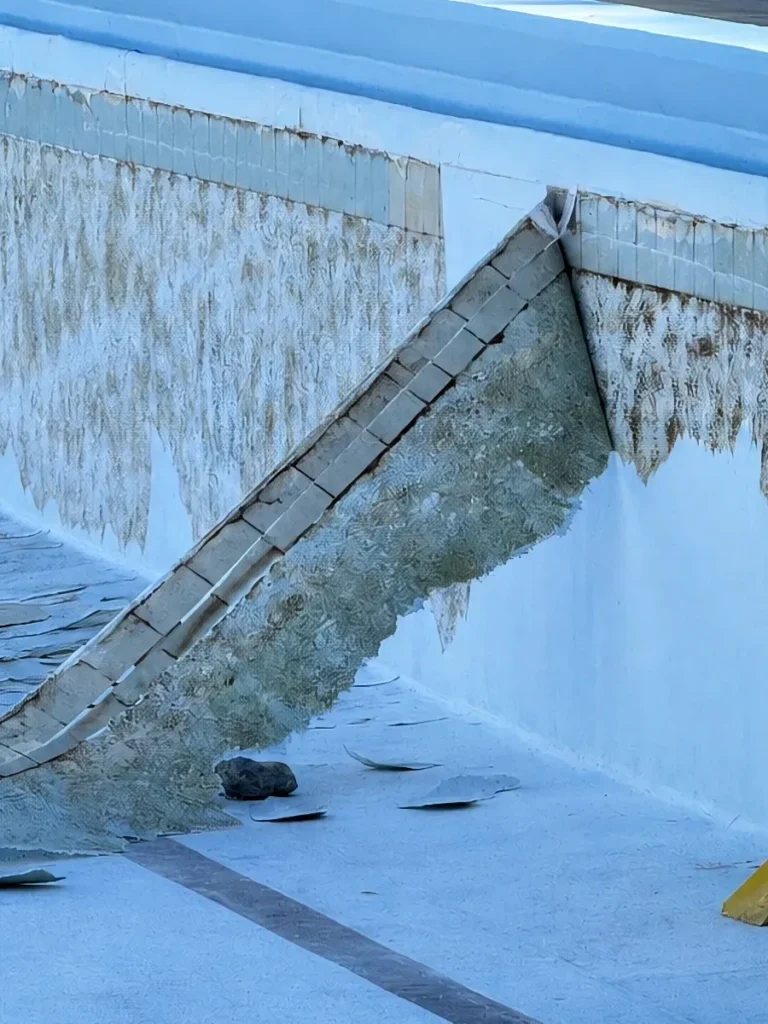
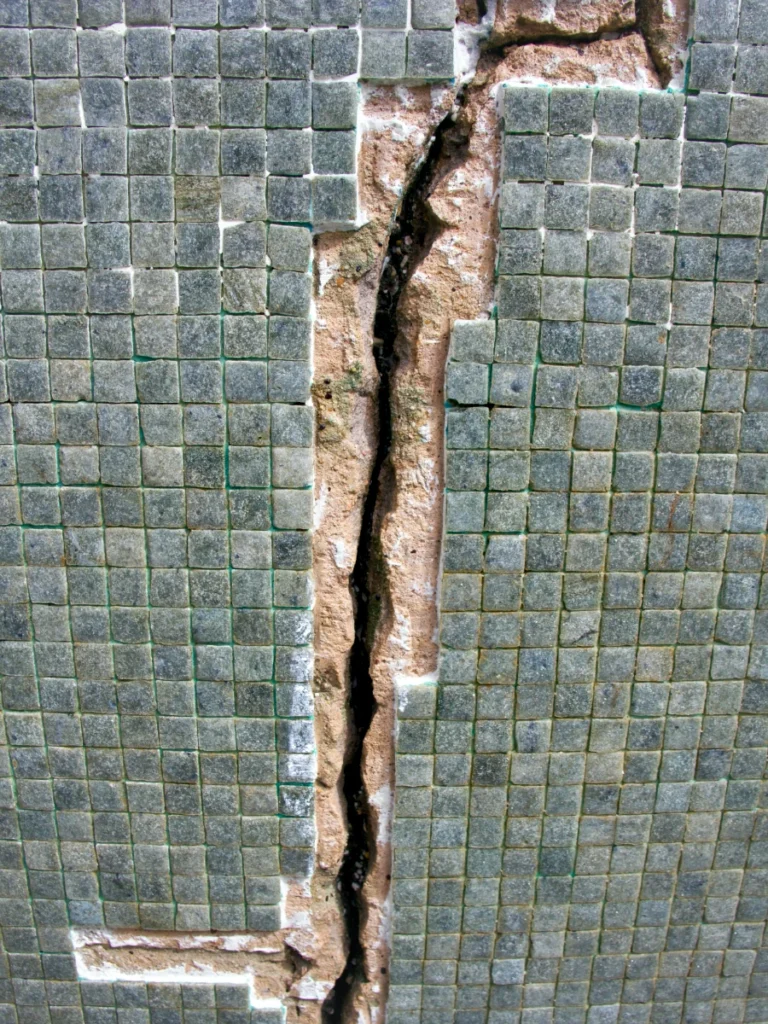
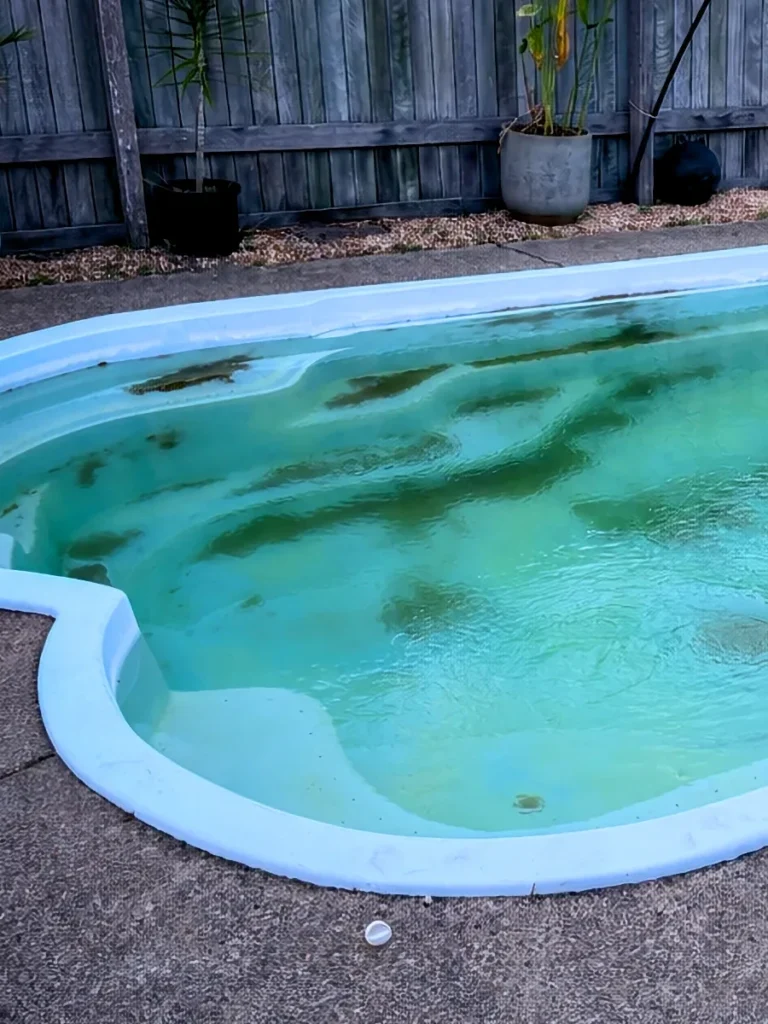
Every pool is assessed individually, but the work generally follows five stages—from confirming the scope and preparing the existing surface to installing the reinforced lining and applying the selected finish.
We review the pool details and photographs and arrange a site inspection where required. The existing fibreglass lining is checked for worn topcoats, cracks, hollow areas, delamination and moisture damage. Once empty, its bond to the concrete shell can be assessed and the final scope confirmed.
Degraded topcoat and loose or separated laminate are removed back to firmly bonded material. Retained fibreglass is cleaned and mechanically prepared, while exposed concrete, moisture-affected areas and concealed deterioration are identified. This creates a sound base for local repairs and the new lining.
Cracks, hollow areas, delaminated sections and exposed concrete are treated according to their condition and extent. Local laminate is rebuilt where required, and repaired areas are filled and levelled to integrate the existing fibreglass and concrete into a stable profile.
A reinforced fibreglass lining is applied across the prepared existing system to form one continuous interior rather than a series of local patches. Additional reinforcement is incorporated over rebuilt or treated areas where required. The completed lining creates an even foundation for the selected AquaGuard finish.
Two UV-stabilised AquaGuard top coats are applied in the selected colour, followed by the chosen speckle finish. Once cured, the resurfaced interior is inspected and applicable fittings are refitted. Guidance is then provided for refilling, initial water balancing and ongoing care.
Share what you can see and what you would like to improve. Details about worn topcoat, hollow areas, cracking, leaks or previous repairs help us prepare for the first review; the bond between the lining and concrete can only be fully assessed after emptying.

Fibreglass-lined concrete pool resurfacing enquiry
Often, firmly bonded sections of the existing lining can remain, but the decision is based on their condition rather than age alone. Hollow, lifted, deteriorated or moisture-affected laminate must be removed back to sound material, and exposed concrete or fibreglass repaired and levelled. Cracks, penetrations and movement details are treated separately before a continuous reinforced lining is installed across the prepared interior. The final removal scope is confirmed after the pool is emptied and the existing bond can be systematically assessed.
Delamination may appear as a raised sheet or bubble, a soft or flexible area, flaking around an edge, or a section that sounds hollow when lightly tapped. Water may be released when a failed area is opened. The visible boundary can be smaller than the separation underneath, so tapping alone cannot confirm the full extent. A systematic inspection is needed to map unstable areas and determine whether the separation is limited to the surface or extends into the original laminate.
A small, clearly defined delaminated area may be suitable for local rebuilding if the surrounding laminate is dry, stable and firmly bonded. Multiple hollow areas, widespread lifting or separation associated with movement usually require more extensive removal and a continuous resurfacing system. The decision is made progressively: unstable material is removed until sound laminate is reached, then the depth and spread of the defect can be assessed. Covering hollow material without removing it is not a durable repair.
Pool size is only one part of the price. The existing surface, access, pool shape, fittings and amount of preparation can have a greater effect. Costs can increase where failed paint, tiles or a vinyl liner must be removed, or where cracks, osmosis, hollow areas, corrosion, movement or an uneven substrate need repair. A useful quotation should state what removal, preparation, repairs, lining, finish and clean-up are included so different proposals can be compared on the same scope.
Send us a few photos and our team can help identify the likely issue and the most suitable next step.