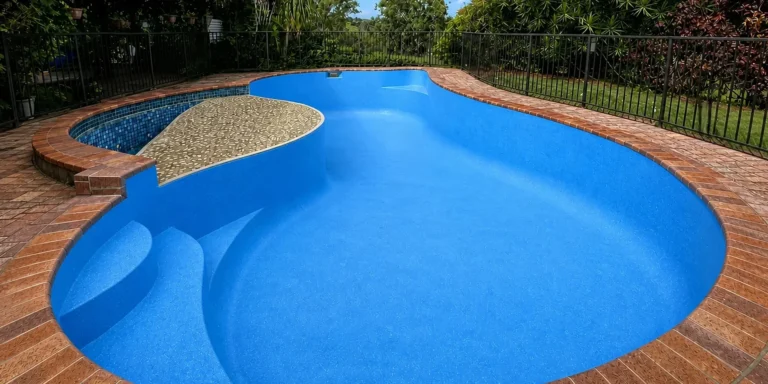
Delaminated areas may sound hollow when tapped, feel soft under pressure, form raised sheets or bubbles, crack around their edges, or release water when opened. On a resurfaced pool, separation may be between the newer lining and old substrate; in a moulded shell, it may be within the original laminate.
The visible boundary is not always the full boundary. The pool requires systematic inspection and progressive removal until firmly bonded material is reached. Depth and spread determine whether a local rebuild is suitable or more extensive reconstruction is required.
The extent and location of the visible problem
The condition of the surrounding pool surface
Likely causes and the most suitable repair approach
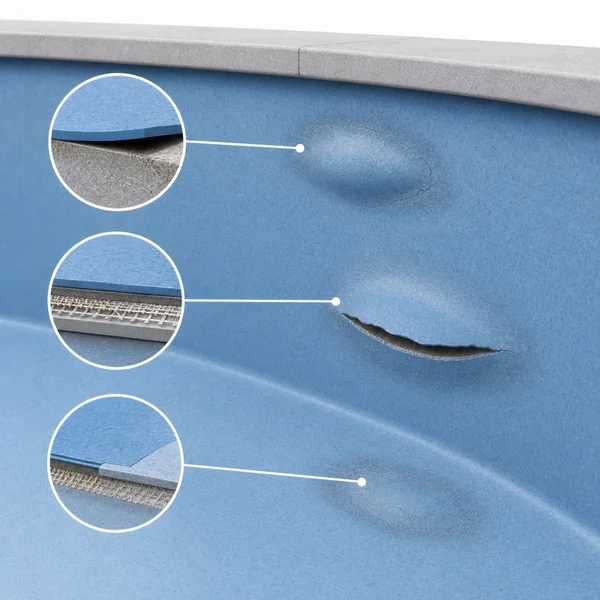
Delamination is a loss of adhesion between fibreglass layers, between a lining and the original shell, or beneath an earlier repair. It can develop where the substrate was contaminated or damp, preparation was inadequate, resin was under-cured, air was trapped during laminating, or incompatible materials were combined. Age, water ingress and repeated movement can enlarge a local defect.
Once the bond fails, the affected layer can flex independently and allow moisture beyond the visible edge. Covering it with another coating does not restore the missing bond and can conceal the true extent.
Fibreglaze maps hollow and unstable areas, removes separated laminate and follows the defect to sound, firmly bonded material. The exposed substrate is cleaned, dried as necessary and feathered so the new repair overlaps and transfers load into the surrounding laminate.
The lost section is rebuilt with compatible resin and multiple fibreglass layers appropriate to its depth and location. After fairing, the repair is incorporated into the continuous Enduratec lining. Extensive or movement-related failure may require additional structural investigation.
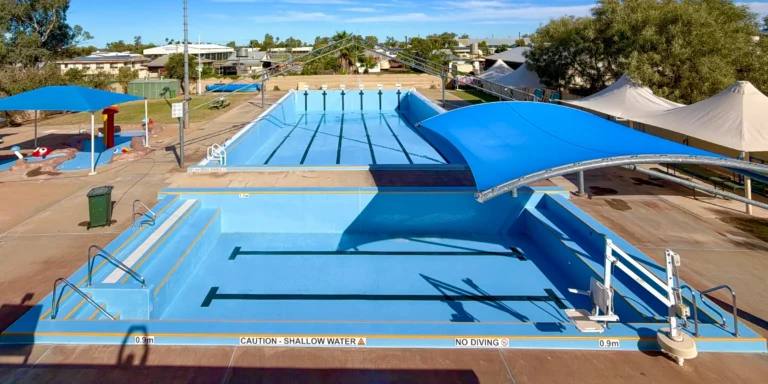
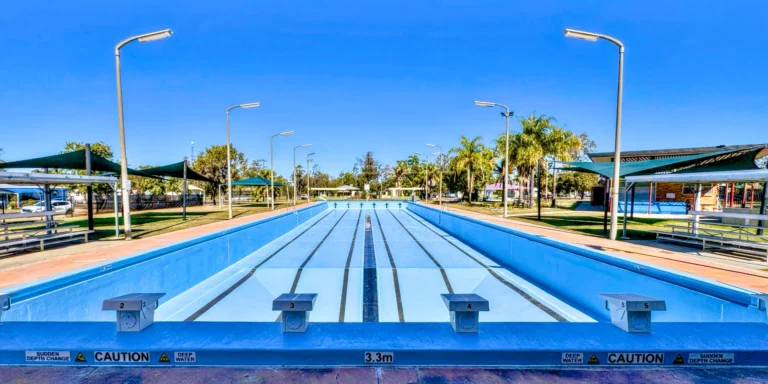
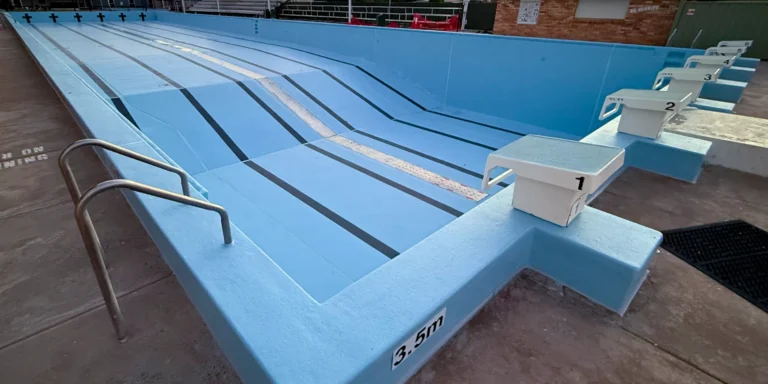
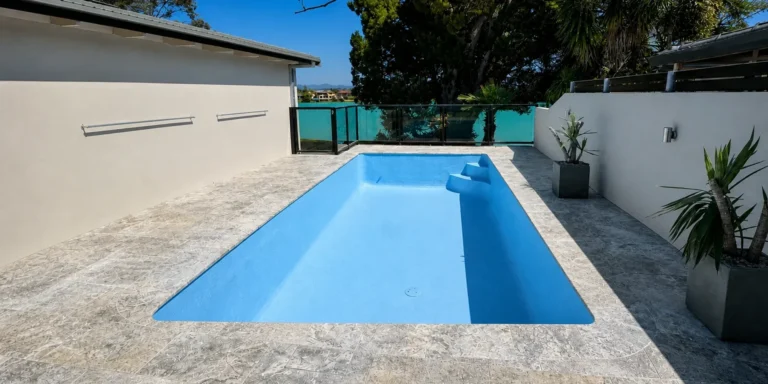
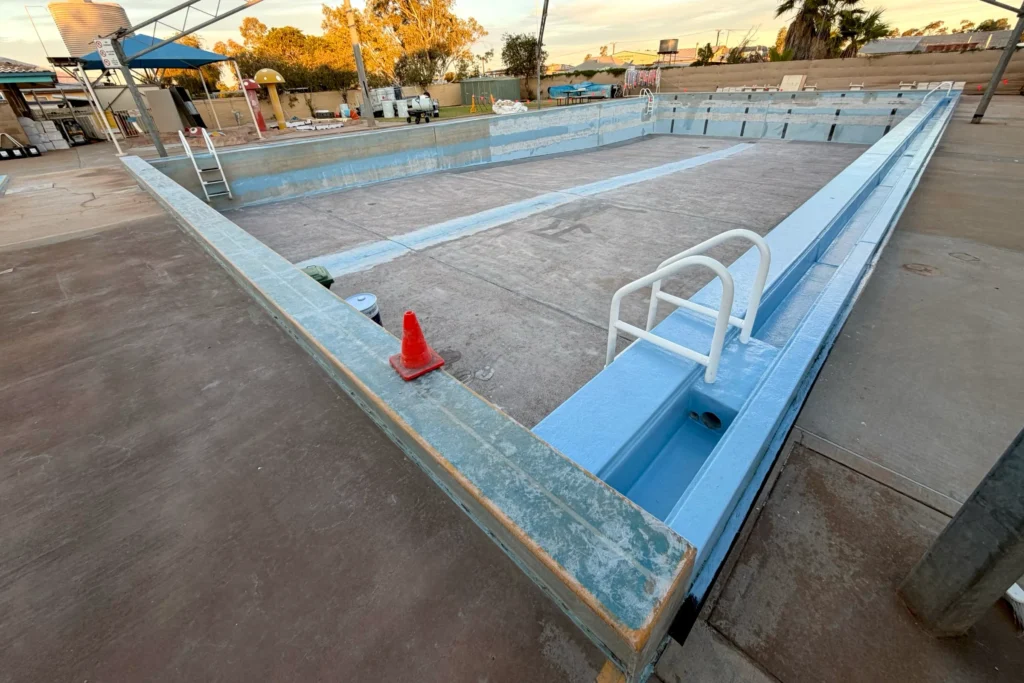
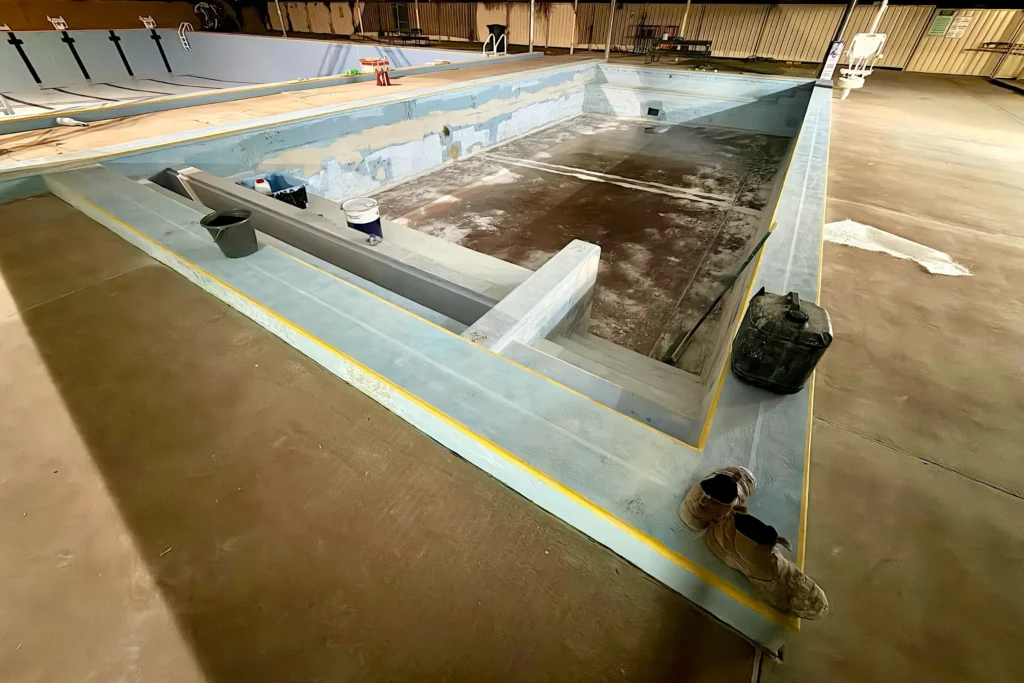
These photographs show preparation and repair stages from projects involving this pool problem. The exact approach is confirmed after inspection and once the pool has been emptied and the shell condition is exposed.
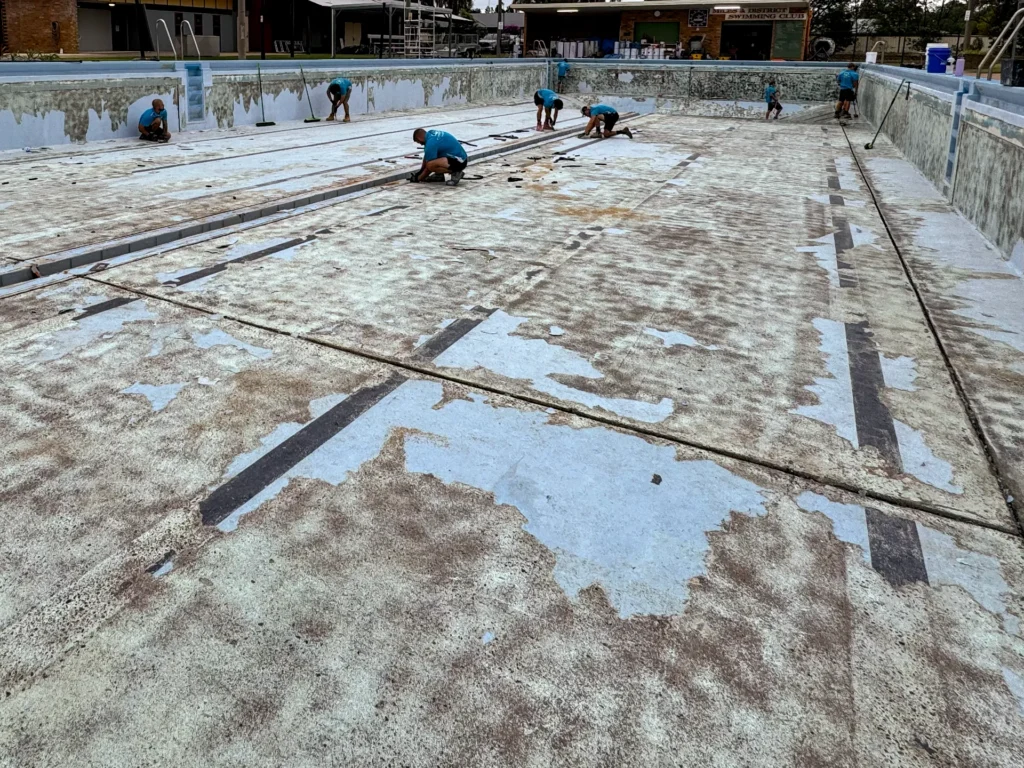
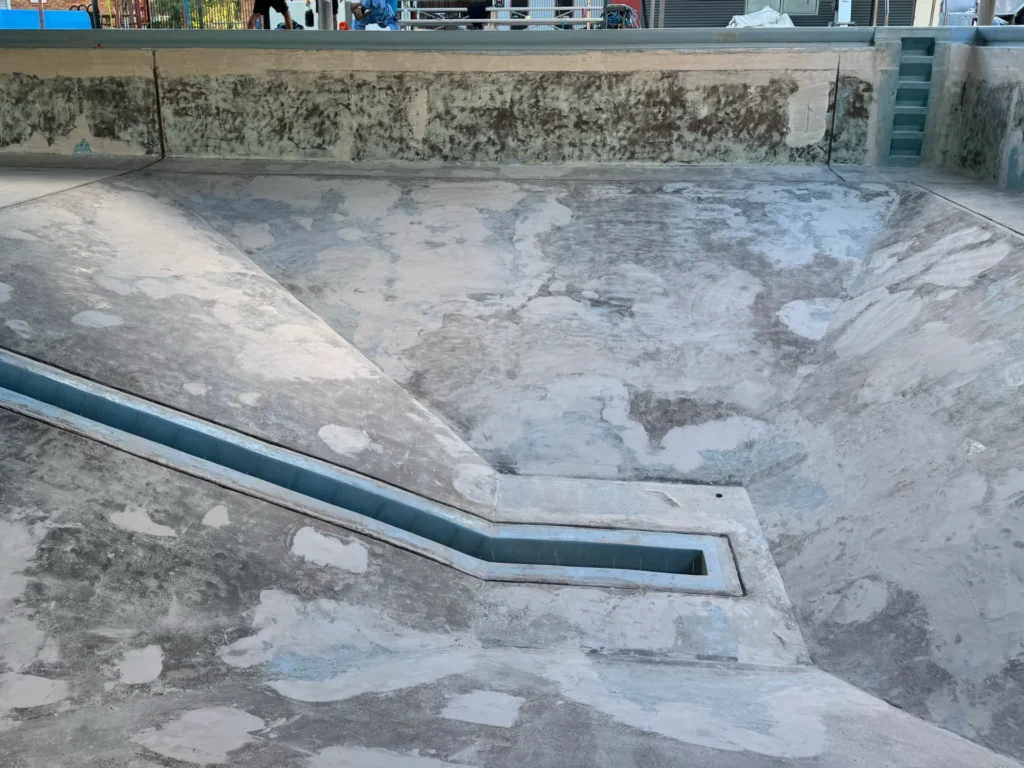
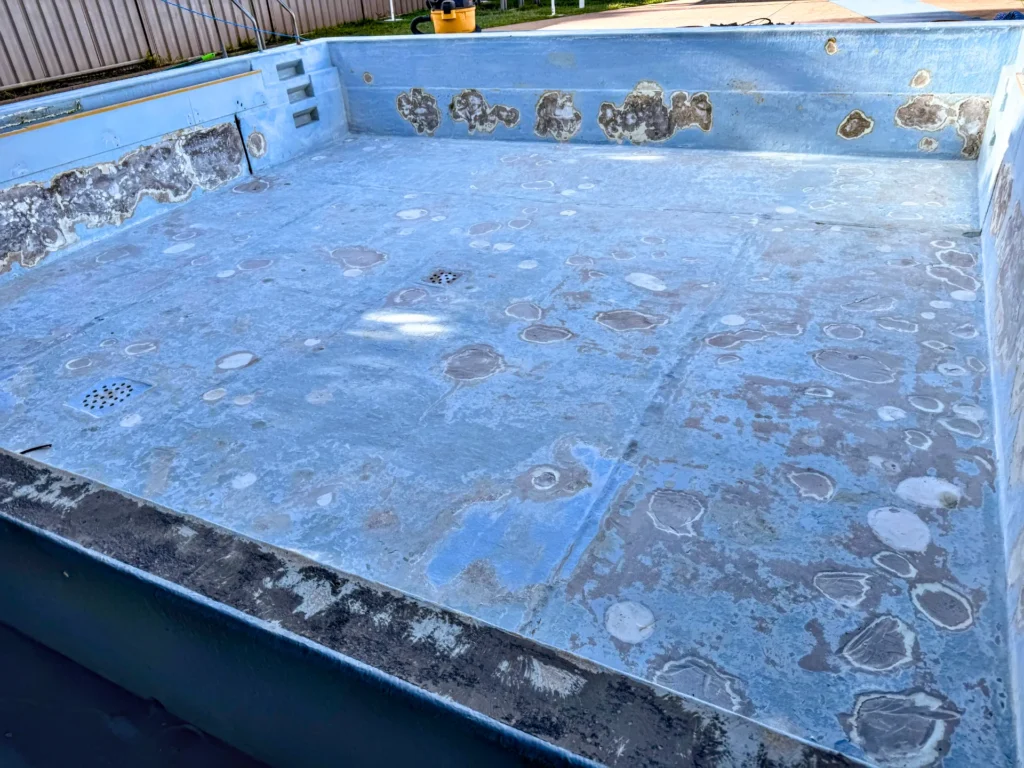
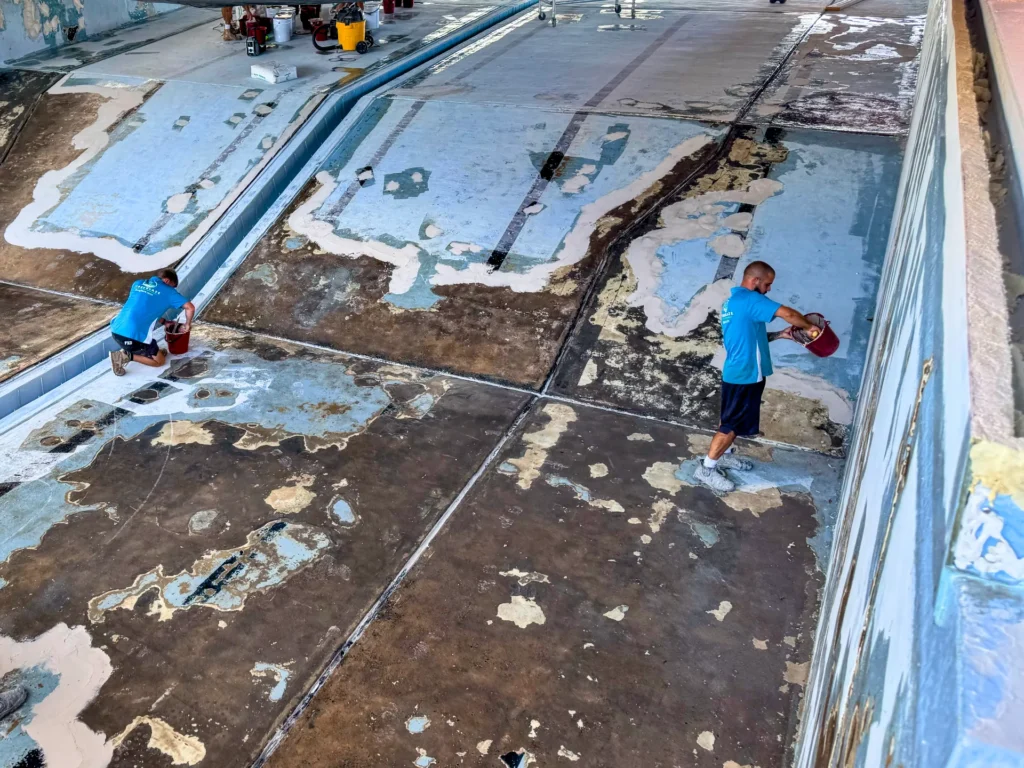
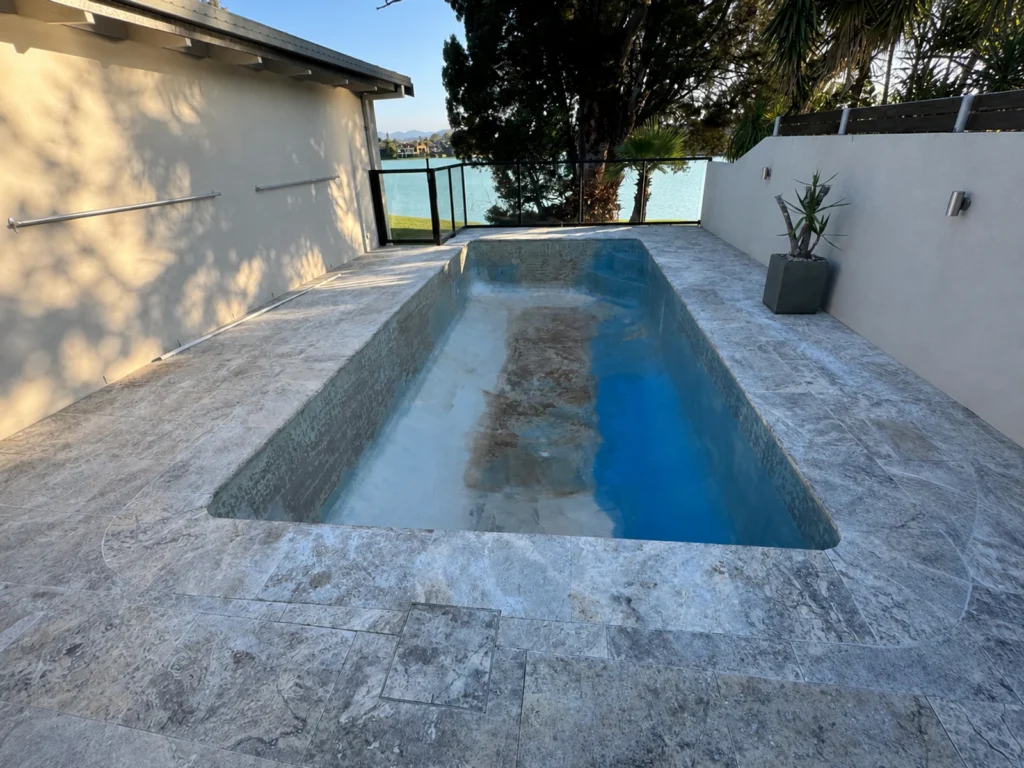
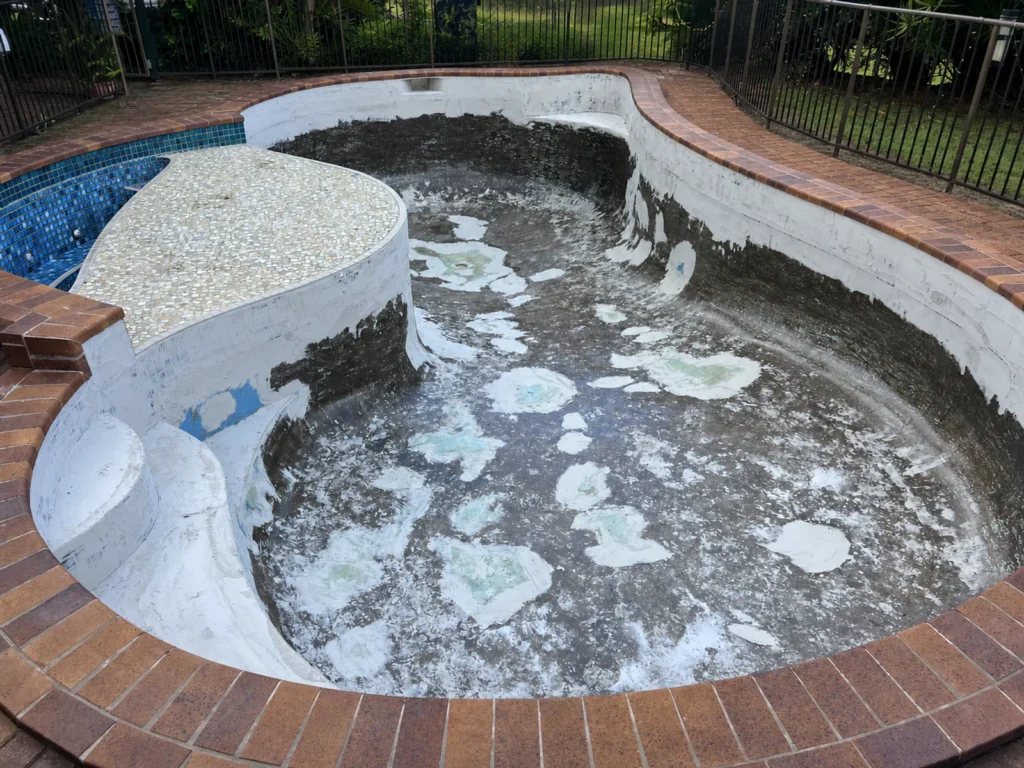
Every pool is assessed individually, and the precise repair depends on the shell, substrate and site conditions. Where repair is suitable, the work generally follows five stages—from confirming the scope through to the reinforced lining, finish and handover.
We review the pool details and photographs and arrange a site inspection where required. Raised, hollow or poorly bonded areas, previous repairs and moisture exposure are considered. Once the pool is empty, tap-testing and closer inspection can confirm the extent of delamination and the final repair scope.
Hollow, poorly bonded or delaminated areas are identified by visual inspection and tap testing. Defective material is removed back to a stable, well-bonded edge, and the exposed substrate is checked for moisture, contamination and deterioration. Prepared margins are cleaned and tapered for repair and relining.
Prepared delaminated areas are treated according to their depth and extent. Removed sections and surrounding transitions are filled and levelled to restore a continuous profile, while any additional surface defects are addressed. The repaired shell then provides a stable base for the complete reinforced lining.
A reinforced fibreglass lining is applied across the prepared pool interior to form one continuous system. Additional reinforcement is incorporated over rebuilt or previously delaminated sections where required. The completed lining bridges repaired transitions and creates an even foundation for the selected AquaGuard finish.
Two UV-stabilised AquaGuard top coats are applied in the selected colour, followed by the chosen speckle finish. Once cured, the completed surface is inspected, applicable fittings are refitted and the hydrostatic valve is replaced where required. Guidance is then provided for refilling, initial water balancing and ongoing care.
Tell us where the affected areas are, how they feel or sound, and whether they have cracked, lifted or released water. The visible edge may not show the full extent, so representative areas may need to be opened before the repair scope is confirmed.

Pool delamination assessment enquiry
Delamination may appear as a raised sheet or bubble, a soft or flexible area, flaking around an edge, or a section that sounds hollow when lightly tapped. Water may be released when a failed area is opened. The visible boundary can be smaller than the separation underneath, so tapping alone cannot confirm the full extent. A systematic inspection is needed to map unstable areas and determine whether the separation is limited to the surface or extends into the original laminate.
A small, clearly defined delaminated area may be suitable for local rebuilding if the surrounding laminate is dry, stable and firmly bonded. Multiple hollow areas, widespread lifting or separation associated with movement usually require more extensive removal and a continuous resurfacing system. The decision is made progressively: unstable material is removed until sound laminate is reached, then the depth and spread of the defect can be assessed. Covering hollow material without removing it is not a durable repair.
Delamination occurs when the bond fails between fibreglass layers or between a newer lining and the original pool. Contributing factors can include moisture or contamination beneath a repair, inadequate surface preparation, trapped air, incomplete resin cure, incompatible materials, ageing, water ingress and repeated shell movement. Once the layers can flex independently, the separation may extend beyond the visible defect. Applying another coating over the area does not restore the missing bond beneath it.
In most cases resurfacing will be a far more practical and cost-effective alternative. An assessment will determine whether resurfacing is appropriate for your pool.
Send us a few photos and our team can help identify the likely issue and the most suitable next step.