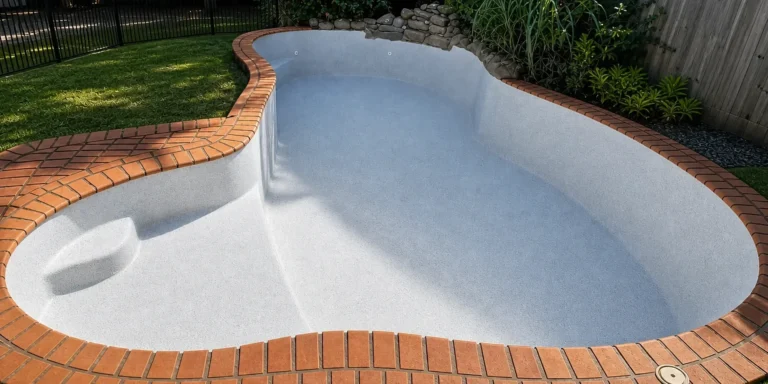
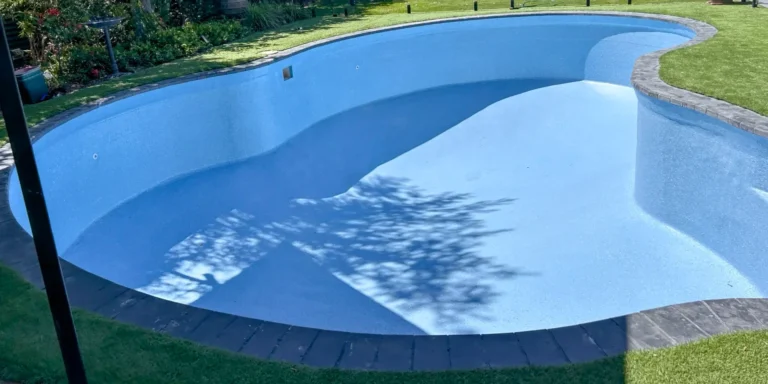
In November 2025, Fibreglaze restored the 9 x 3.5 m vinyl-lined pool in Carseldine, Queensland. The pool presented with a deteriorated vinyl liner, water loss and leakage, and a stained, rough or dated interior, requiring careful assessment and preparation before resurfacing.
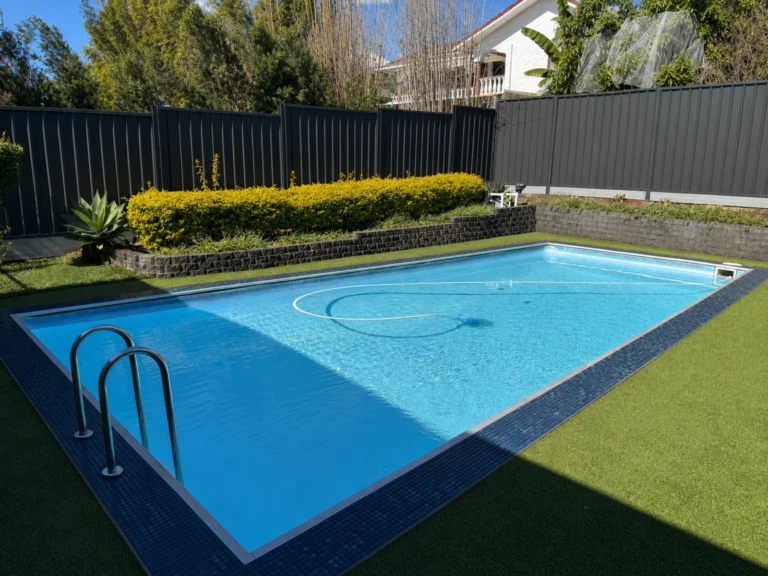
The existing vinyl liner was removed and disposed of, the identified source of water loss was repaired, and surface irregularities were corrected with resin-based screeding and filler. A new structural fibreglass laminate was installed, and the pool was completed in Lagoon Blue Speckle using the Fibreglaze Enduratec finishing system.
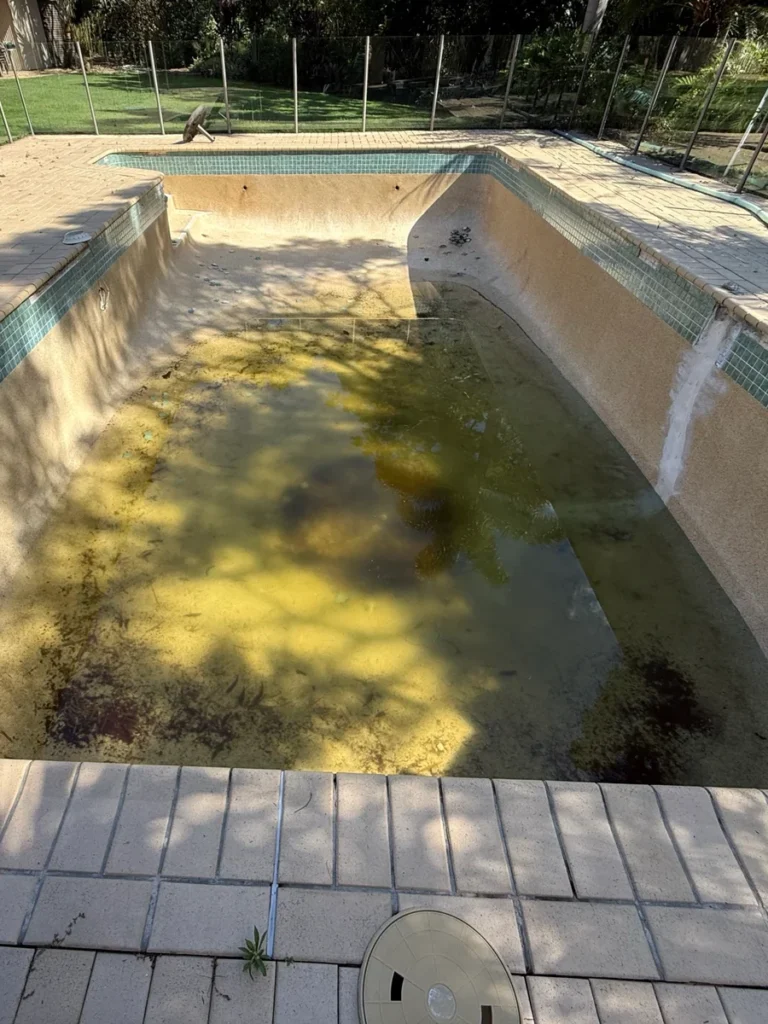
These photographs follow the work from the pool’s original condition through preparation and repair to the completed finish.
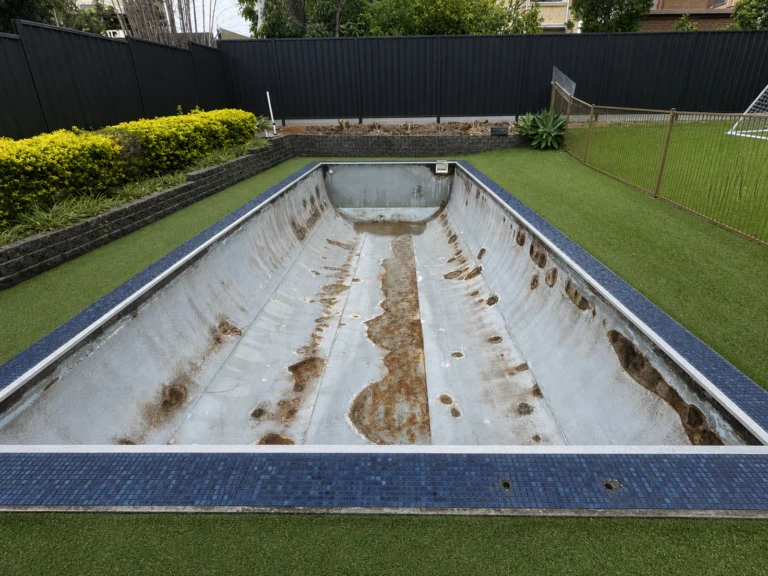
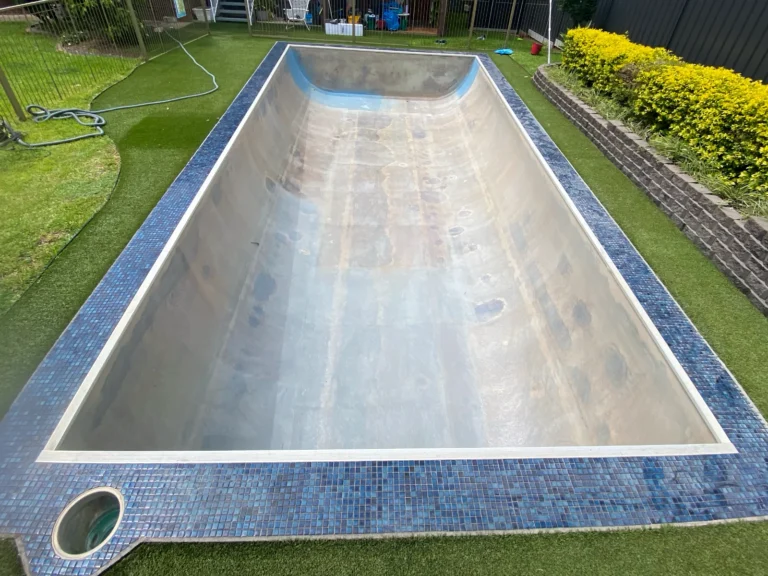
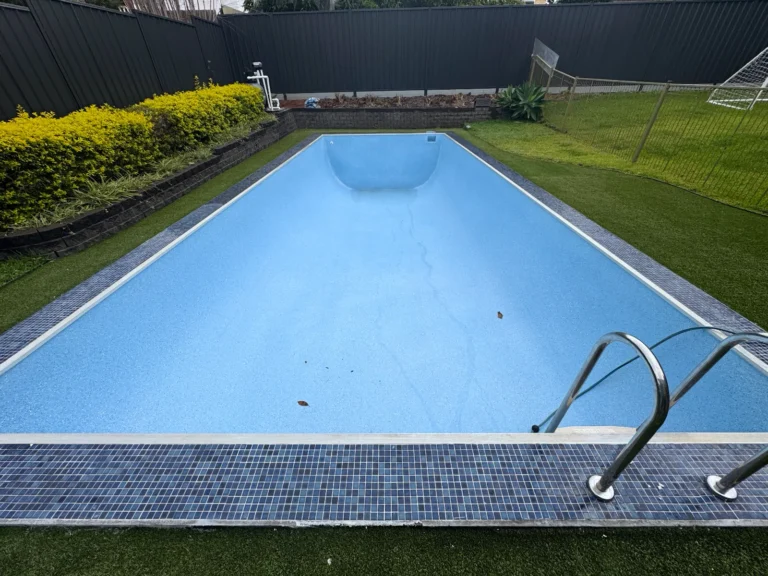
These were the main pool conditions recorded for this project. Select an issue to learn more about its common signs, possible causes and repair considerations.
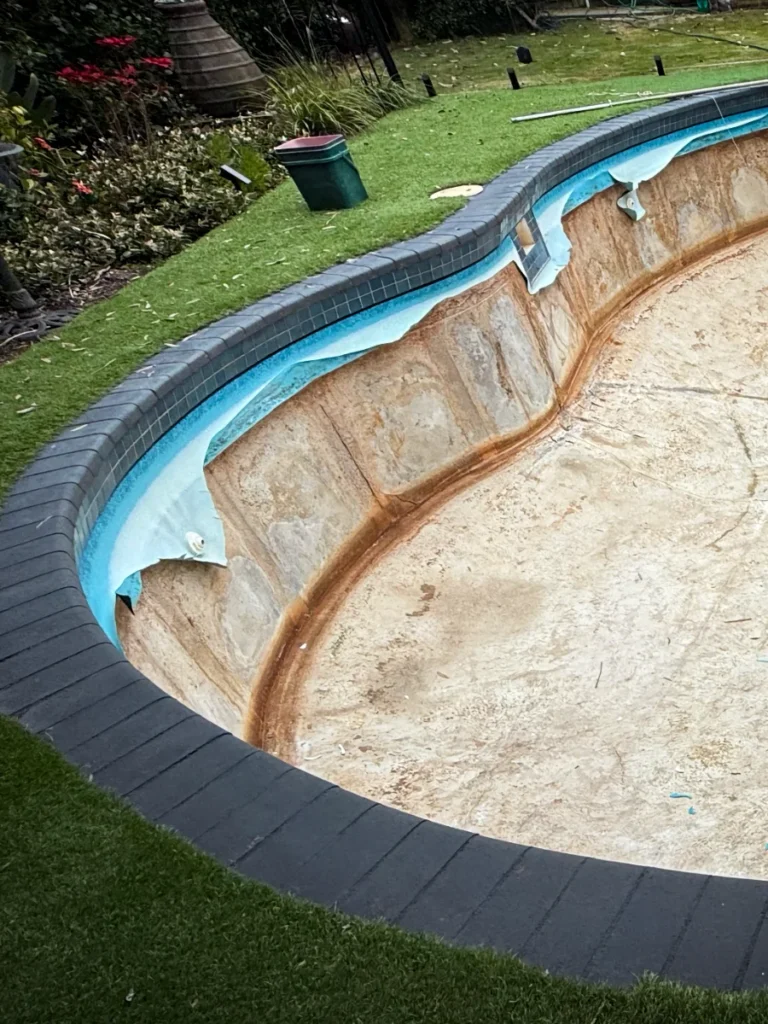
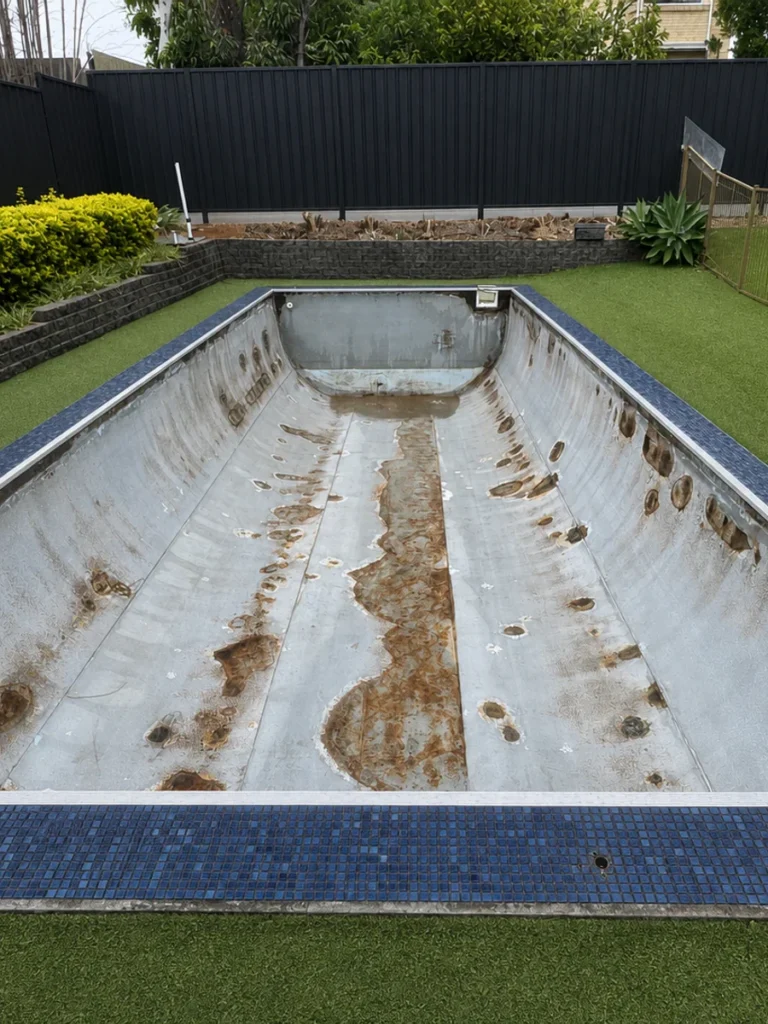
Additional views of the preparation, repair work and completed finish.
We had a leaking Vinyl Liner pool. Fibreglaze did a fantastic job making it look like new again.
Answers to common questions about the pool conditions and restoration work shown in this project.
A 24-hour bucket test can compare pool water loss with normal evaporation. Fill a bucket with pool water, place it securely on a pool step and mark the water level inside the bucket and the pool level outside it. Keep normal circulation running, avoid swimming, backwashing and water features, then compare both levels after 24 hours. If the pool falls noticeably more than the water inside the bucket, a leak is likely. Repeat the test if it rains or the test conditions change.
Conversion removes the old liner, so liner tears, open seams and wrinkles are no longer part of the finished surface. It does not automatically repair every water-loss source. Leaks can also occur in plumbing, fittings, penetrations or the underlying structure. Once the liner is removed, the exposed pool can be inspected for corrosion, cracks, movement and damaged transitions before the continuous fibreglass lining is installed.
Pool stain colour alone does not confirm the cause. Brown or rust-coloured marks may involve iron or organic debris; green, grey or black marks can involve algae, copper, manganese or material trapped in a rough surface. Location, texture, recent water changes and the way a small test area responds are more useful than colour by itself. The source also needs attention, such as metals in fill water, corroding equipment, poor circulation or debris, otherwise the stain can return after cleaning.
It depends on the source of the leak. If the leak is caused by cracks or deterioration in the pool shell, repairs will form part of the resurfacing work rectifying any associated leaks. Leaks from plumbing, fittings or other components need to be identified separately.
Many stains can be treated without resurfacing when the underlying finish is sound and the stain type is correctly identified. Organic, metal and mineral deposits require different treatment approaches, so the safest starting point is water testing and a controlled test on a small area. Resurfacing becomes more relevant when stains are deeply embedded, repeatedly return through a porous surface, or occur with widespread roughness, pitting, peeling or earlier failed repairs. Correcting the stain source remains important after either treatment.
It depends on the pool condition and the owner’s priorities. A replacement liner may suit a sound pool where the flexible lining system is to be retained. Conversion is more involved, but replaces the liner, seams and wrinkle-prone surface with a continuous bonded interior. The underlying structure still needs inspection and repair, so conversion should not be used to conceal corrosion, movement or substrate damage. Compare the complete scopes, maintenance and future replacement cycle rather than upfront price alone.
Send us a few photos and our team can help identify the likely issue and the most suitable next step.