A deteriorated liner may show fading, brittleness, wrinkles, stretching, open seams, tears, patches or edges that have slipped from the track. Water loss can occur through the liner, but leaks may also come from fittings, plumbing or the structure behind it.
The flexible liner conceals much of the pool’s construction. Its removal can reveal corrosion, cracked or uneven concrete, damaged panels, movement, moisture and poorly supported transitions. Suitability for conversion and the final repair scope can only be confirmed after those concealed areas are inspected.
The extent and location of the visible problem
The condition of the surrounding pool surface
Likely causes and the most suitable repair approach
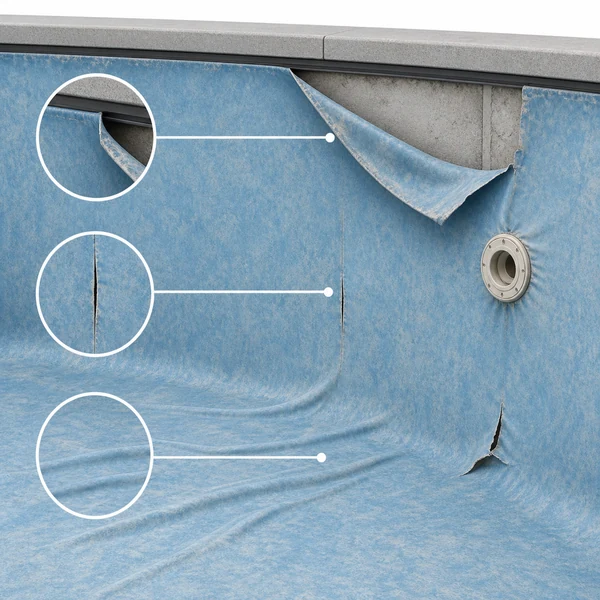
Sunlight, sanitising chemicals, unbalanced water chemistry, repeated temperature changes and age can gradually make vinyl fade, lose flexibility or become brittle. Wrinkles or movement may also develop after water enters behind the liner, the liner stretches, the pool is drained, or the underlying walls and floor move or lose support.
Sharp substrate irregularities, damaged fittings, failed seams and previous repairs can create local stress or leakage. Because construction varies between vinyl-lined pools, the visible liner defect alone does not establish the condition or repair needs beneath it.
Fibreglaze removes the existing liner and inspects the exposed concrete, panel, metal or mixed construction. Corrosion, cracks, voids, damaged sections, fittings and transitions are repaired or adapted as required, and the walls and floor are levelled to create a sound, stable profile.
The Enduratec System is then installed across the prepared interior as a continuous, bonded reinforced fibreglass lining, replacing the flexible liner and its seams. Plumbing faults, unstable structural conditions or other work outside the lining are identified for separate action before the final scope is confirmed.
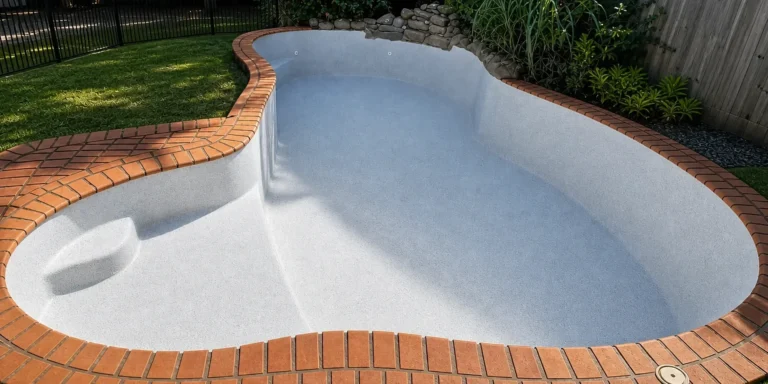
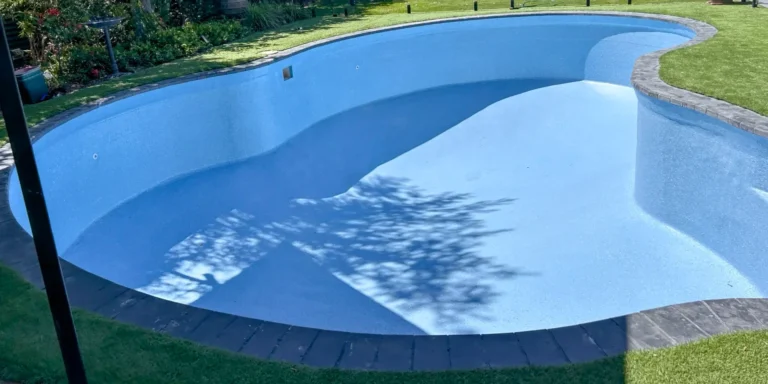
These photographs show preparation and repair stages from projects involving this pool problem. The exact approach is confirmed after inspection and once the pool has been emptied and the shell condition is exposed.
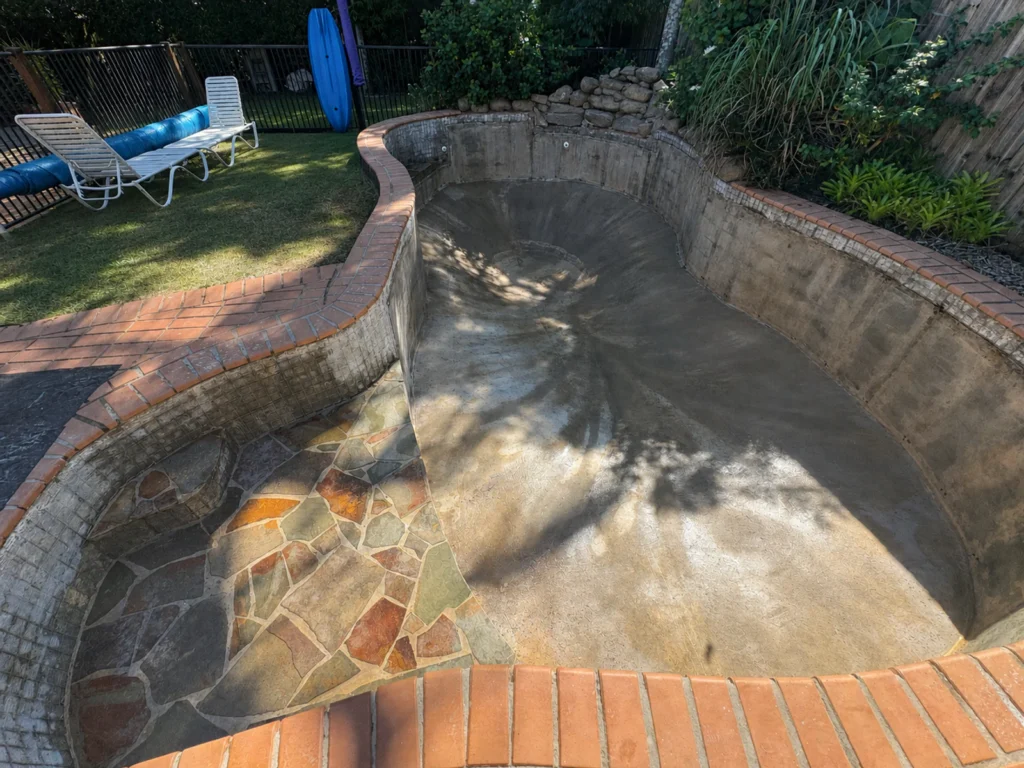
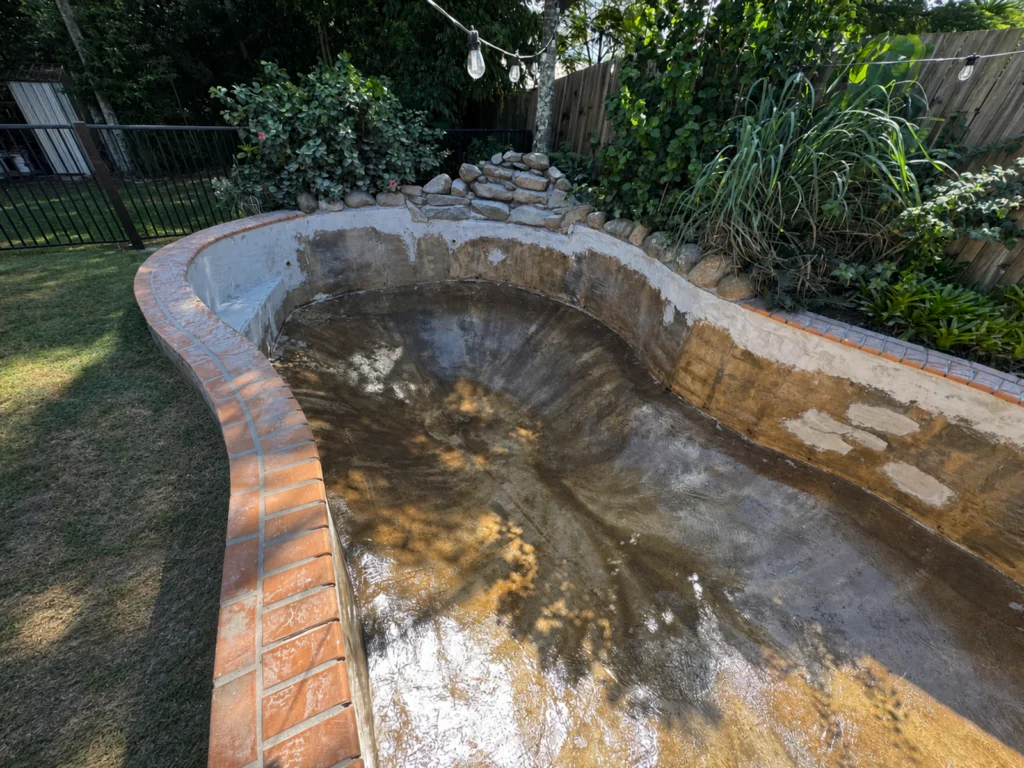
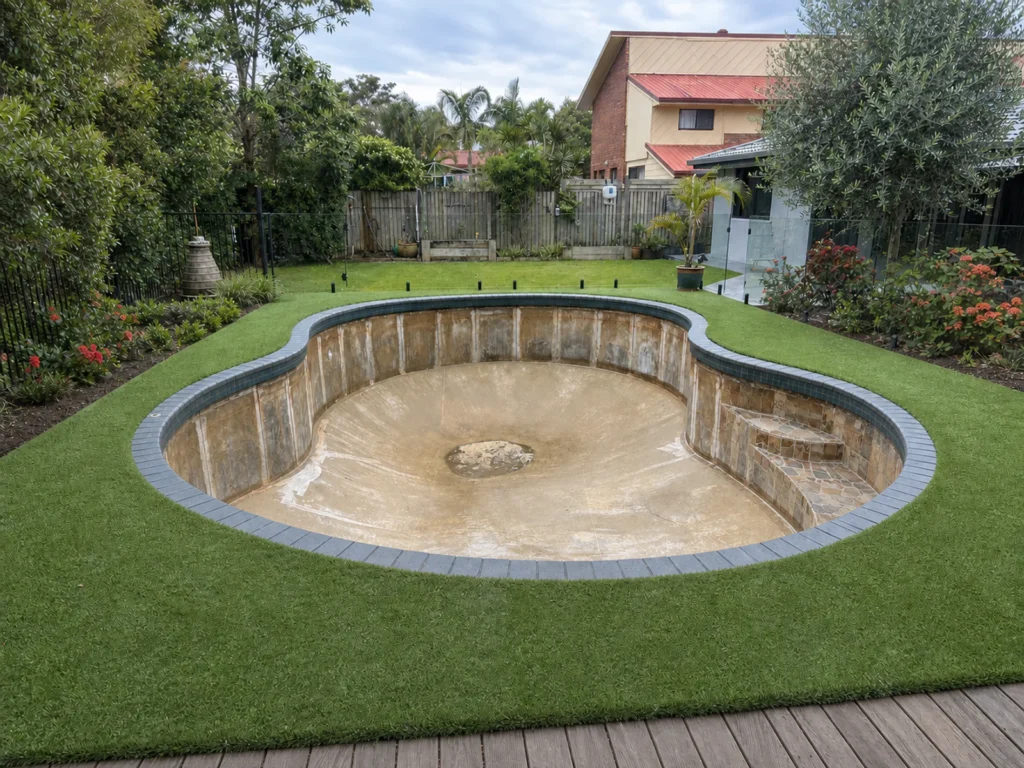
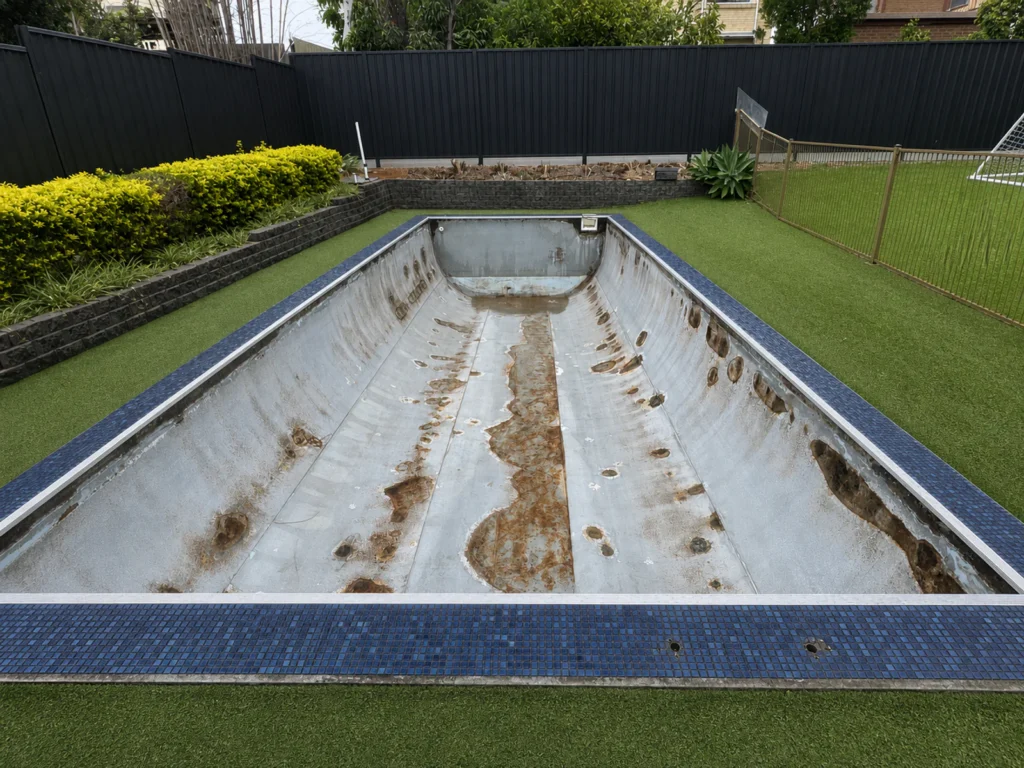
Every pool is assessed individually, and the precise repair depends on the shell, substrate and site conditions. Where repair is suitable, the work generally follows five stages—from confirming the scope through to the reinforced lining, finish and handover.
We review the pool details, photographs and known construction before arranging a site inspection where required. The deteriorated liner, fittings, access and visible movement are assessed, but concealed substrate condition can only be confirmed after the liner is removed. Any resulting scope change is discussed before work proceeds.
The deteriorated vinyl liner and redundant fixing components are removed to expose the supporting structure. Concrete, panel, metal or mixed substrates are cleaned and prepared, while corrosion, cracks, penetrations and wall-to-floor transitions are identified for repair. The surface is then made ready for the lining stages.
Corroded areas, cracks, voids and damaged substrate are treated according to the underlying construction. Fittings, penetrations and transitions are repaired or adapted as required, and the exposed interior is levelled to create a consistent, stable profile for the new reinforced lining.
A reinforced fibreglass lining is applied across the prepared walls, floor, steps and transitions to form one continuous bonded interior. Additional reinforcement is incorporated around treated areas and details where required. The completed lining replaces the flexible liner and forms the base for the selected finish.
Two UV-stabilised AquaGuard top coats are applied in the selected colour, followed by the chosen speckle finish. Once cured, the converted interior is inspected and applicable fittings are completed or refitted. Guidance is then provided for refilling, initial water balancing and ongoing care.
Tell us where the liner is faded, wrinkled, split, stretched or pulling away, and whether the pool appears to be losing water. The liner conceals much of the underlying construction, so conversion suitability and repair scope can only be confirmed after removal and inspection.

Deteriorated vinyl liner conversion enquiry
Conversion removes the old liner, so liner tears, open seams and wrinkles are no longer part of the finished surface. It does not automatically repair every water-loss source. Leaks can also occur in plumbing, fittings, penetrations or the underlying structure. Once the liner is removed, the exposed pool can be inspected for corrosion, cracks, movement and damaged transitions before the continuous fibreglass lining is installed.
It depends on the pool condition and the owner’s priorities. A replacement liner may suit a sound pool where the flexible lining system is to be retained. Conversion is more involved, but replaces the liner, seams and wrinkle-prone surface with a continuous bonded interior. The underlying structure still needs inspection and repair, so conversion should not be used to conceal corrosion, movement or substrate damage. Compare the complete scopes, maintenance and future replacement cycle rather than upfront price alone.
Many in-ground vinyl-lined pools can be converted, but suitability depends on the structure concealed behind the liner. The pool may have concrete, metal, panel or mixed construction. Corrosion, movement, moisture, distortion or an unstable substrate may require additional repair or design input before a bonded lining is installed. An initial inspection can identify obvious constraints, but the final scope should allow for the condition revealed during strip-out rather than assuming every liner pool has the same base.
They are assessed individually and incorporated into the conversion detail. Serviceable steps and fittings may be retained and prepared, while damaged, corroded or unsuitable components may need repair, alteration or replacement. Junctions around the skimmer, returns, lights, drains and transitions are important because the lining must connect continuously to each penetration. Confirm which components are included, provisional or to be completed by separate licensed trades.
Send us a few photos and our team can help identify the likely issue and the most suitable next step.