
These routes share a continuous reinforced lining and AquaGuard finish, but the work before lining is different. New concrete begins with construction readiness and design coordination. Commercial resurfacing begins with an operating asset, its existing defects and the requirements for shutdown and return to service.
The first interior installed over a newly constructed concrete shell.
Concrete is not ready for lining on age alone. Curing, moisture, laitance, cracking, joints, penetrations and surface tolerances must be assessed, with the builder or designer confirming that the shell is released for surfacing where required.
Resurfacing planned around an existing facility and its operating requirements.
The scope must account for pool construction and defects as well as access, plant operation, shutdown requirements, markings, fittings and the agreed return-to-service programme.
Building a new pool for a council, school, resort or another commercial facility?
Drawings and photographs support a preliminary brief, but the final scope still depends on project review and inspection. For an existing residential pool, start with our Pool Resurfacing guide.
New concrete work is governed by the shell design and readiness. Commercial resurfacing is governed by the existing asset, the defects exposed and the facility program. Treating those briefs separately avoids hiding critical assumptions inside a generic resurfacing scope.
The shell, details and project information are reviewed before preparation begins. Builder release supports the process but does not replace assessment of the lining substrate.
Confirm dimensions, builder information, fittings, penetrations, joints and details that must remain active.
Review curing, moisture, laitance, contamination, cracks, voids, honeycombing and surface tolerances.
Remove weak material, treat identified defects and create the agreed profile before lining.
The facility, existing pool and operating constraints are reviewed together. The final repair scope is confirmed after the pool is emptied and the substrate can be inspected.
Gather drawings, pool history, known defects, plant information, access constraints and stakeholder requirements.
Coordinate isolation, access, closure, hold points, fixed events and the required reopening date.
Remove failed material, treat defects and detail fittings, joints, markings and nominated textured areas.
Both pathways culminate in a continuous reinforced fibreglass lining and selected AquaGuard finish. The preparation, repairs, active joints, fittings, markings, texture and handover requirements are defined for the individual project. Shell design, active movement, plumbing, groundwater or other work outside the lining may require separate input or trades.
Concrete readiness defines the new-pool route, while wear, cracking and water loss can affect an existing commercial pool. These conditions help direct investigation; they do not confirm the final lining or repair scope.
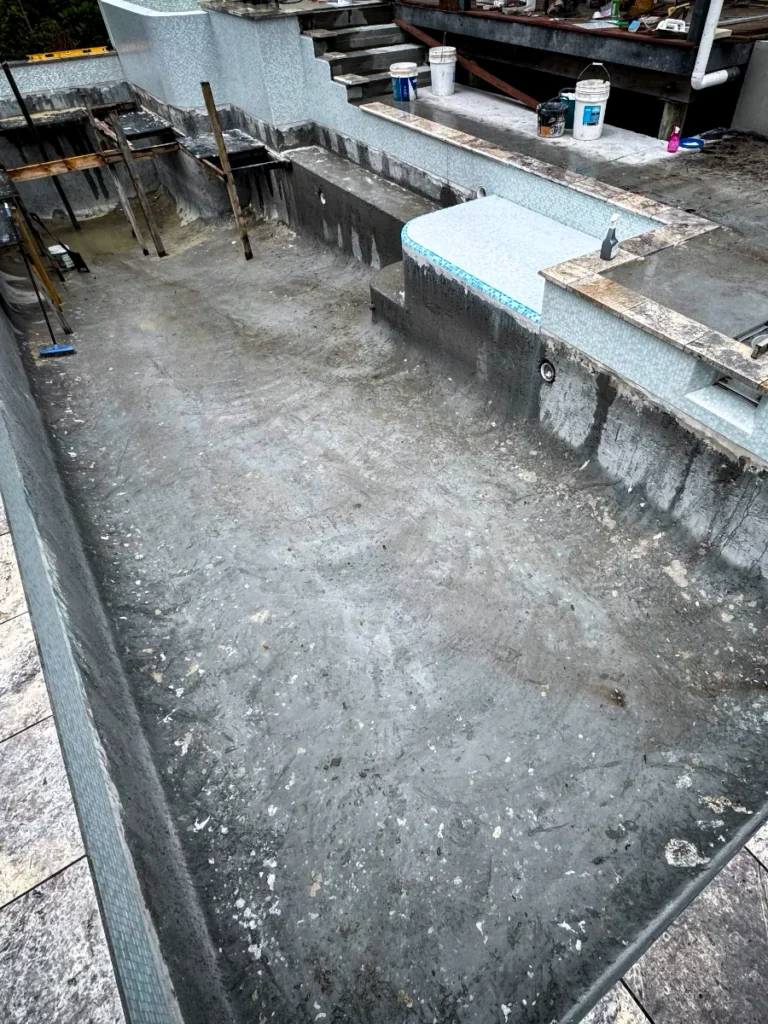
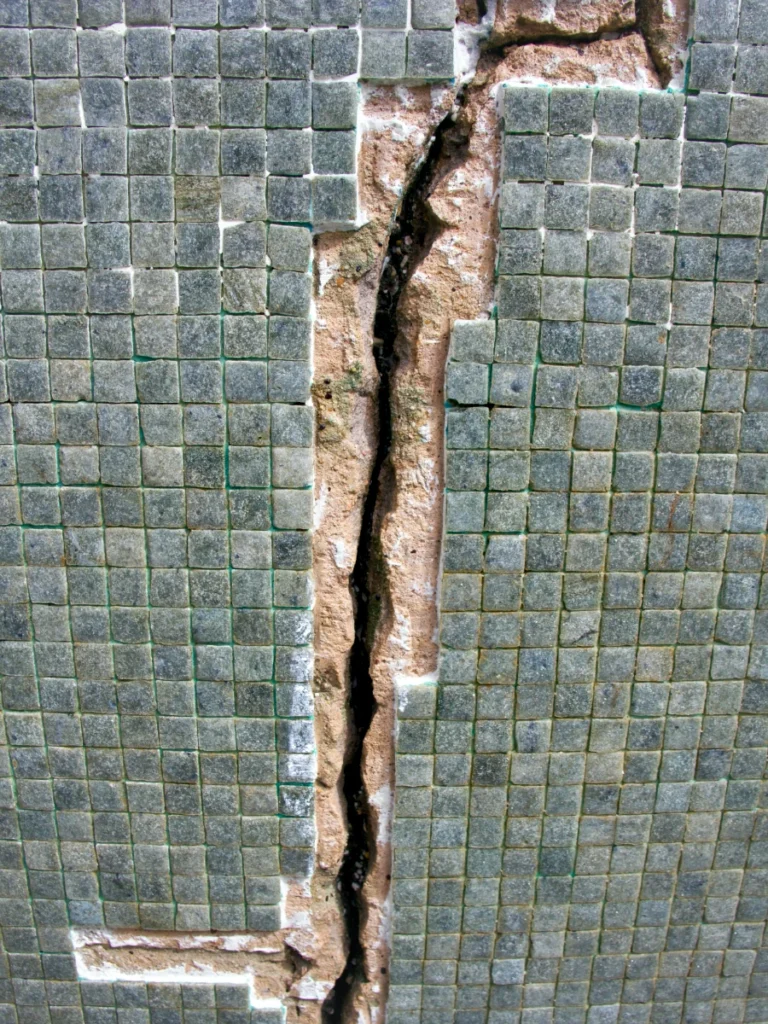
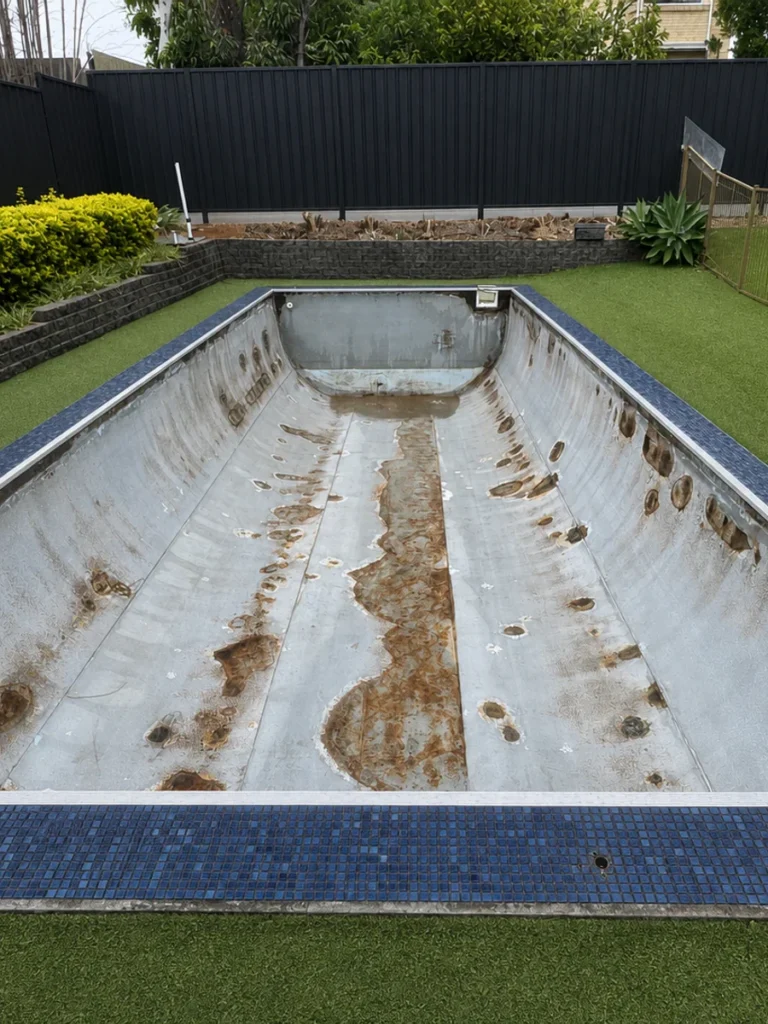
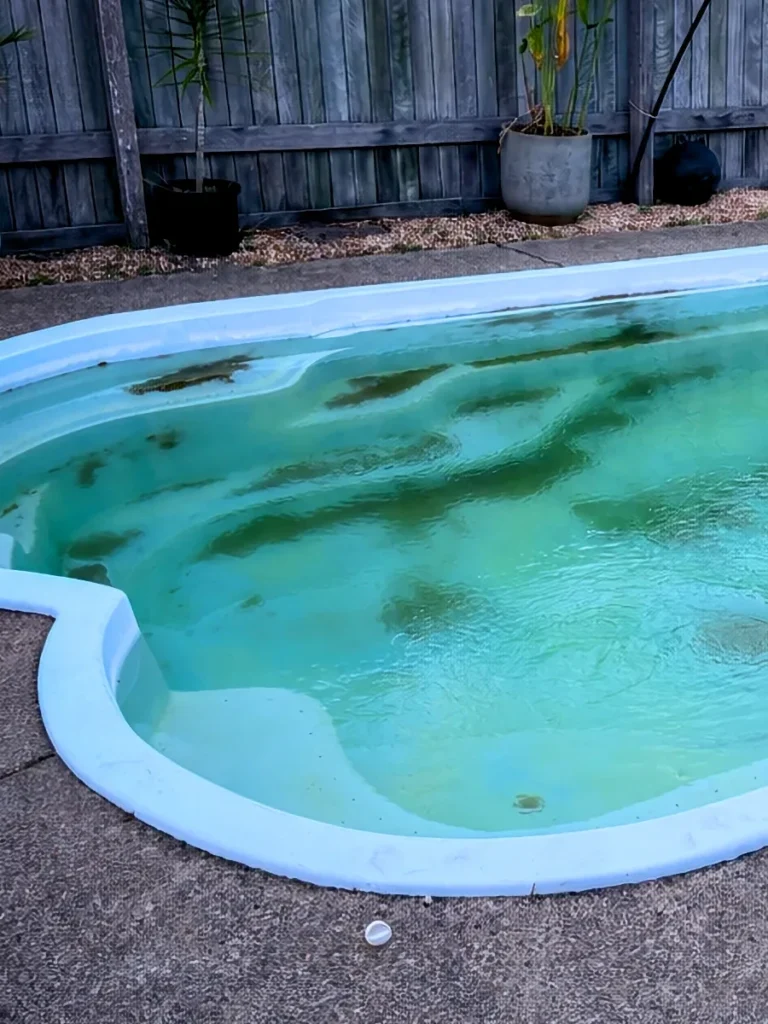
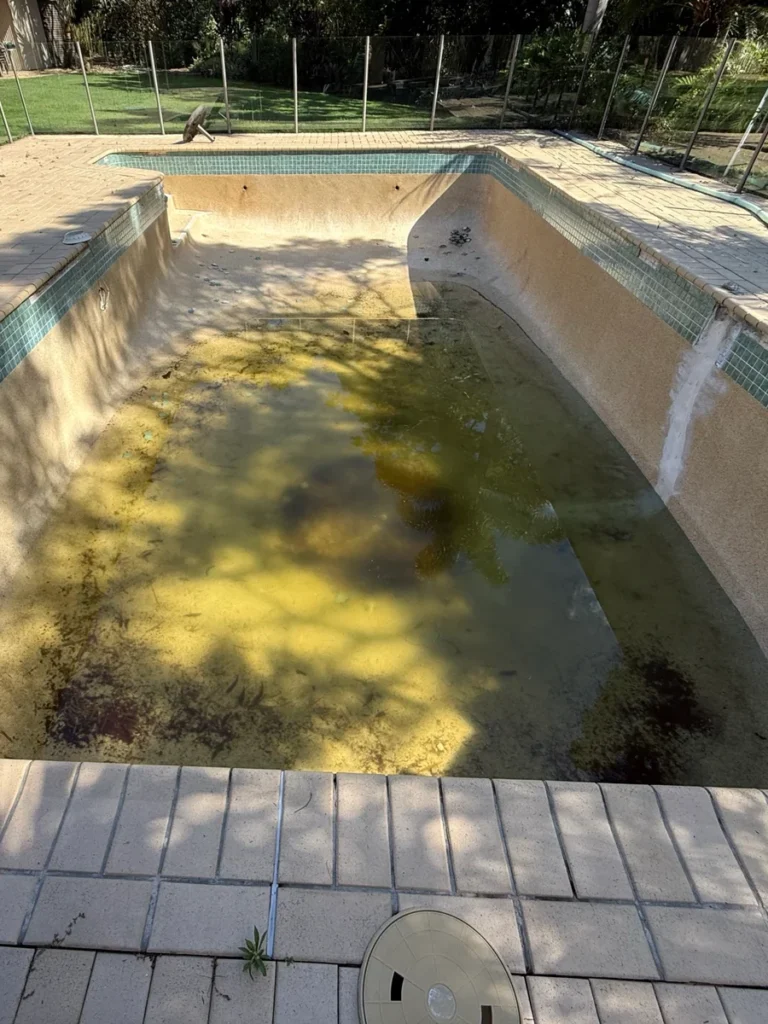
Cracks or water loss can result from conditions outside the lining scope, including active movement, joints, plumbing, fittings, groundwater or settlement. These require separate investigation and may require separate work.
These verified projects show the two briefs in practice: preparing a newly built concrete shell for its first interior, and resurfacing three existing pools within a public aquatic-centre project.
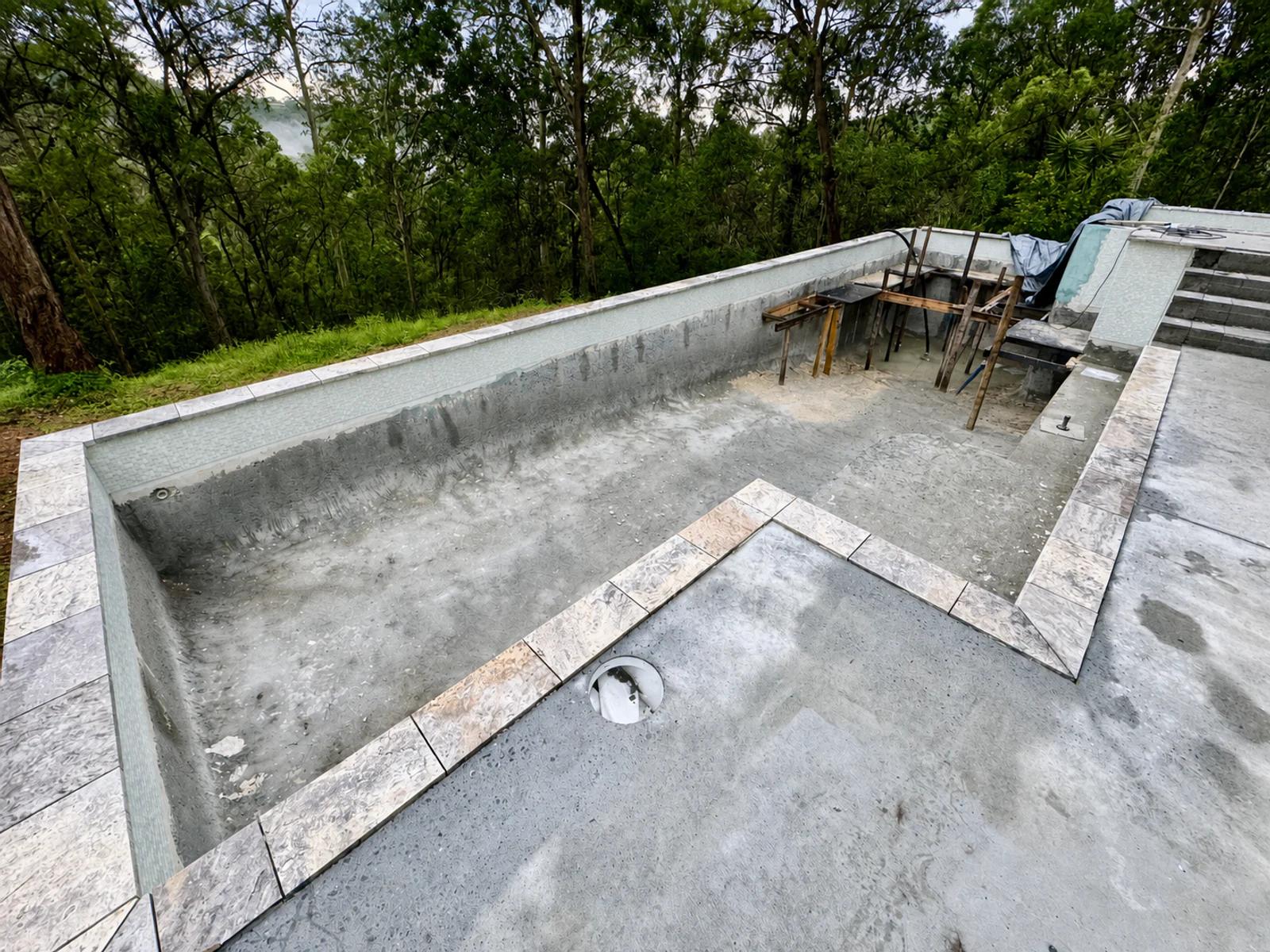
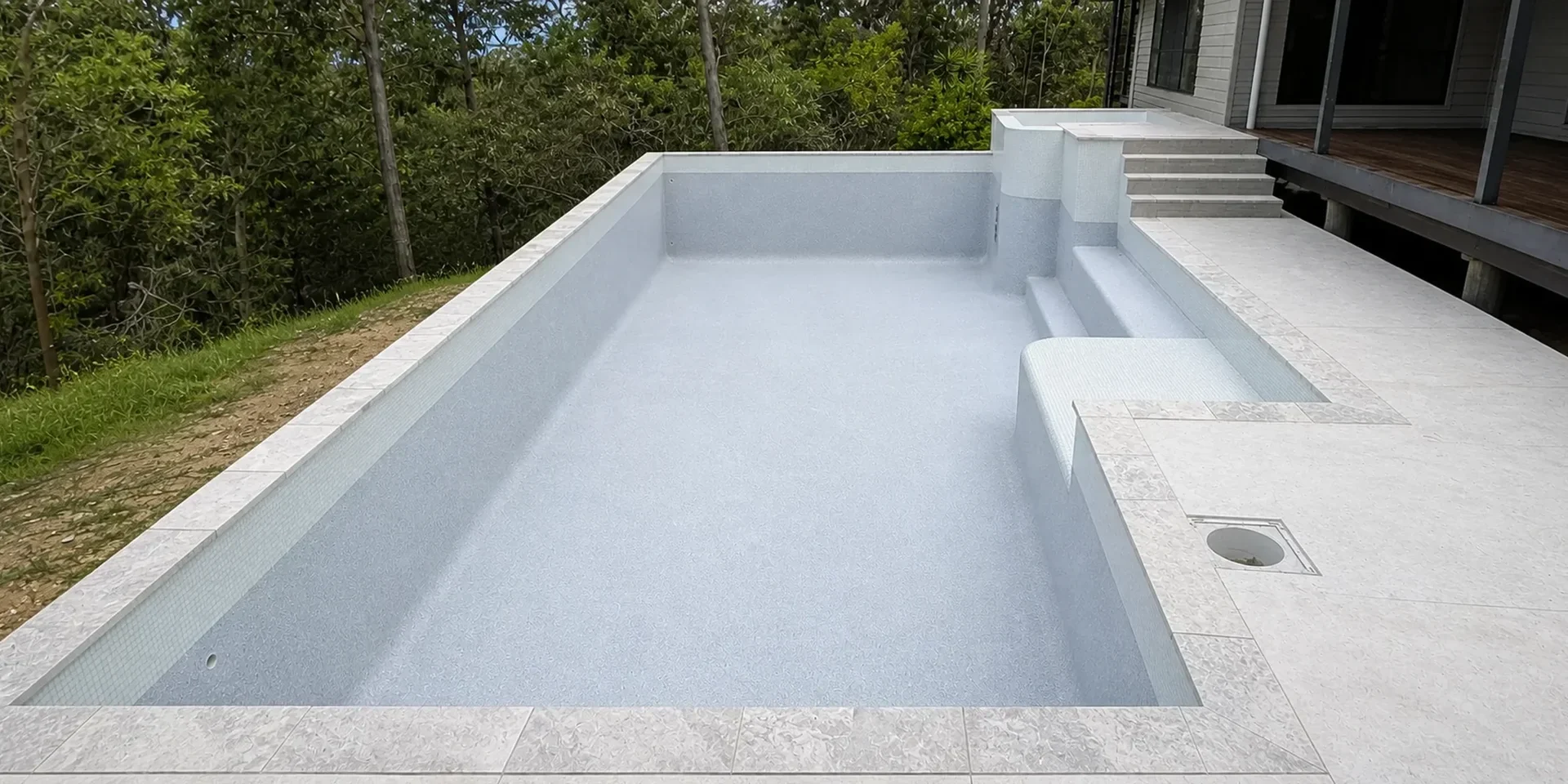
The new concrete shell was assessed and prepared for lining before the continuous reinforced fibreglass interior and Dove Grey Speckle AquaGuard finish were installed.
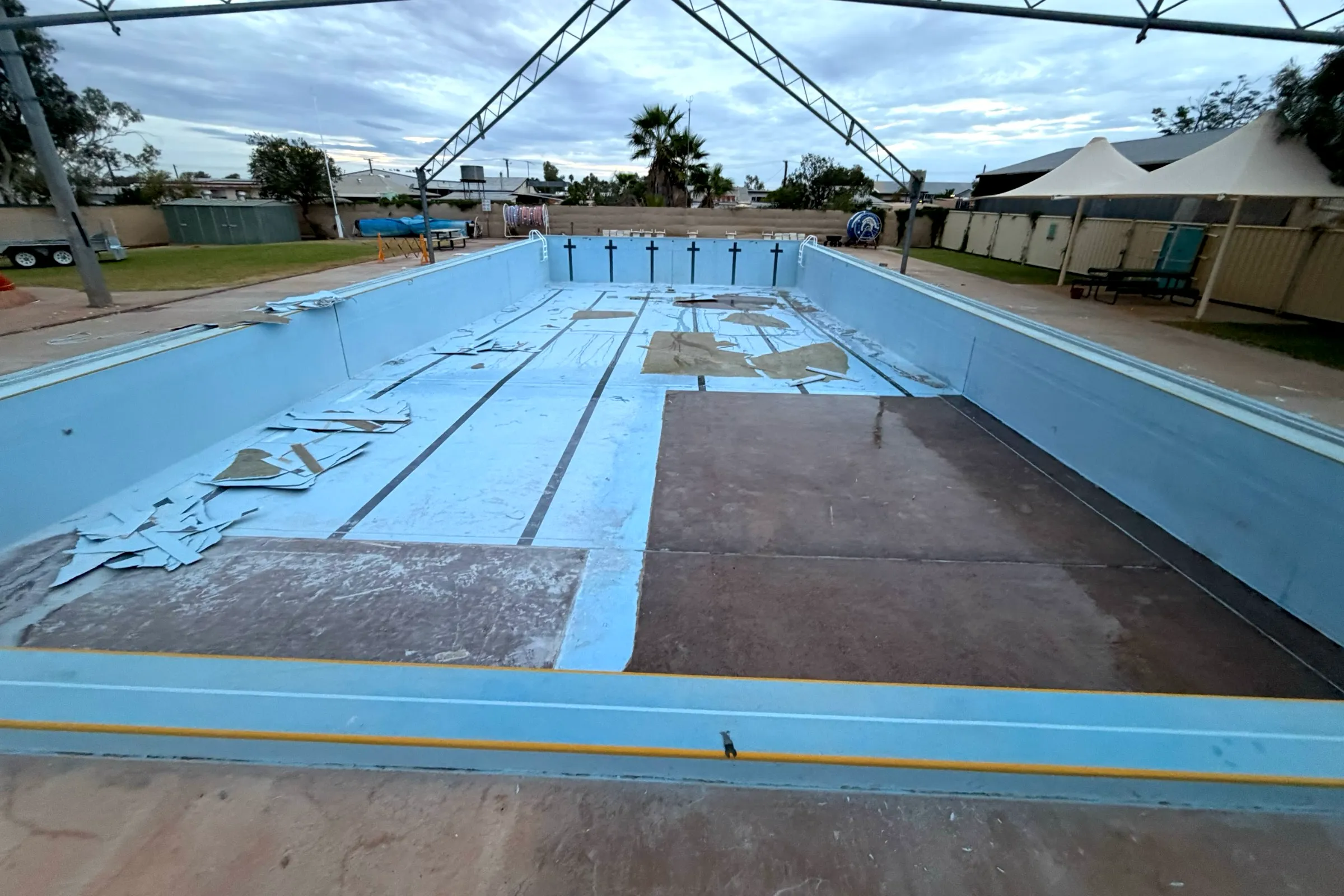
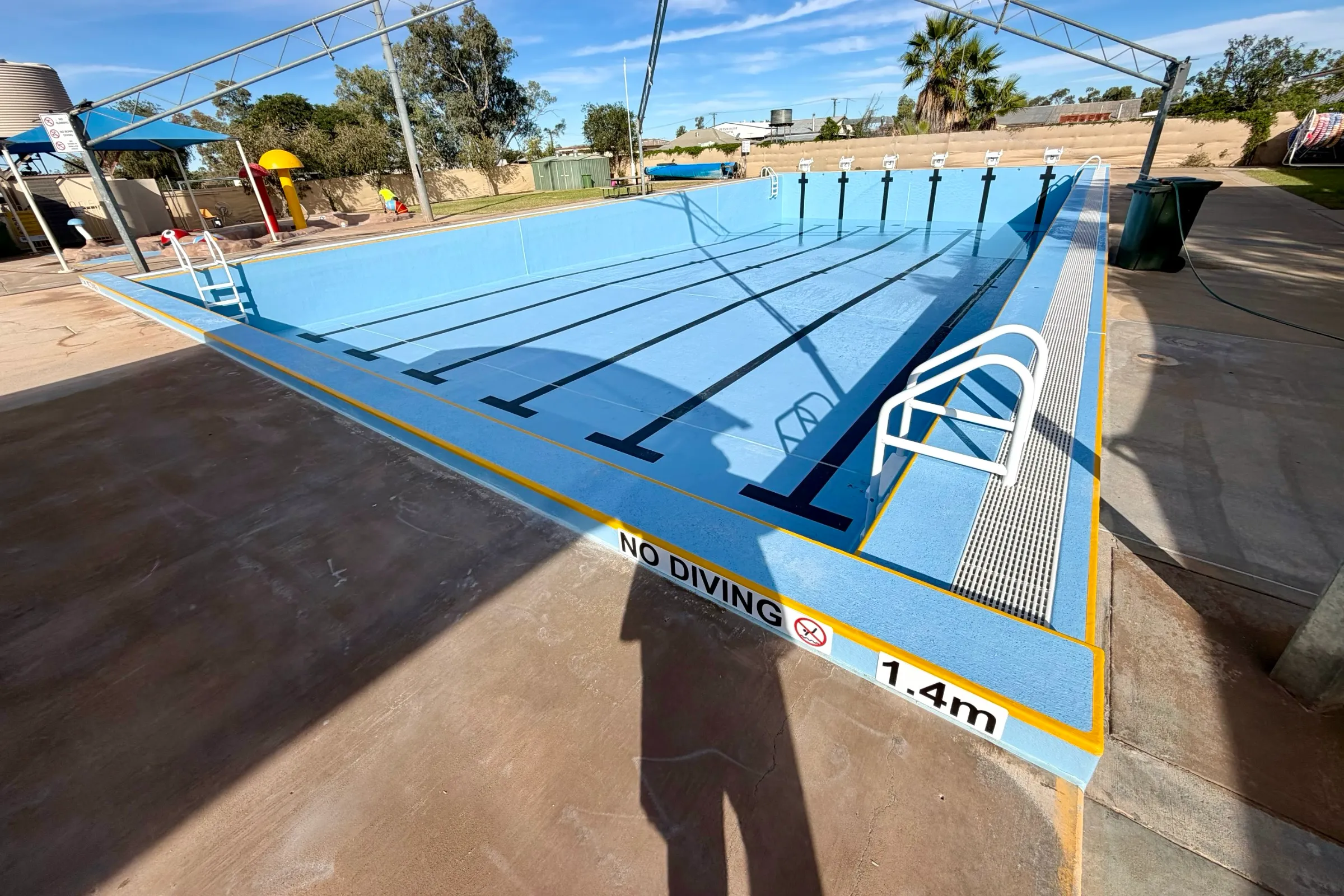
Fibreglaze resurfaced three public pools for Quilpie Shire Council. Failed floor laminate was removed, the cracked wet-deck drainage channel was repaired and reinforced, and low areas were corrected before the prepared concrete pools were completed in Lagoon Blue Plain AquaGuard.
For a new pool, share the design, dimensions, builder details, proposed fittings and target surfacing date. For an existing commercial facility, include the pool construction, known defects, drawings, access, plant constraints, fixed events and required reopening date.
Drawings and photographs help establish the preliminary brief. A site inspection and project-specific scope are still required.

New and commercial project enquiry
Send us a few photos and our team can help identify the likely issue and the most suitable next step.