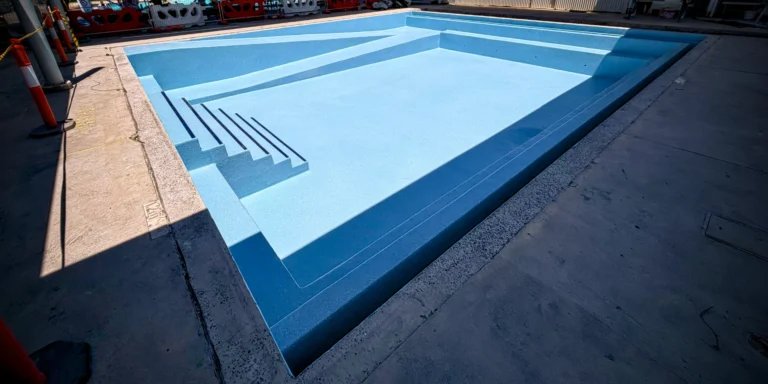
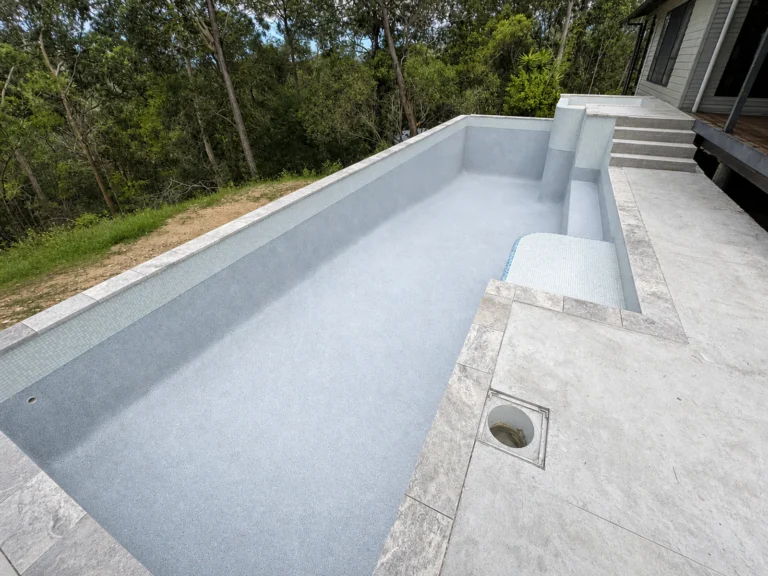
In December 2024, Fibreglaze restored the 12.5 x 3 m concrete pool in Bonogin, Queensland. The new concrete substrate required assessment and preparation to confirm it was ready for a fibreglass lining.
After the concrete shell was assessed and prepared, a new structural fibreglass laminate was installed. The pool was completed in Dove Grey Speckle using the Fibreglaze Enduratec finishing system.
These photographs follow the work from the pool’s original condition through preparation and repair to the completed finish.
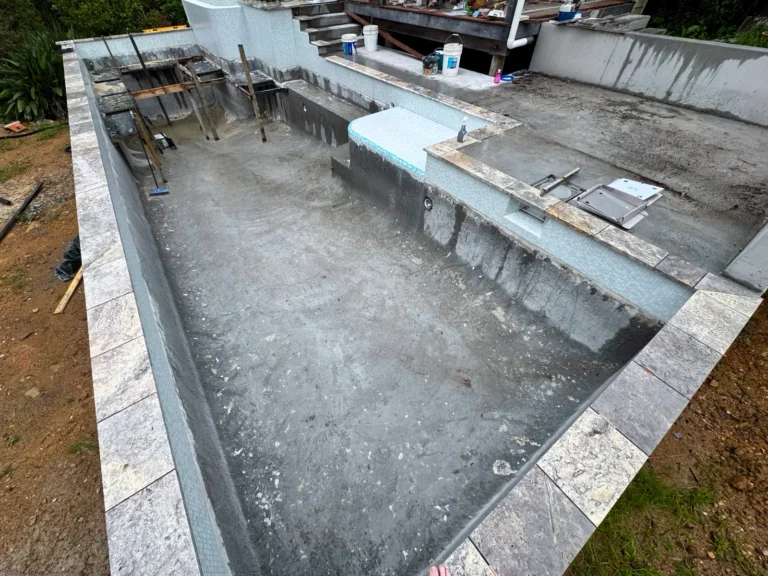
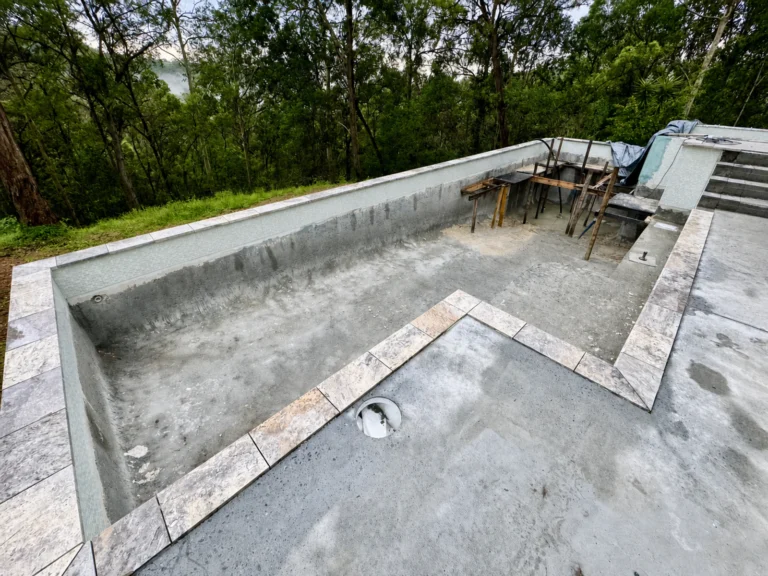
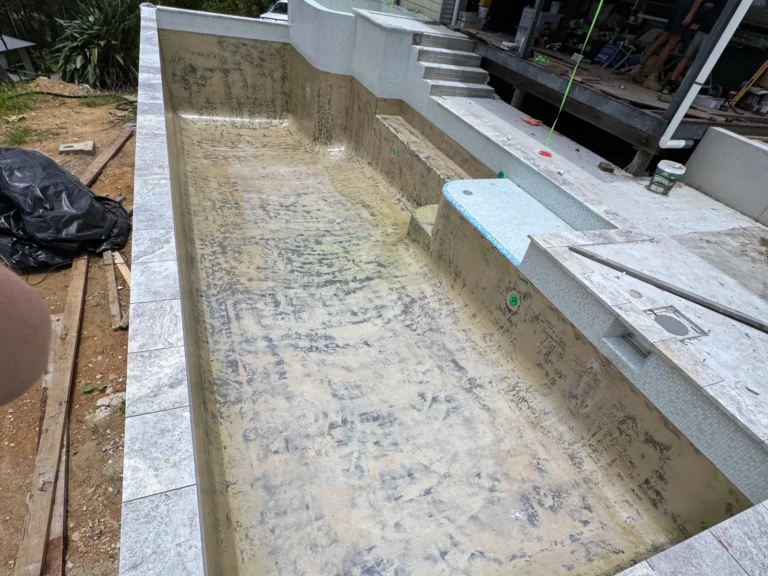
These were the main pool conditions recorded for this project. Select an issue to learn more about its common signs, possible causes and repair considerations.
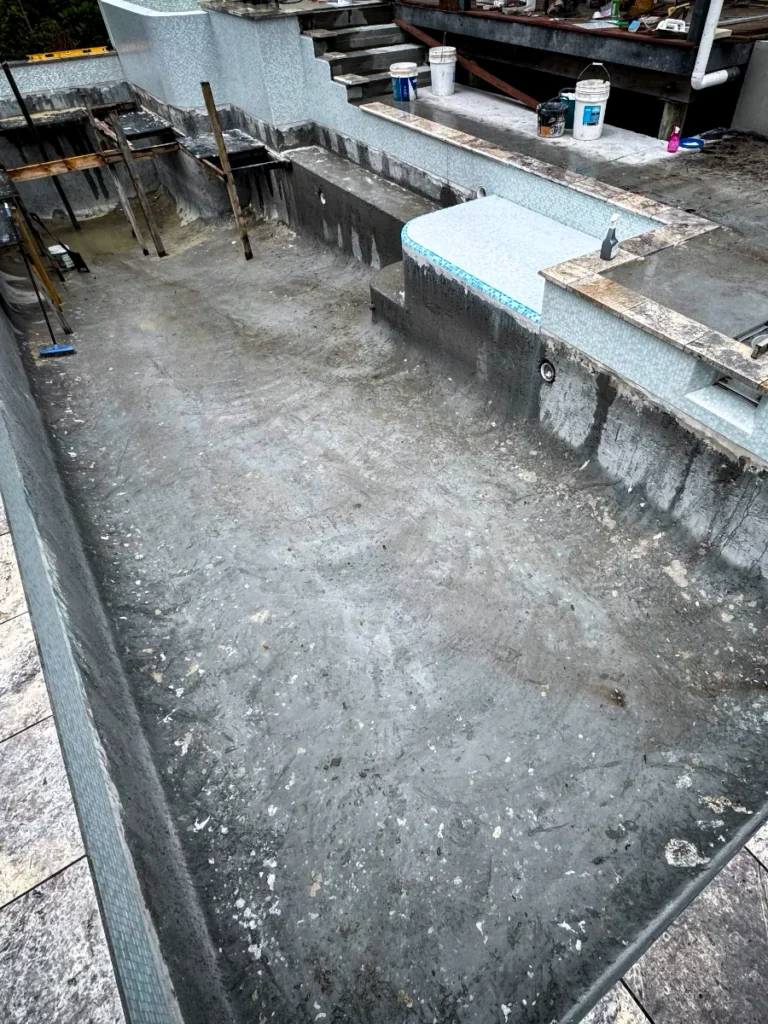
Additional views of the preparation, repair work and completed finish.
The team at Fibreglaze were a switched on crew who went above and beyond to fit our job in before Christmas.
It was helpful having expert advice on matching the colour choice to the desired look for the pool, and the finished product looks and feels fantastic, with none of the rubbish grazes the kids used to end up with from a pebblecrete pool.
Answers to common questions about the pool conditions and restoration work shown in this project.
Age alone does not confirm readiness. The concrete needs to meet the pool design and lining-system requirements, with moisture, curing, laitance, cracks, penetrations, joints and surface tolerances assessed before work begins. Weak, contaminated or excessively damp areas can affect the bond of an applied finish. Fibreglaze should coordinate with the pool builder or designer to confirm the shell is released for surfacing, then mechanically prepare and test the actual substrate rather than relying only on a nominal cure date.
Yes. A purpose-built fibreglass lining can be installed over a suitably cured and prepared concrete pool shell. The concrete structure remains in place and the reinforced lining is formed on site to follow its shape, steps and details. The shell must first be assessed for moisture, laitance, cracking, penetrations, construction joints and surface irregularities. Defects and active movement details are treated before the fully bonded lining and selected colour finish are installed.
Not automatically. The reinforced fibreglass lining is intended to form the continuous water-retaining interior, but it still requires a suitably designed, cured and prepared concrete shell. Moisture, laitance, cracks, penetrations, construction joints and any active movement details must be assessed and treated for the project. Any membrane, sealer or waterproofing admixture already proposed should be disclosed because its compatibility and bond with the lining need to be confirmed. The pool builder or designer and Fibreglaze should agree on the substrate and junction details before surfacing starts.
The programme depends on the pool type, condition, access and repairs found after it is emptied. Draining, preparation, drying, repairs, installation, curing and refilling are separate stages, and weather can affect several of them. Pools with osmosis, failed coatings, loose tiles or concealed damage usually need more time. The pool should not be refilled until the installed system has reached its required cure and the contractor confirms it is ready. Ask for a project-specific programme rather than relying on a generic number of days.
Send us a few photos and our team can help identify the likely issue and the most suitable next step.