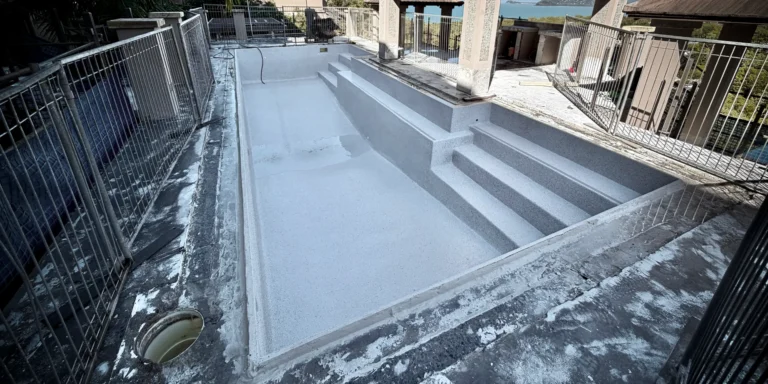
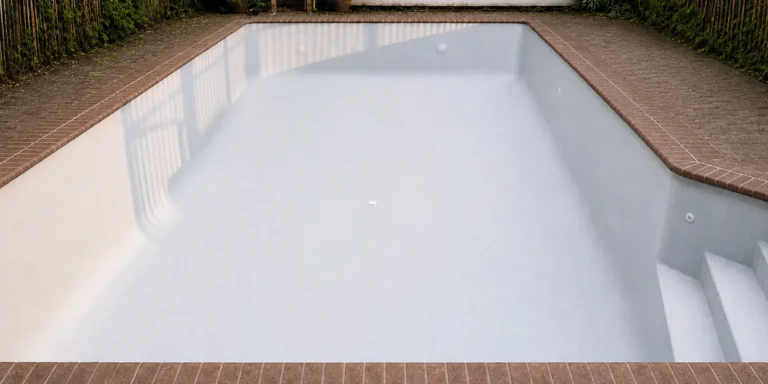
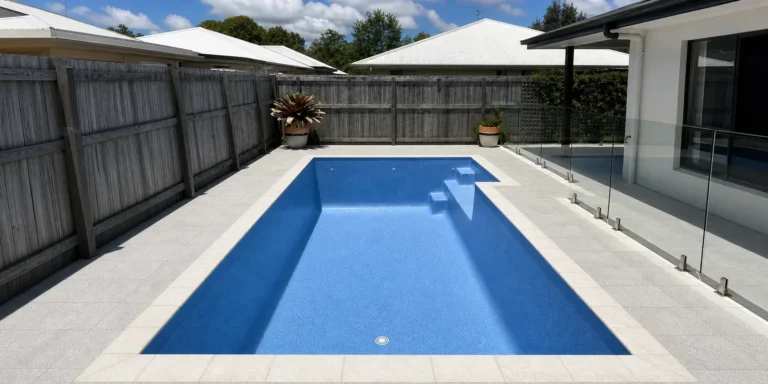
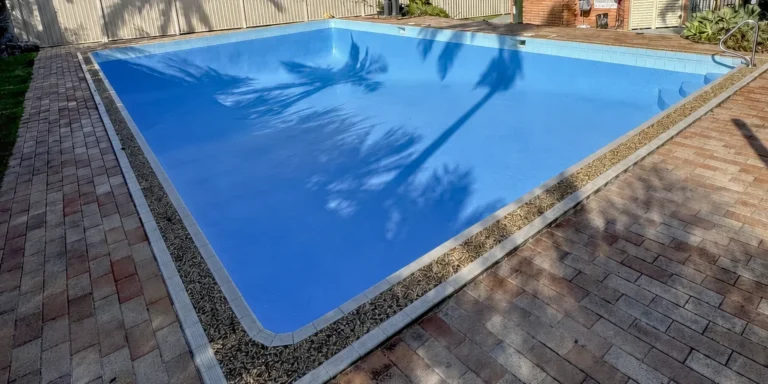
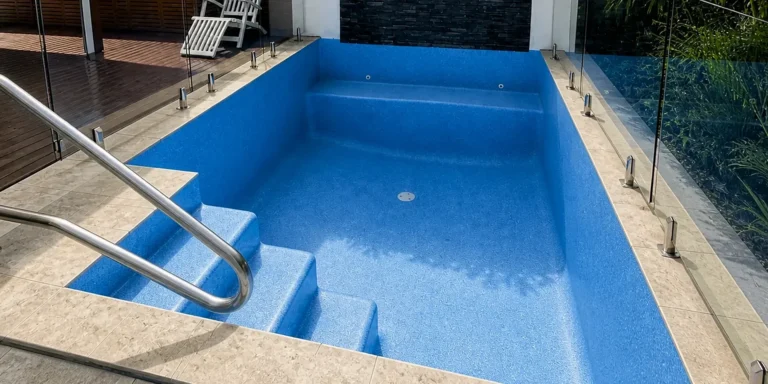
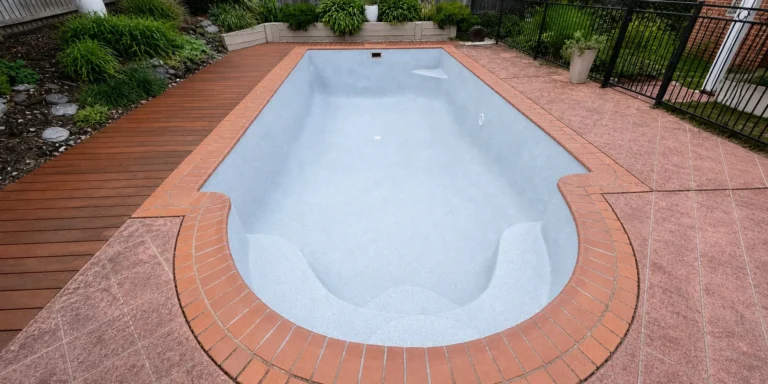
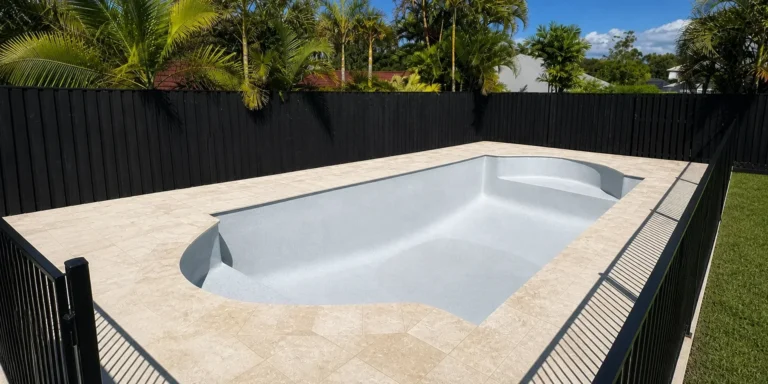
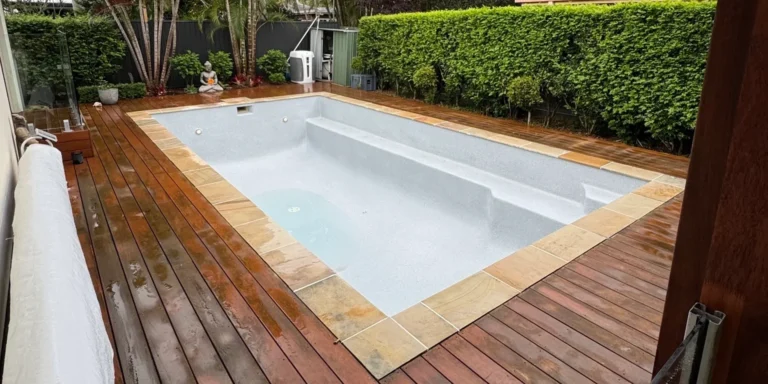
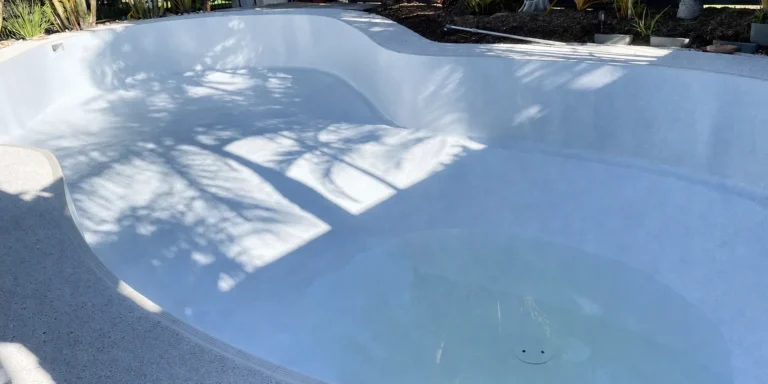
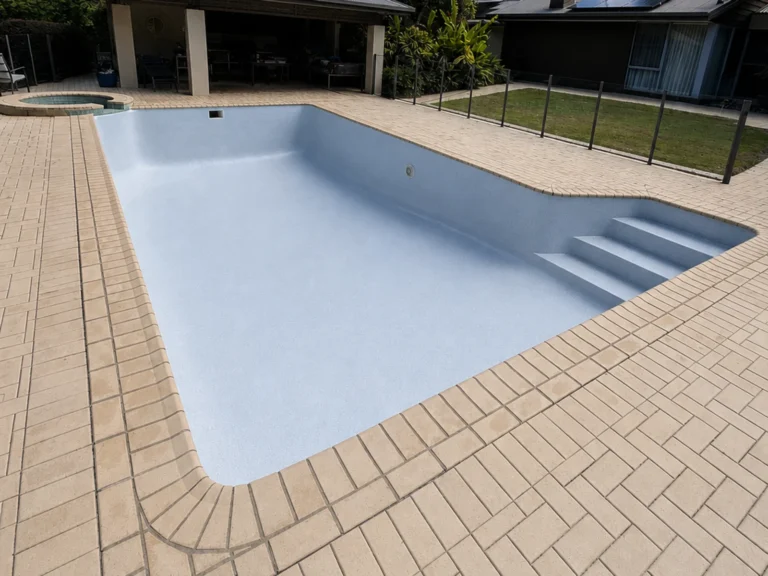
In February 2026, Fibreglaze restored the 9 x 4.5 m pebblecrete pool in Tallai, Queensland. The pool presented with cracking, deteriorated tiled areas and a stained, rough or dated finish, requiring careful assessment and preparation before resurfacing.
Cracks were repaired and reinforced where required, and nominated tiled areas were prepared, repaired and incorporated into the new lining. Resin-based screeding and filler corrected surface irregularities before a new structural fibreglass laminate and the Fibreglaze Enduratec finishing system were installed. The pool was completed in Dove Grey Speckle as a smooth, seamless surface.
These photographs follow the work from the pool’s original condition through preparation and repair to the completed finish.
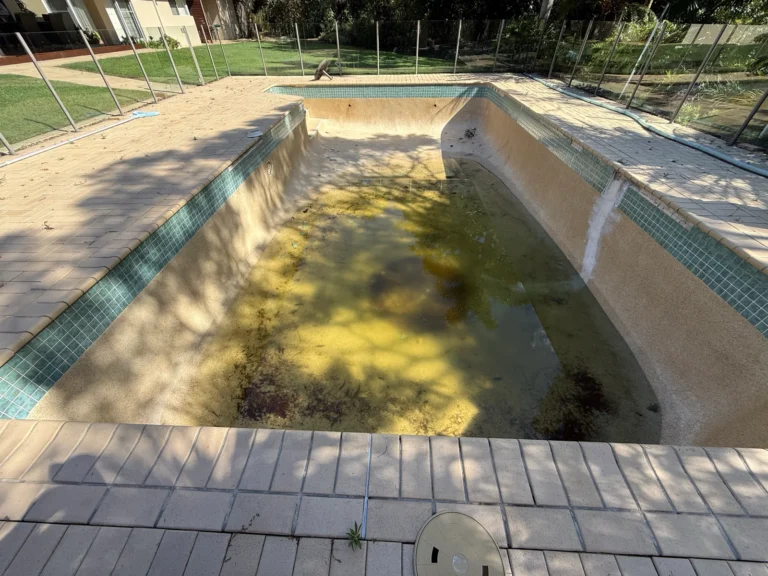
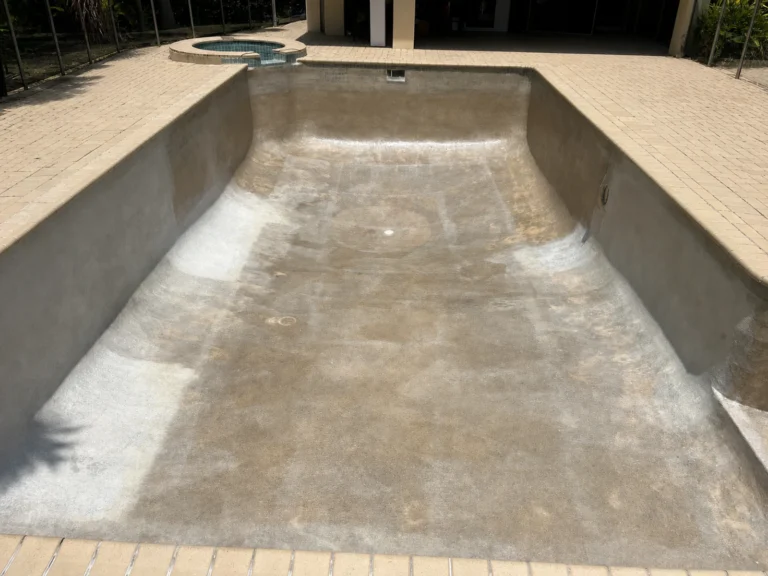
These were the main pool conditions recorded for this project. Select an issue to learn more about its common signs, possible causes and repair considerations.
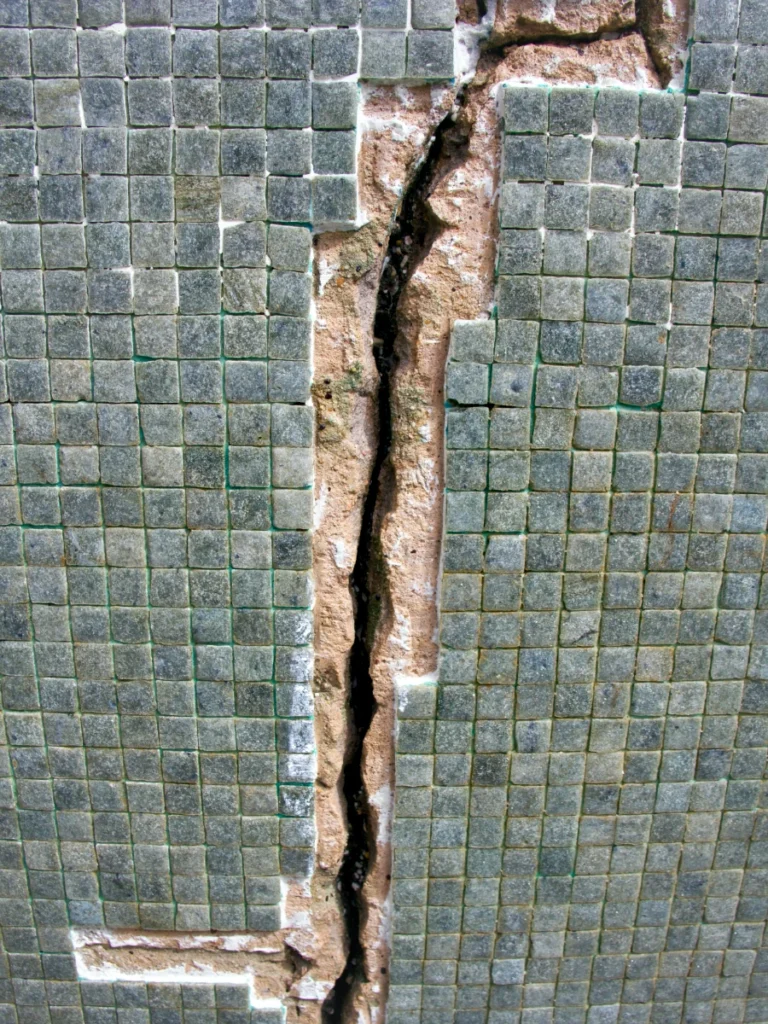
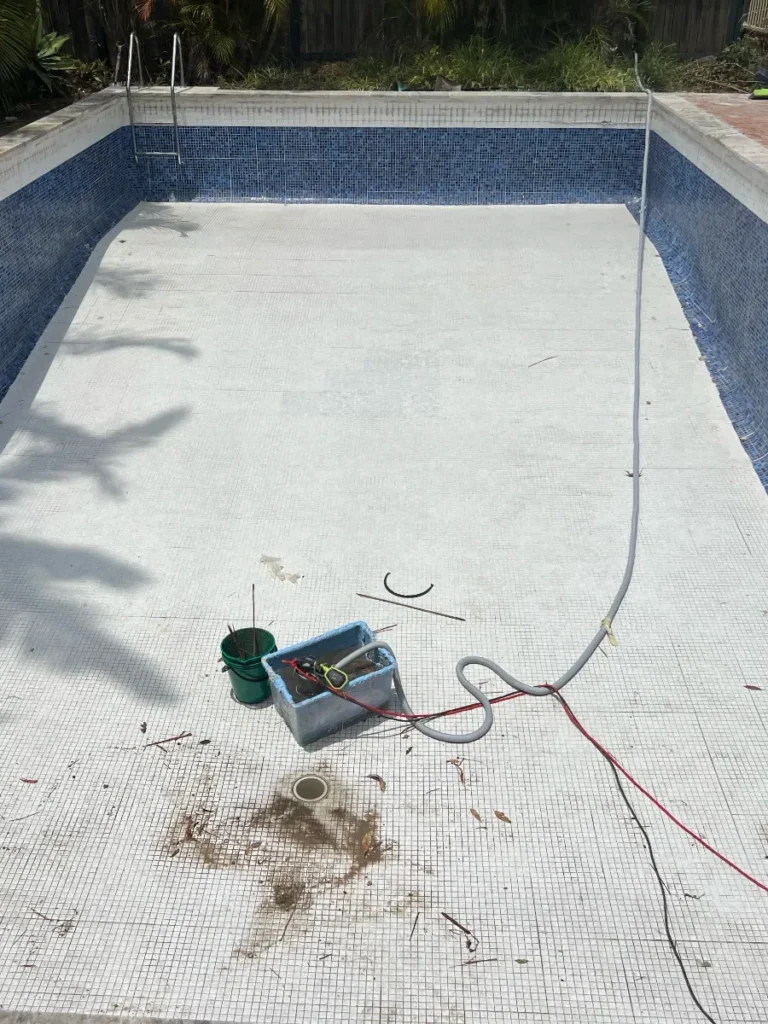
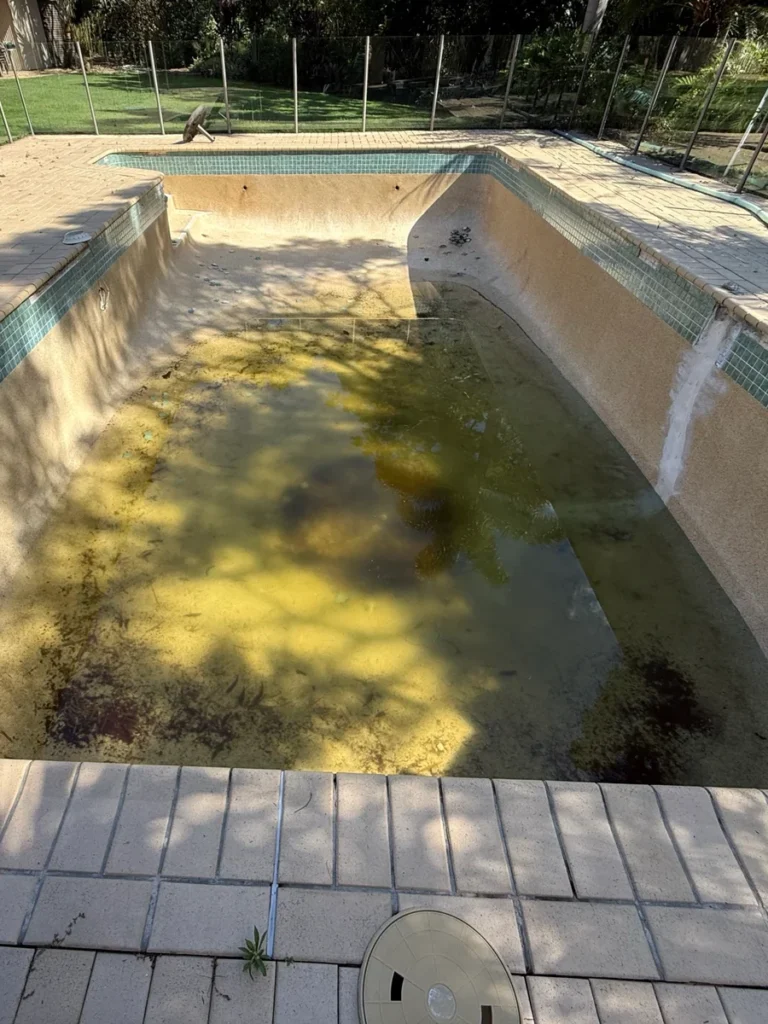
Additional views of the preparation, repair work and completed finish.
The whole process was painfree from beginning to end, in very sharp contrast to competitors, who didn’t turn up, made false promises, didn’t commit on pricing and timing etc etc. The young team of workers was very respectful- a real delight to have.
Answers to common questions about the pool conditions and restoration work shown in this project.
A fine hairline crack is not automatically structural, but its width alone does not determine the risk. Location, depth, direction, displacement, moisture, surrounding soundness and whether it is growing are all important. Fine crazing may be limited to the surface, while a crack through the shell can admit water or indicate movement. Photograph and mark the crack so changes can be monitored, and arrange an assessment if it is widening, leaking, recurring through repairs or associated with movement.
Pool stain colour alone does not confirm the cause. Brown or rust-coloured marks may involve iron or organic debris; green, grey or black marks can involve algae, copper, manganese or material trapped in a rough surface. Location, texture, recent water changes and the way a small test area responds are more useful than colour by itself. The source also needs attention, such as metals in fill water, corroding equipment, poor circulation or debris, otherwise the stain can return after cleaning.
Tiles and grout can deteriorate because of inadequate original bonding, poor preparation, water entering behind the finish, unsuitable grout, aggressive water chemistry, shell movement or missing movement allowance. A tile face may look sound even when the adhesive behind it has failed. Repeated grout loss, cracks and hollow-sounding areas suggest that more than the visible joint may be affected. The cause should be identified before tiles are reset so the same movement or moisture problem does not continue beneath the repair.
Ongoing water loss, damp ground, staining, water movement at the crack or a bucket test that confirms abnormal loss can indicate leakage, although the actual source may be elsewhere. Structural concern increases where the crack is displaced, widening, repeated through an earlier repair or accompanied by settlement, bowed walls or movement at steps and fittings. Neither condition can be confirmed from a photograph alone. Leak testing and inspection of the surrounding shell are used to determine whether lining repair, plumbing work or structural investigation is required.
Many stains can be treated without resurfacing when the underlying finish is sound and the stain type is correctly identified. Organic, metal and mineral deposits require different treatment approaches, so the safest starting point is water testing and a controlled test on a small area. Resurfacing becomes more relevant when stains are deeply embedded, repeatedly return through a porous surface, or occur with widespread roughness, pitting, peeling or earlier failed repairs. Correcting the stain source remains important after either treatment.
A local repair may be suitable when only a few tiles are loose and the surrounding tiles, grout, substrate and waterproofing remain sound. The failed tiles and old adhesive need to be removed back to a stable base before pool-suitable materials are used. If nearby tiles sound hollow, grout loss is widespread or cracks continue through the area, replacing isolated tiles is likely to be temporary. A broader inspection should establish the boundary of the bond failure before the repair scope is chosen.
Send us a few photos and our team can help identify the likely issue and the most suitable next step.