Loose or Hollow Masonry Surface

Loose or Hollow Masonry Surface

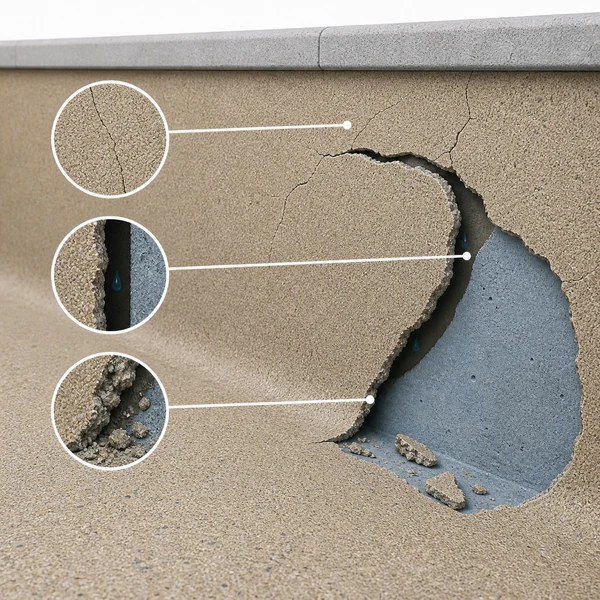
Loose or hollow-sounding render, plaster, pebblecrete or another cement-based finish may no longer be firmly bonded to the pool shell. Unstable areas must be removed to a sound edge before repair, levelling and resurfacing.
Loose Hollow Masonry

What this pool problem can look like

A loose or hollow masonry surface may sound drummy when tapped, flex or crumble under pressure, crack around its edges, or break away during preparation. The visible surface can remain intact even when render, plaster, pebblecrete or an earlier levelling layer has separated from the shell beneath.

The boundary of the problem is often wider than the first hollow spot. The empty pool needs a systematic bond survey and progressive removal of unstable material. The exposed base is then assessed for moisture, cracking, contamination and movement before the repair extent is confirmed.

What we assess

The extent and location of the visible problem

The condition of the surrounding pool surface

Likely causes and the most suitable repair approach

CAUSE AND REPAIR

Why this happens and what repair involves

Why does this happen?

Hollow or poorly bonded areas can develop when the original substrate was weak, dusty, contaminated or too smooth, when materials were applied or cured under unsuitable conditions, or when water entered behind the finish. Age, chemical attack, temperature change, shell movement and continuing water ingress can enlarge an initial loss of bond.

Voids, honeycombing, failed water-proofing membrane, inconsistent thickness and poorly bonded previous repairs can create local weakness. Covering a drummy area does not restore the missing bond and may allow the new surface to move with the unstable layer.

Can this be repaired?

Fibreglaze tap-tests and maps the surface, then removes loose, hollow and friable material until a sound, firmly bonded edge and stable substrate are reached. The exposed shell is cleaned and checked for cracks, moisture, corrosion, voids and movement; deeper losses and irregular transitions are rebuilt and levelled.

The repaired interior is mechanically prepared and incorporated into the continuous reinforced fibreglass lining installed as part of the Enduratec System. Extensive bond failure, active movement or deterioration beyond the interior finish may require additional substrate repair, structural work or groundwater management before resurfacing proceeds.

During Repair

See the repair work in progress

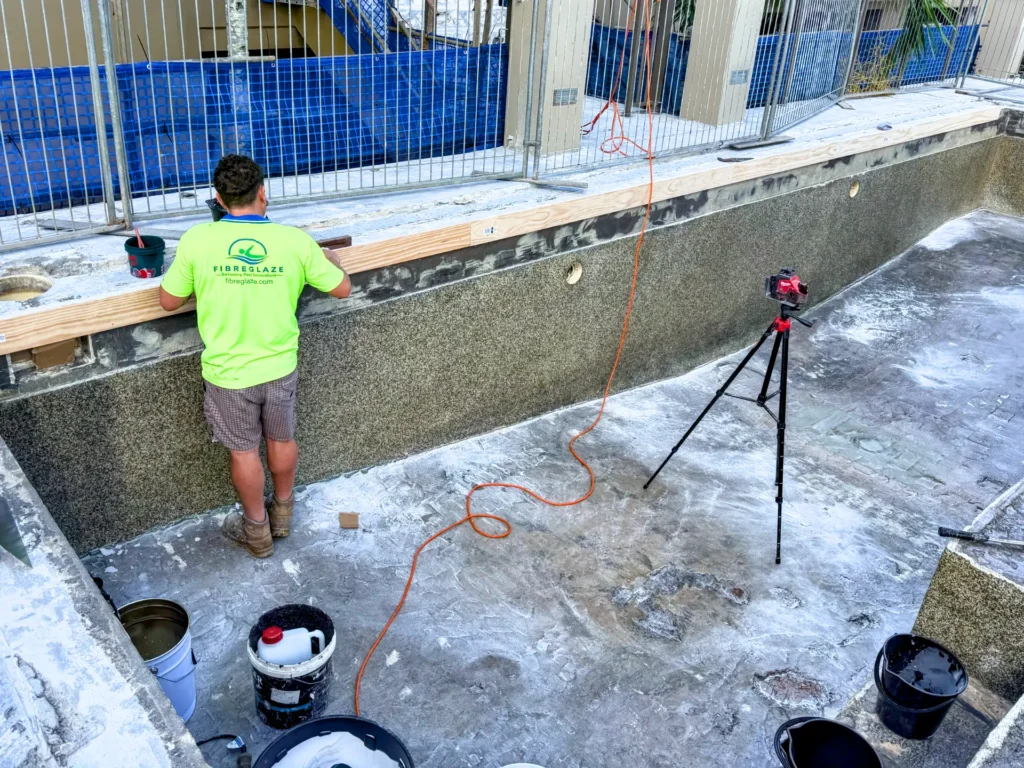
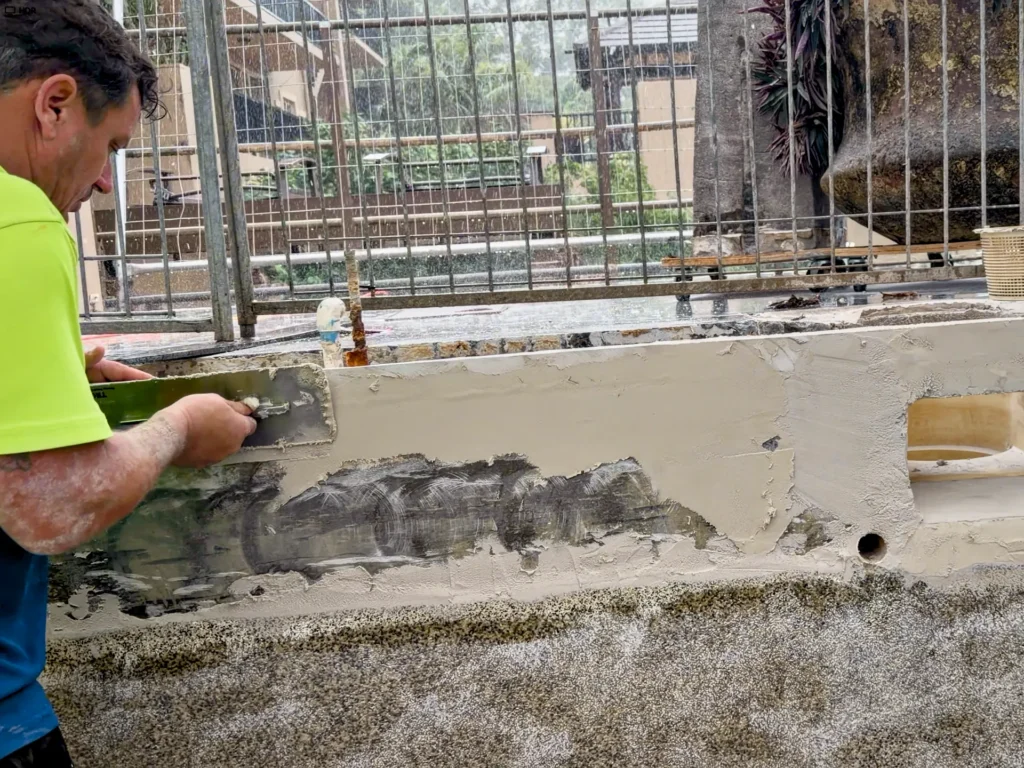
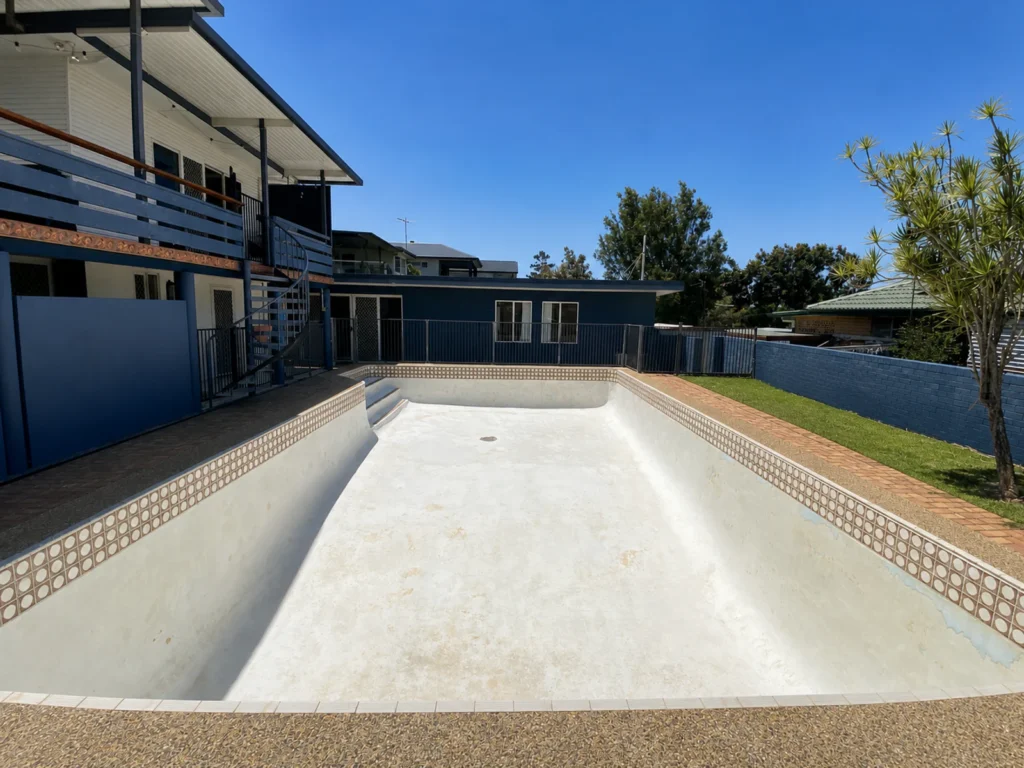
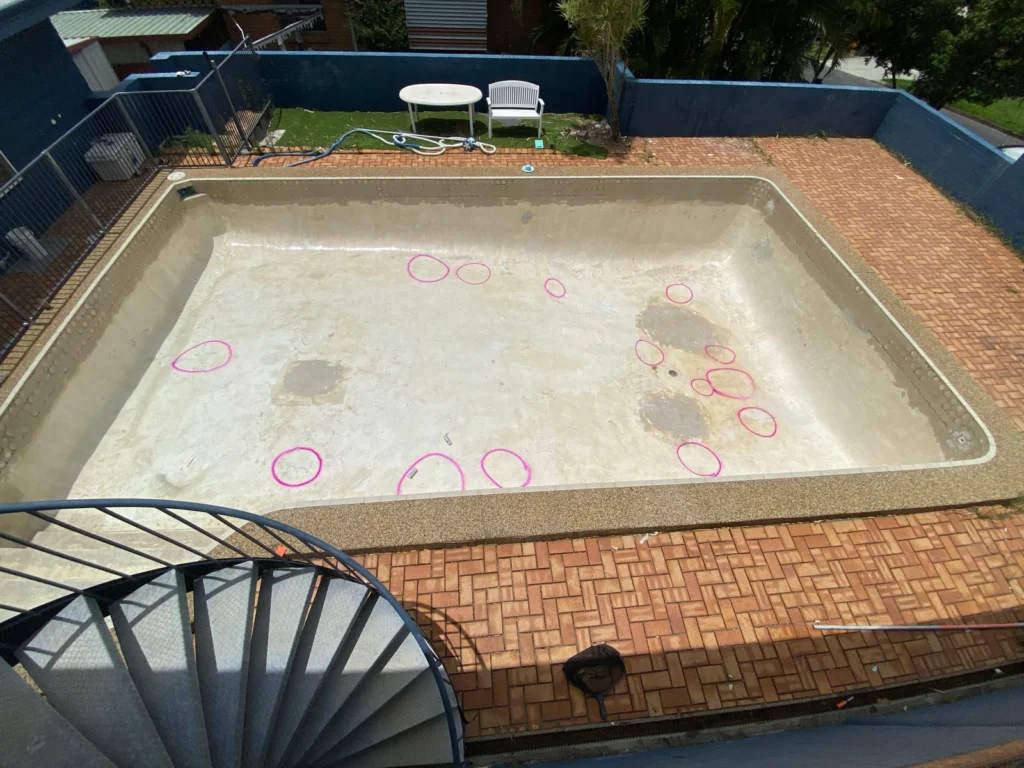
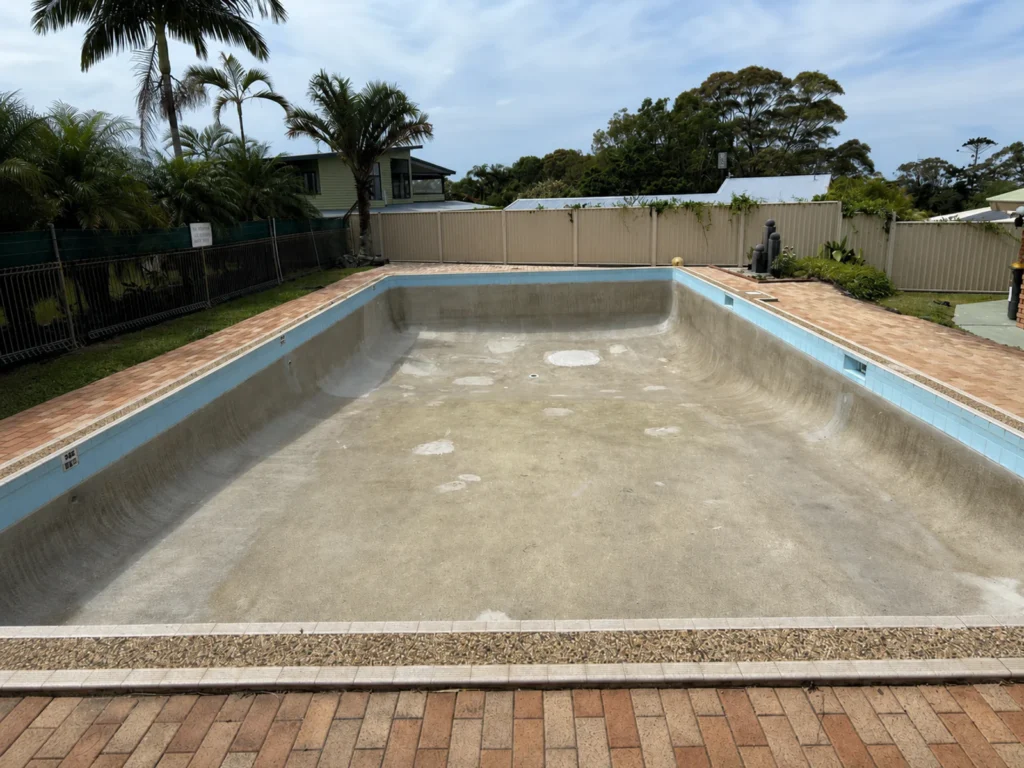
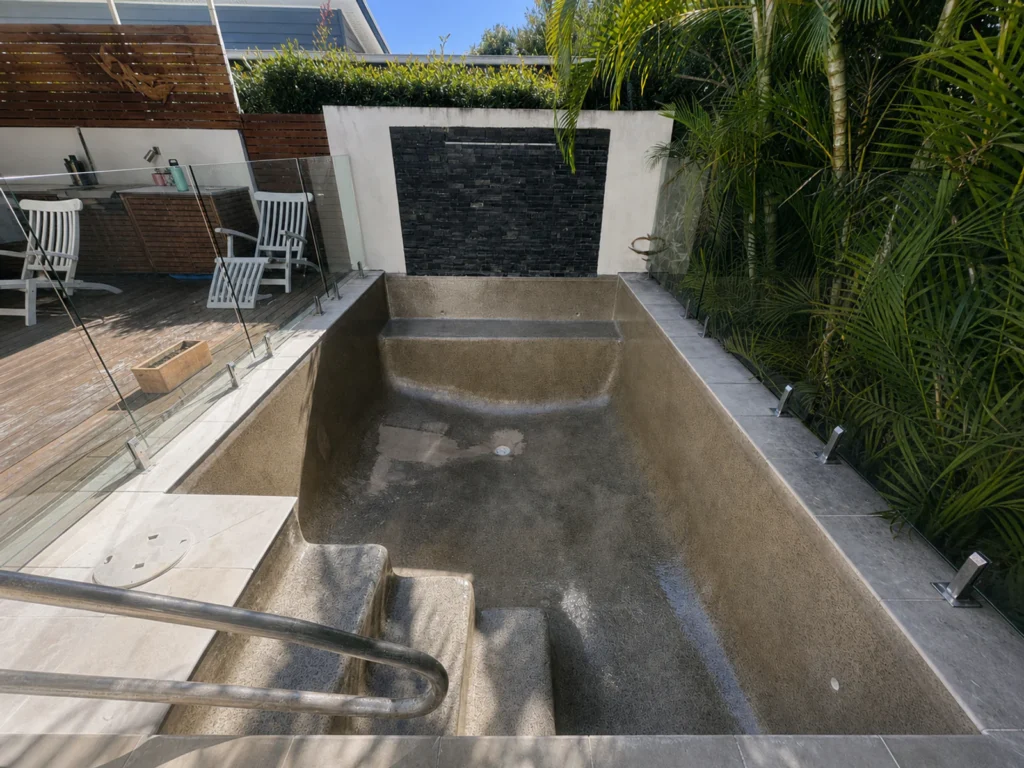
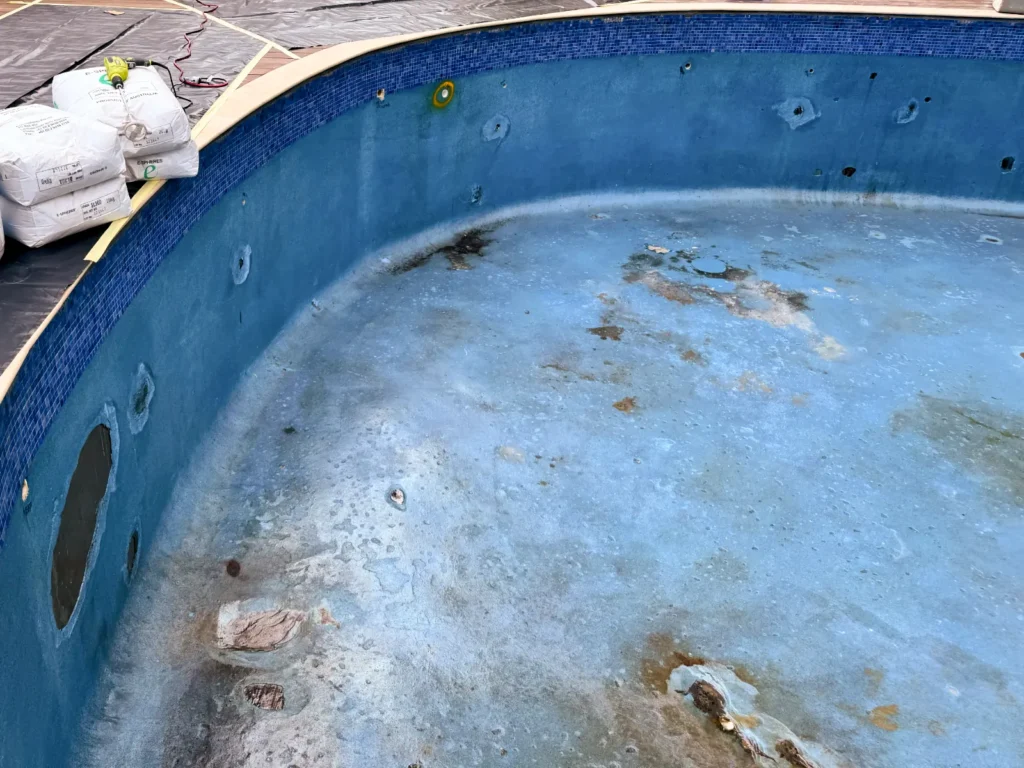
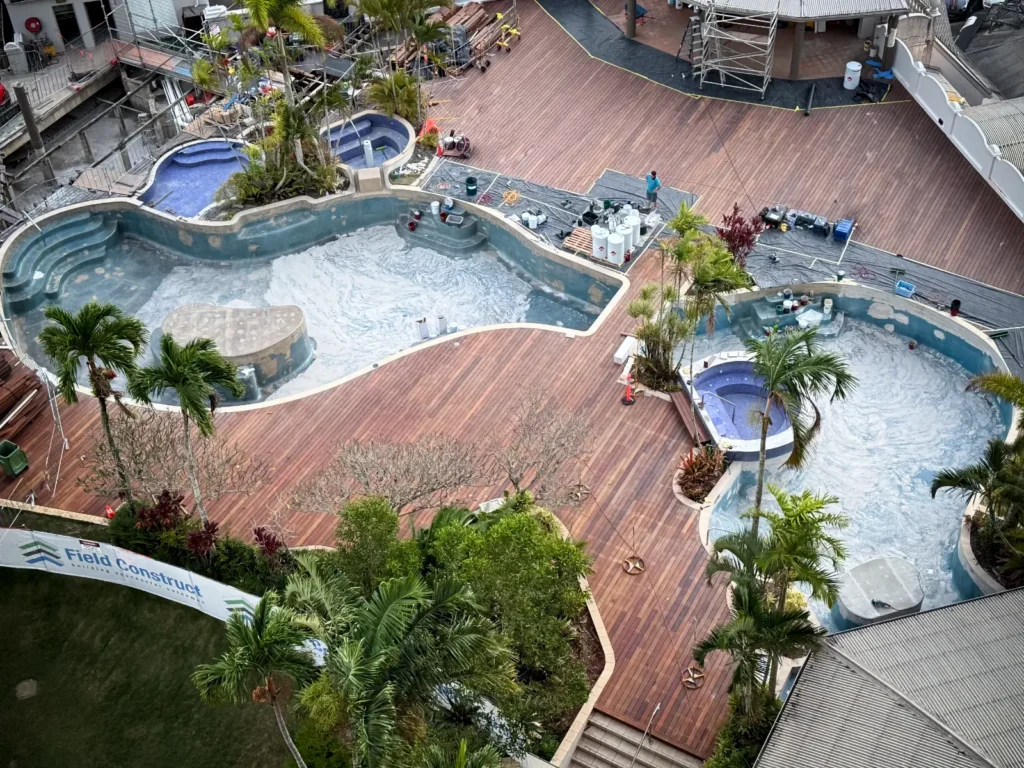
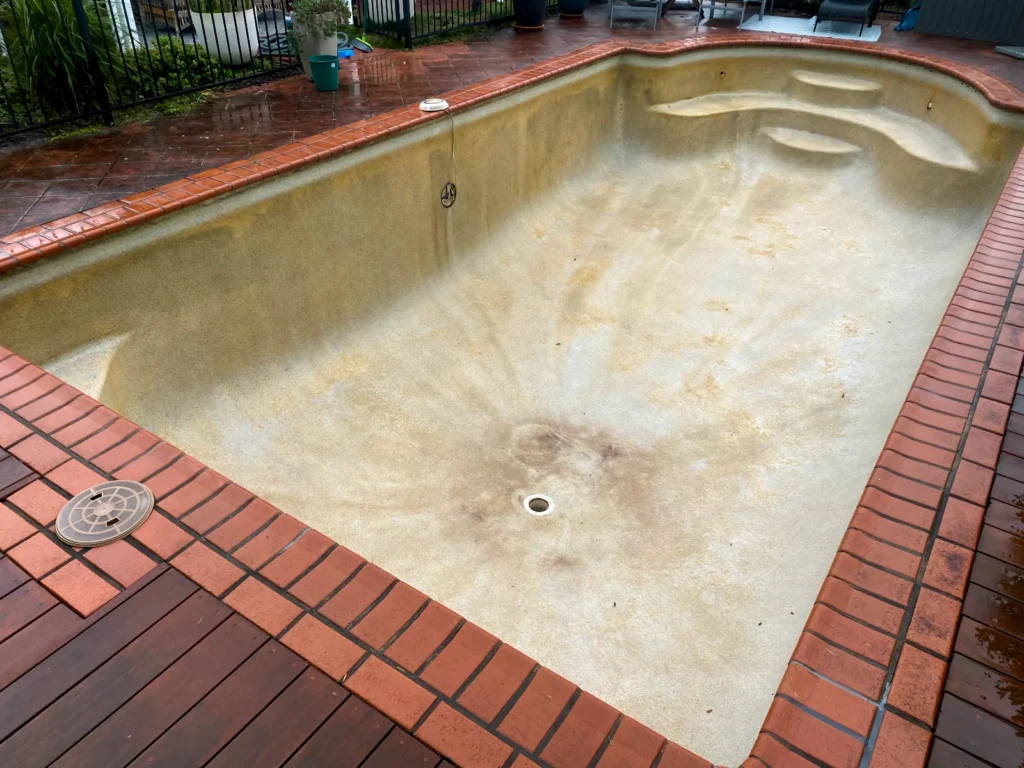
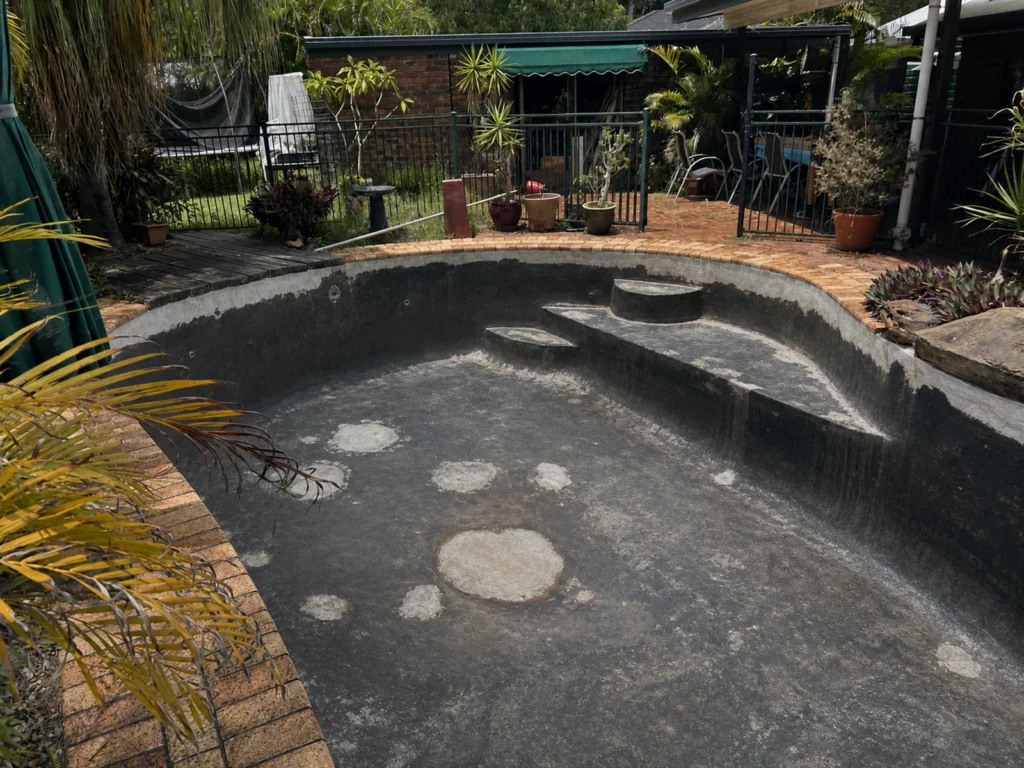
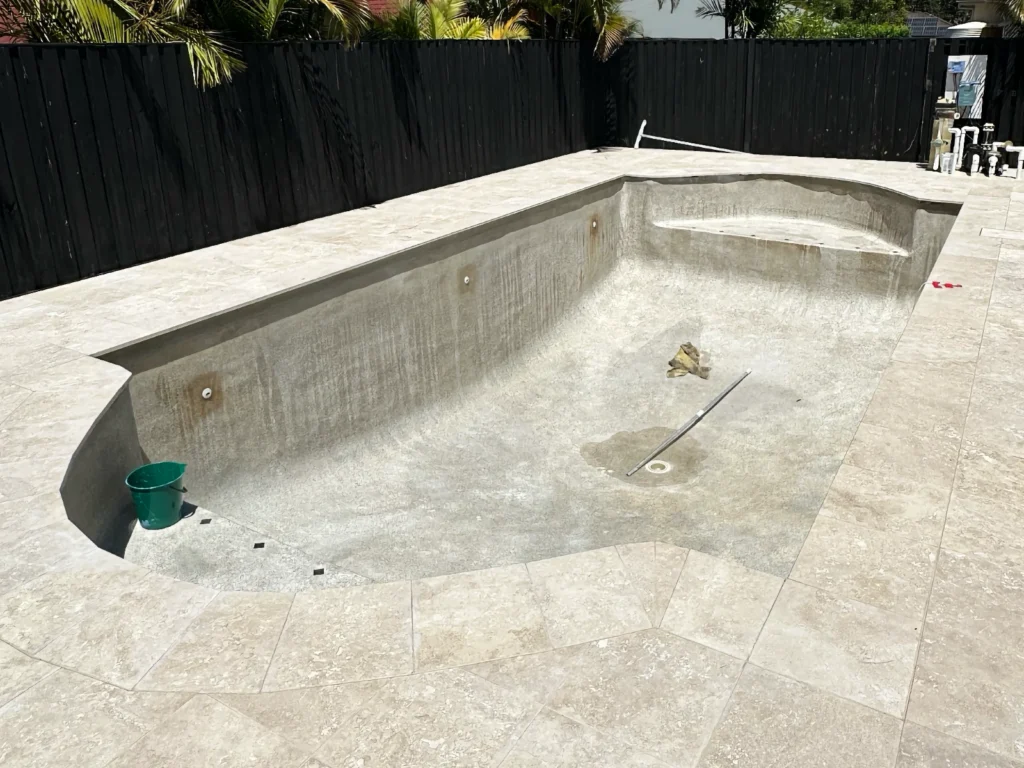
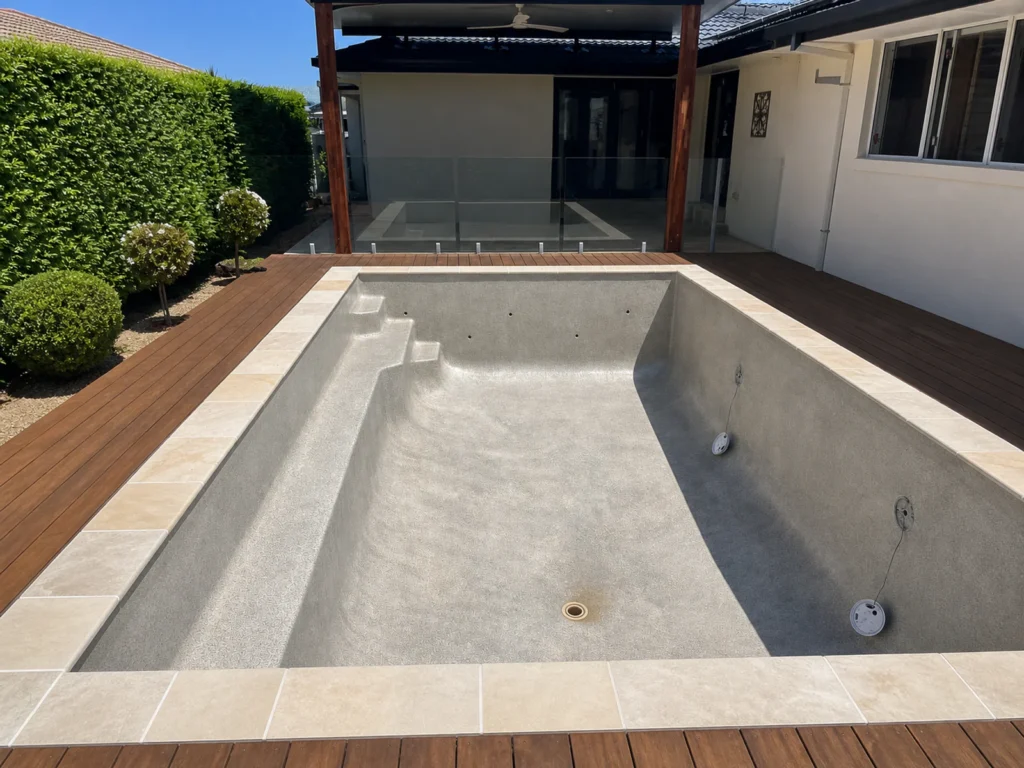
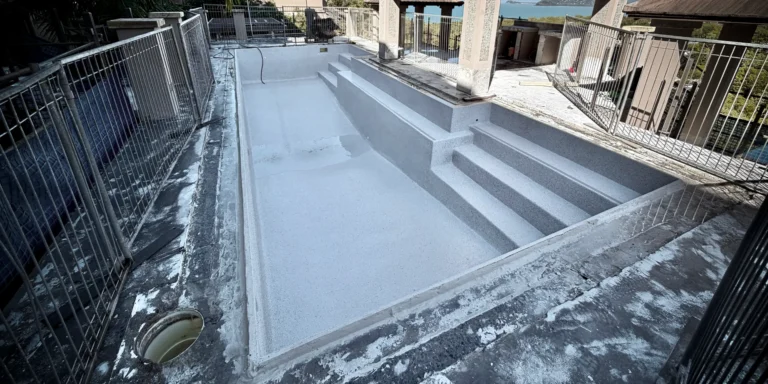
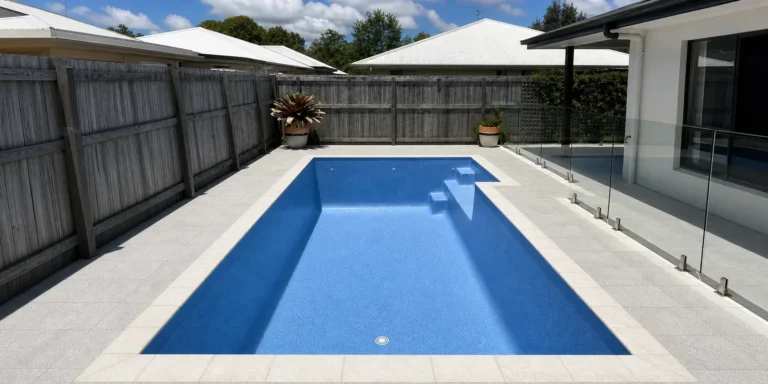
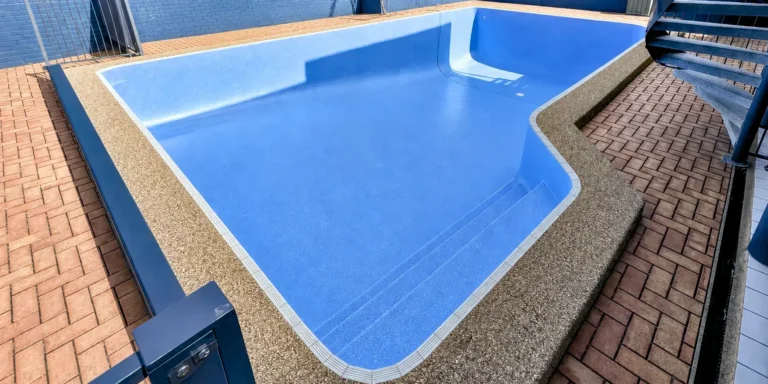
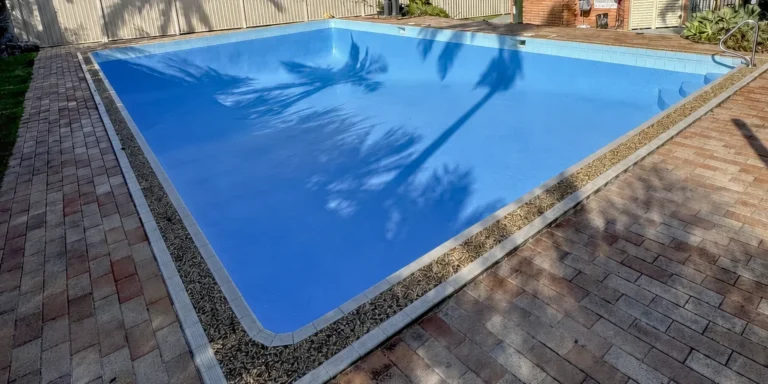
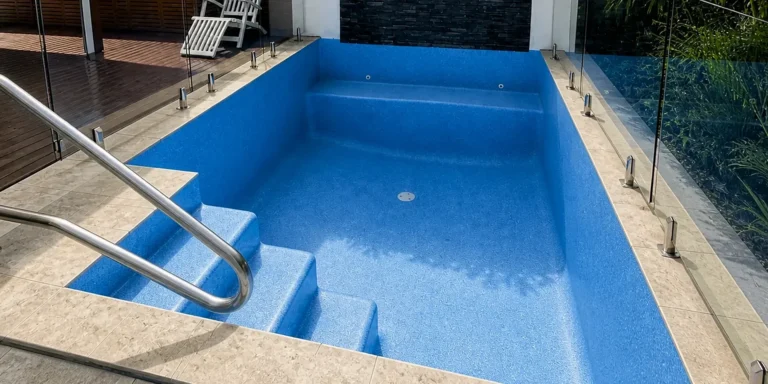
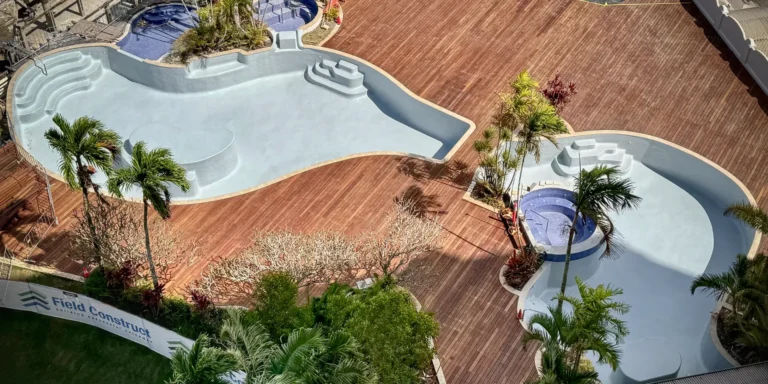
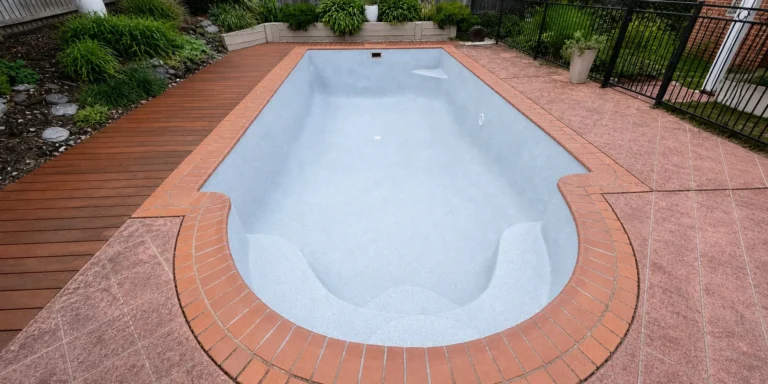
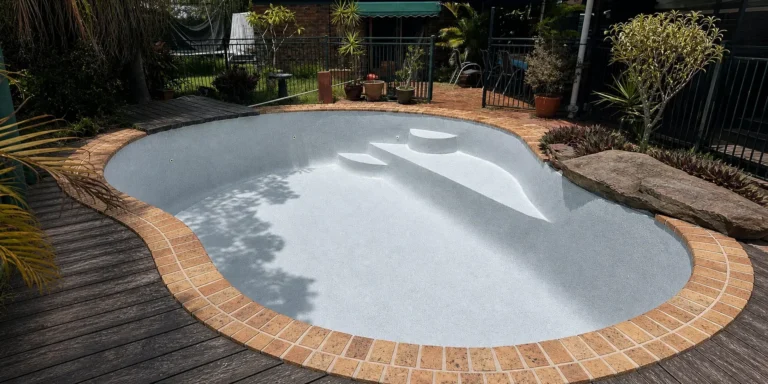
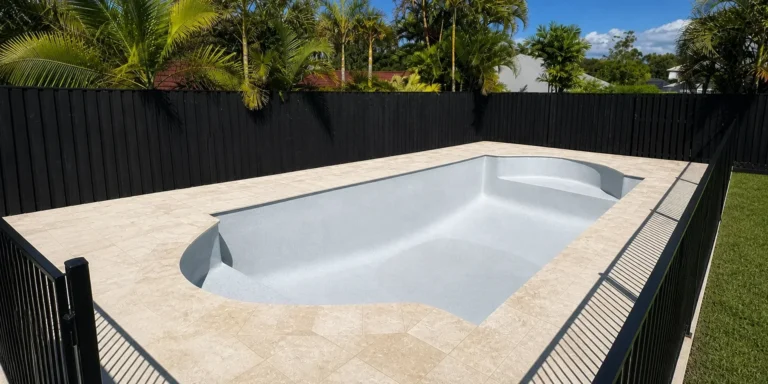
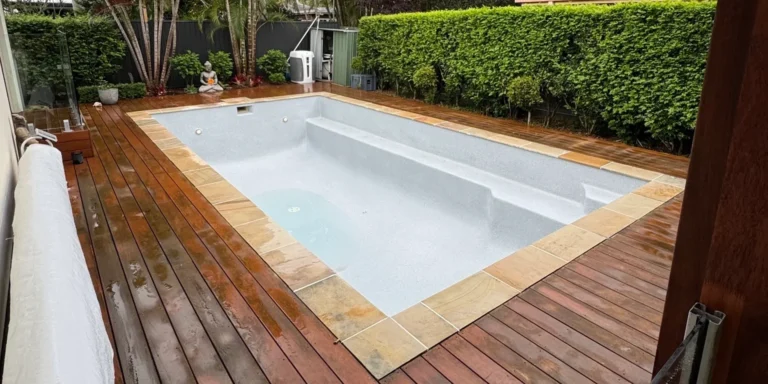
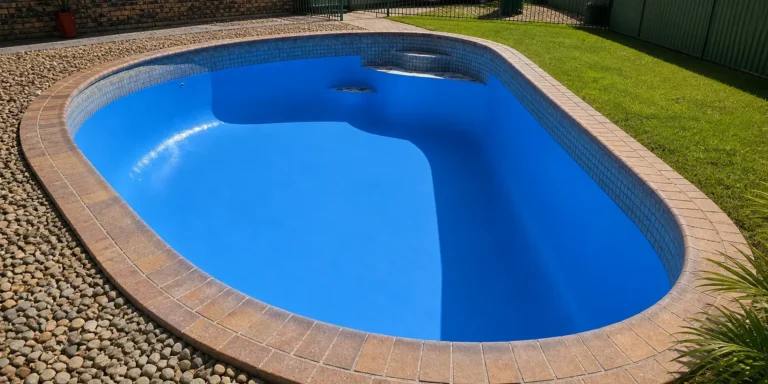
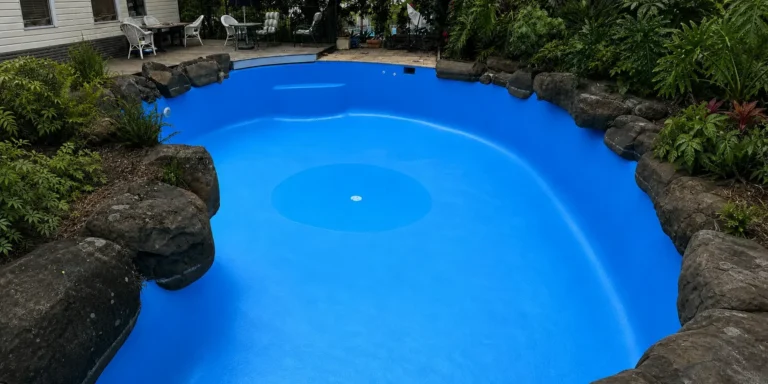
These photographs show preparation and repair stages from projects involving this pool problem. The exact approach is confirmed after inspection and once the pool has been emptied and the shell condition is exposed.

Our Repair Process

How we assess, repair and resurface the pool

Every pool is assessed individually, and the precise repair depends on the shell, substrate and site conditions. Where repair is suitable, the work generally follows five stages—from confirming the scope through to the reinforced lining, finish and handover.

1

Assess and plan

We review the pool details and photographs and arrange a site inspection where required. Hollow, loose or crumbling areas, cracks, water entry and previous repairs are considered. Once the pool is empty, systematic tap-testing can map the loss of bond and confirm the final repair scope.

2

Prepare the existing surface

The surface is tap-tested to locate loose, hollow or poorly bonded areas. Unstable render, plaster, pebblecrete or earlier levelling material is removed back to a sound edge, then the exposed substrate is cleaned and checked for moisture, cracks, contamination, voids and movement.

3

Repair and level

Removed areas, cracks, voids and irregular transitions are repaired according to their depth and condition. Deeper losses are rebuilt and levelled to restore a continuous profile, while active movement or deterioration beyond the interior finish is identified for separate action before the lining is installed.

4

Install the reinforced lining

A reinforced fibreglass lining is applied across the prepared and repaired interior to form one continuous system. Additional reinforcement is incorporated over rebuilt areas and transitions where required. The completed lining integrates the repairs and creates an even foundation for the selected AquaGuard finish.

5

Finish and handover

Two UV-stabilised AquaGuard top coats are applied in the selected colour, followed by the chosen speckle finish. Once cured, the completed surface is inspected, applicable fittings are refitted and the hydrostatic valve is replaced where required. Guidance is then provided for refilling, initial water balancing and ongoing care.

REQUEST AN ASSESSMENT

Concerned about a loose or hollow pool surface?

Tell us where render, plaster, pebblecrete or another cement-based finish sounds hollow, flexes, cracks or breaks away. The affected boundary can extend beyond the first visible area, so the empty pool requires a bond survey before the repair scope is confirmed.

Location and approximate extent of hollow or loose areas
Cracking, crumbling, moisture or movement at the edges
Current finish, previous repairs and clear photographs
YOUR POOL

Tell us about the loose or hollow surface

Loose or hollow masonry surface assessment enquiry

Loose or Hollow Masonry Surface FAQs

What does it mean when a pool surface sounds hollow or drummy?

A pool surface described as hollow or drummy makes a noticeably different sound when lightly tapped because the render, plaster, Pebblecrete, Marblesheen or earlier levelling layer may no longer be fully bonded to the concrete shell. The surface can still look intact, so tapping is only a screening check; it does not show the full boundary or cause. The empty pool should be systematically surveyed, with loose areas opened back to sound material so moisture, cracks, contamination and movement in the substrate can be assessed before resurfacing.

Can loose or hollow Pebblecrete or Marblesheen be repaired locally, or must it be removed?

A local repair may be suitable where the hollow area is clearly contained and the surrounding finish remains sound and firmly bonded. If drummy areas are widespread, recurring, soft or connected by cracking, progressive removal may show that a broader section—or the existing finish—needs to be taken back to the concrete shell. The decision is made after the pool is emptied and the surface is tap-tested. Unstable material must not be left beneath a new lining. Where older Marblesheen could contain asbestos, testing and compliant removal planning are required before it is disturbed. The exposed base is then repaired and levelled before resurfacing.

Can fibreglass be installed over existing pebblecrete?

Often, provided the existing pebblecrete and the concrete shell beneath it are sound enough to form a stable base. Loose, hollow, deteriorated or contaminated material must be removed, while cracks, previous repairs and uneven areas are treated before the new lining is installed.

Firmly bonded pebblecrete is mechanically prepared, levelled where required and primed before the reinforced fibreglass system is applied. The final scope can only be confirmed after the pool is emptied and the exposed surface is inspected; the new surface is not simply a coating applied over untreated pebblecrete.

Can fibreglass be installed over existing Marblesheen?

Often, provided enough of the Marblesheen and concrete shell beneath it remain sound enough to form a stable base. Loose, hollow, drummy or deteriorated material is removed, while firmly bonded areas are mechanically prepared. Cracks and previous repairs are treated and rough or uneven sections are levelled before the reinforced lining is installed. The work is not simply a coating over untreated Marblesheen; the final preparation and repair scope is confirmed after the pool is emptied and the exposed interior inspected.

Pool Types
Services & Finishes
Common Pool Problems
Commercial Pool Services
Projects & Resources
Need help with your pool?

Send us a few photos and our team can help identify the likely issue and the most suitable next step.

Servicing QLD and NSW