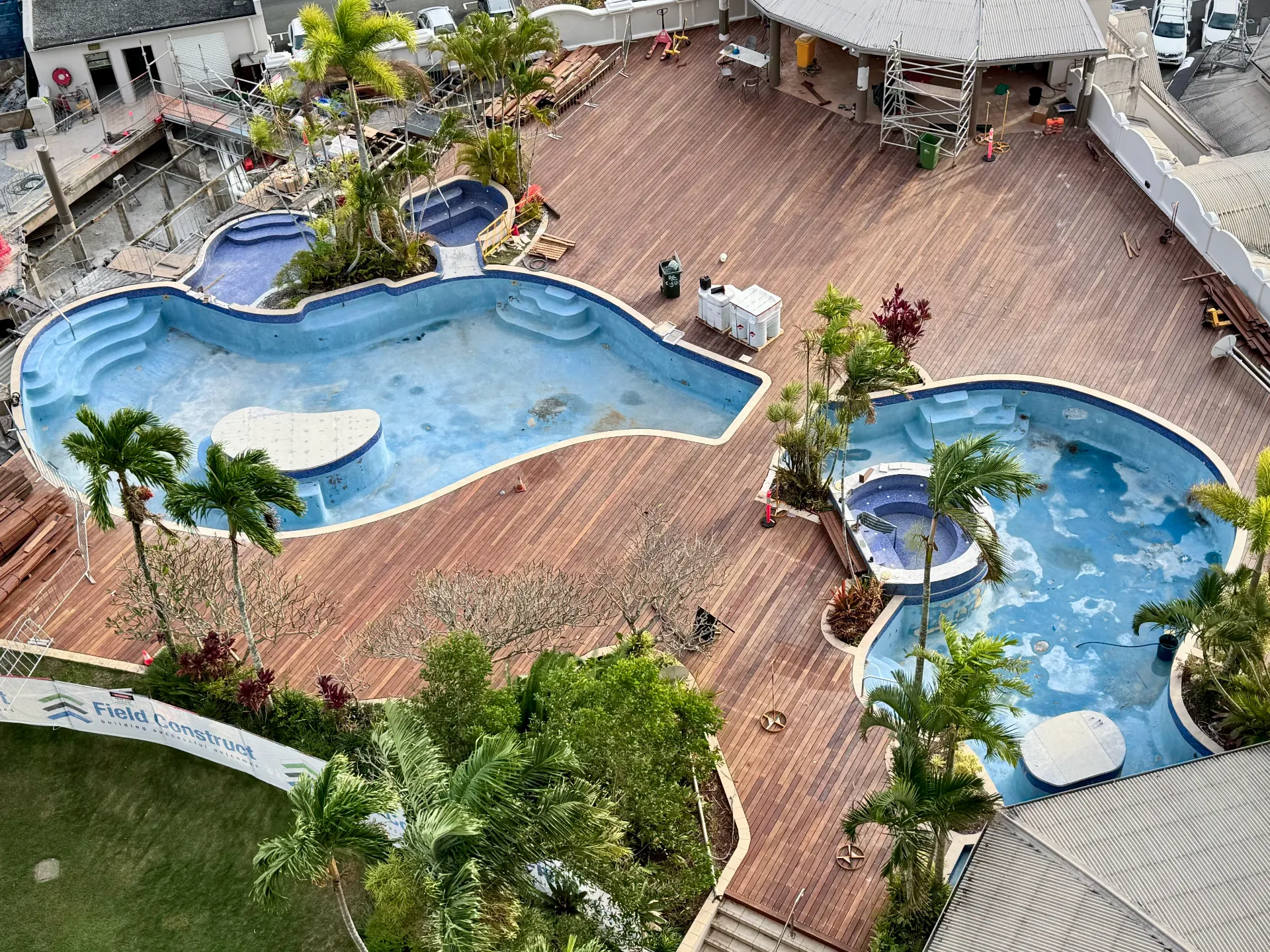
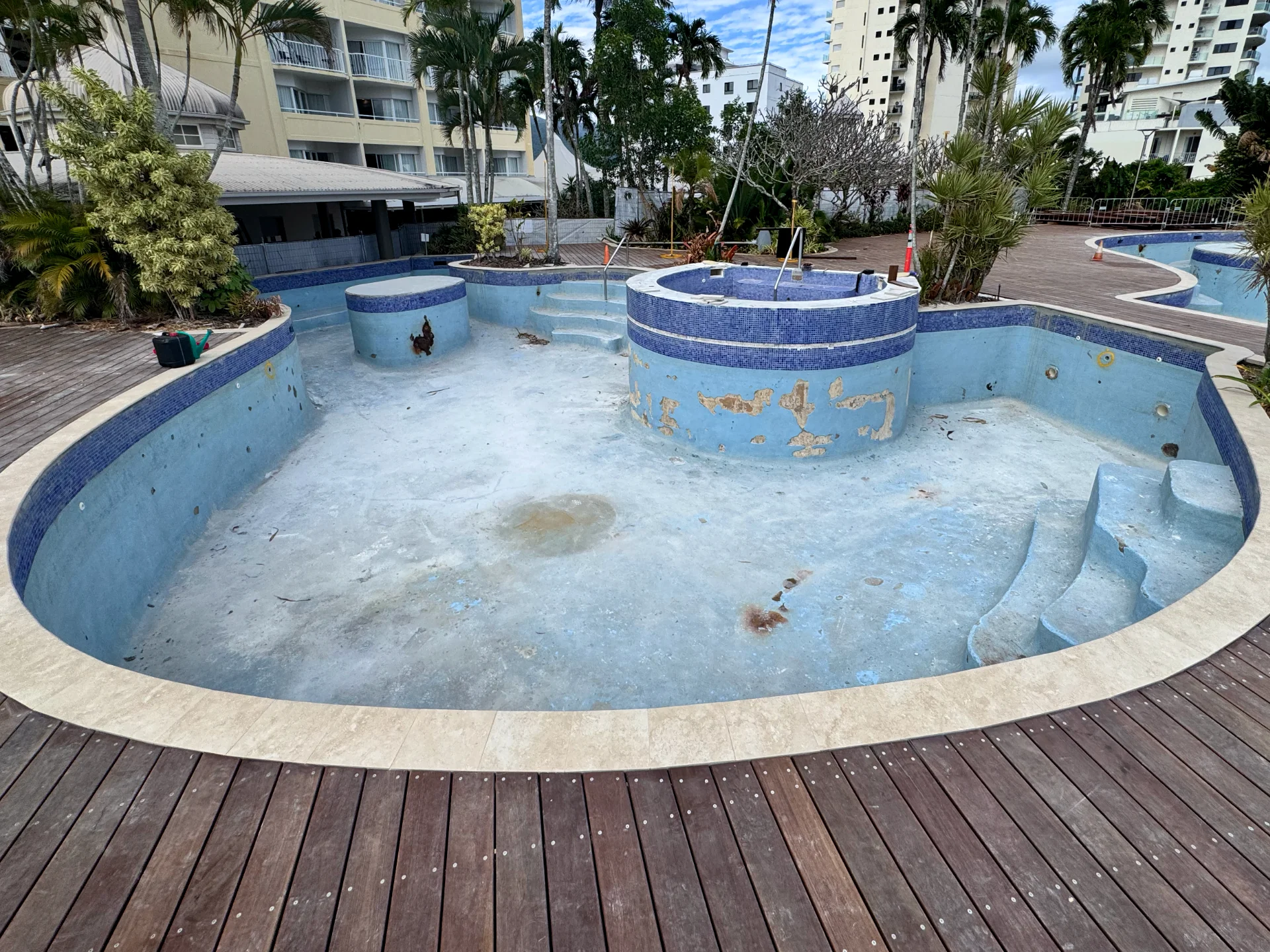
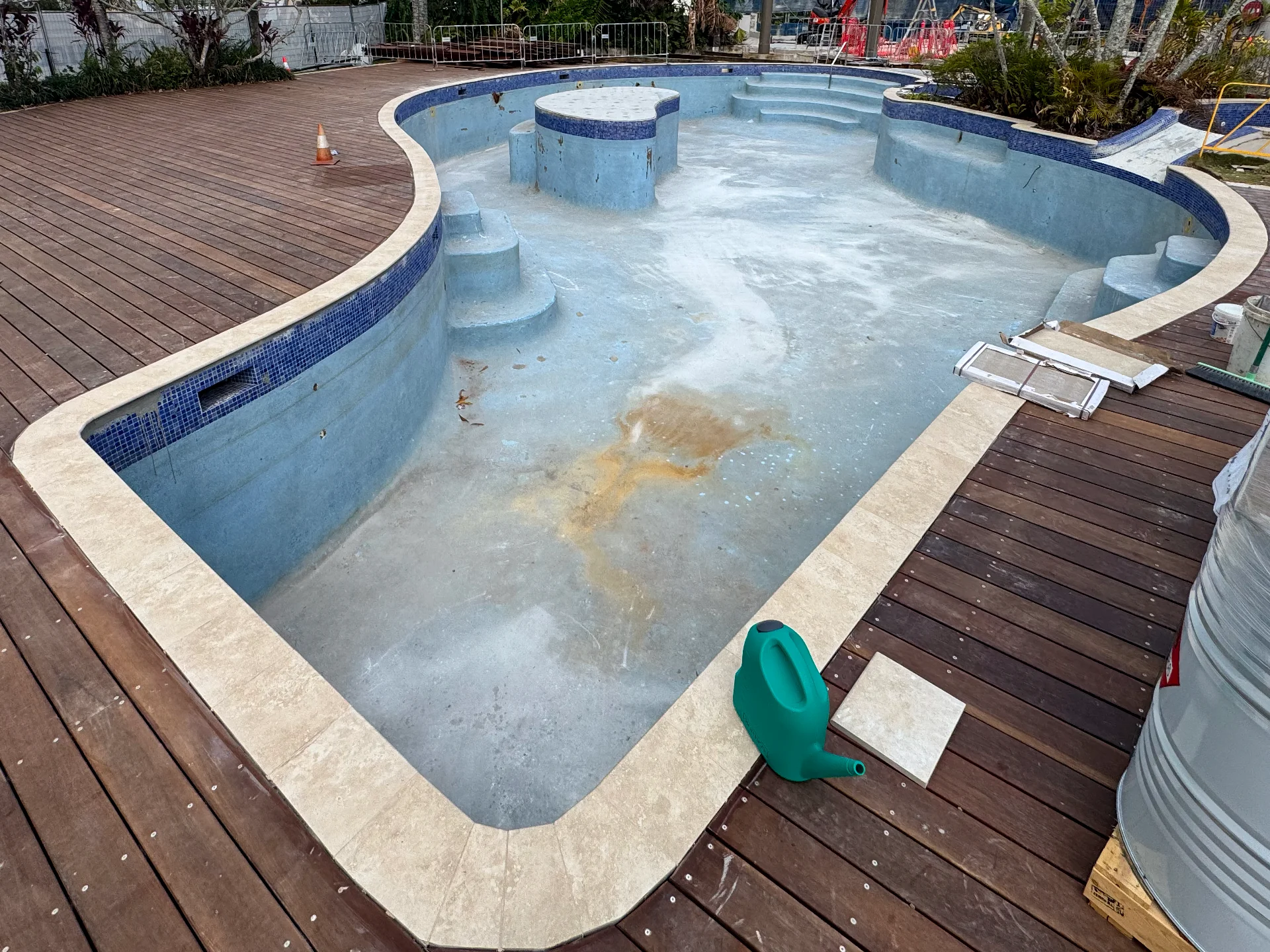
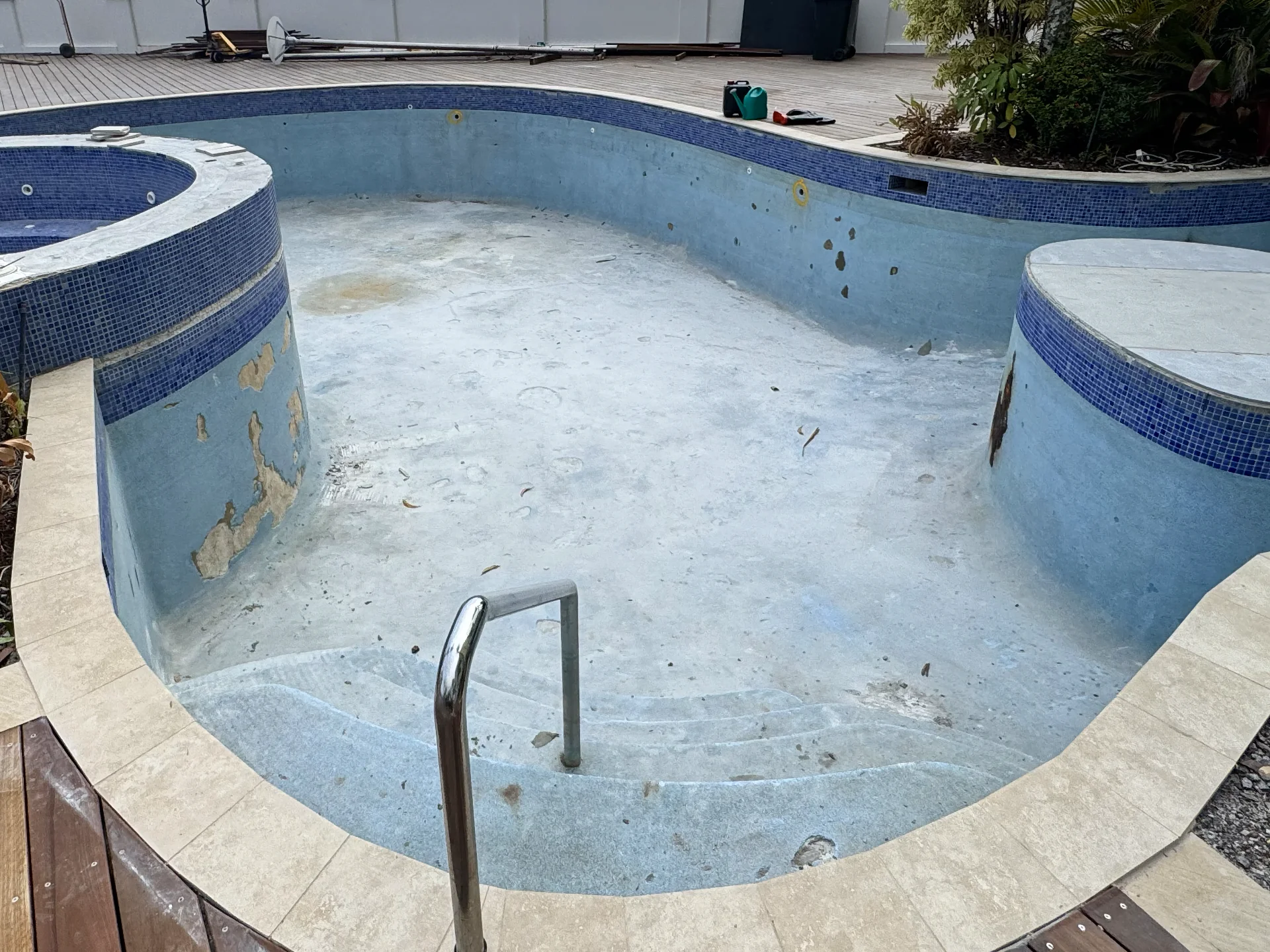
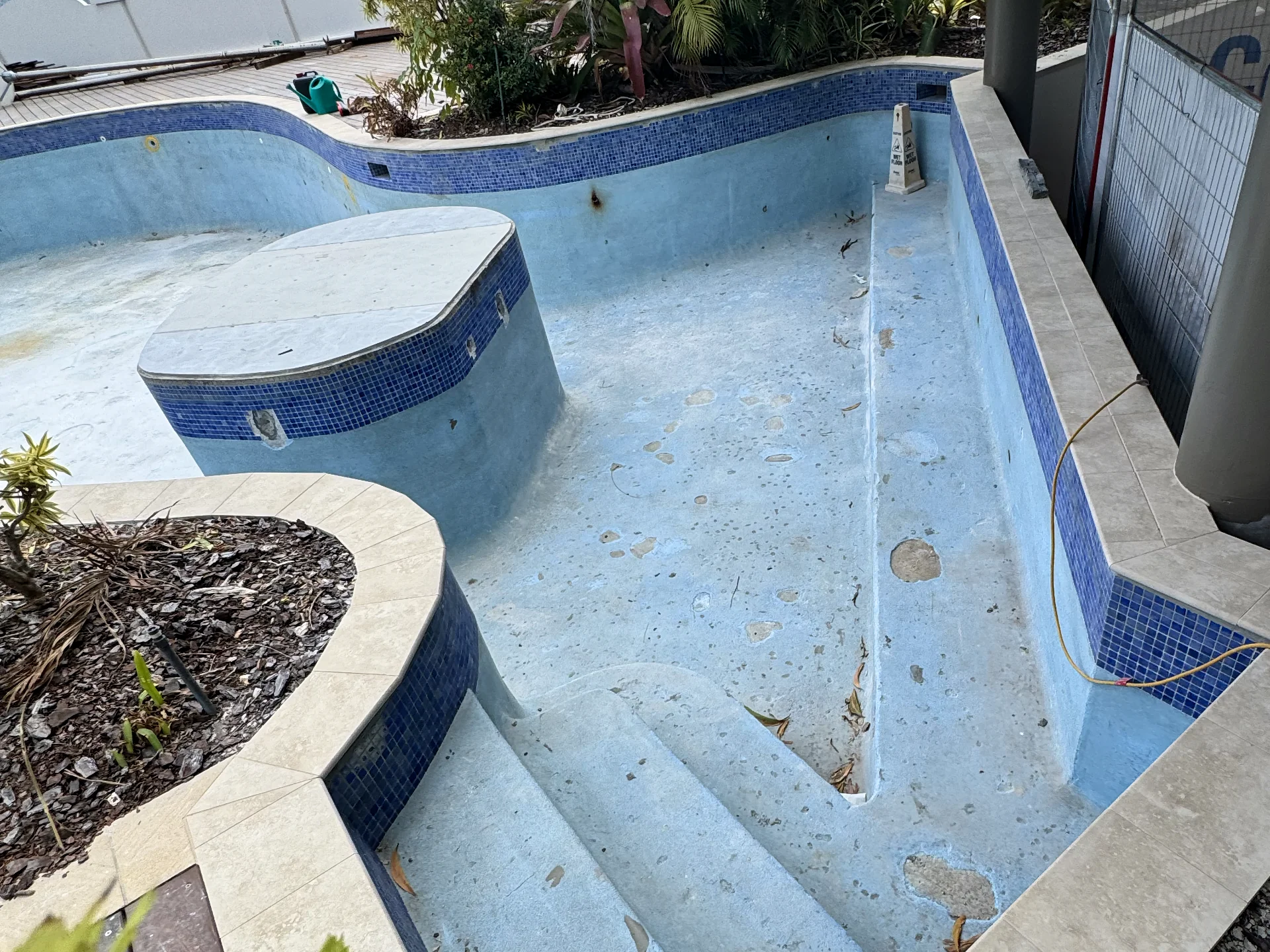
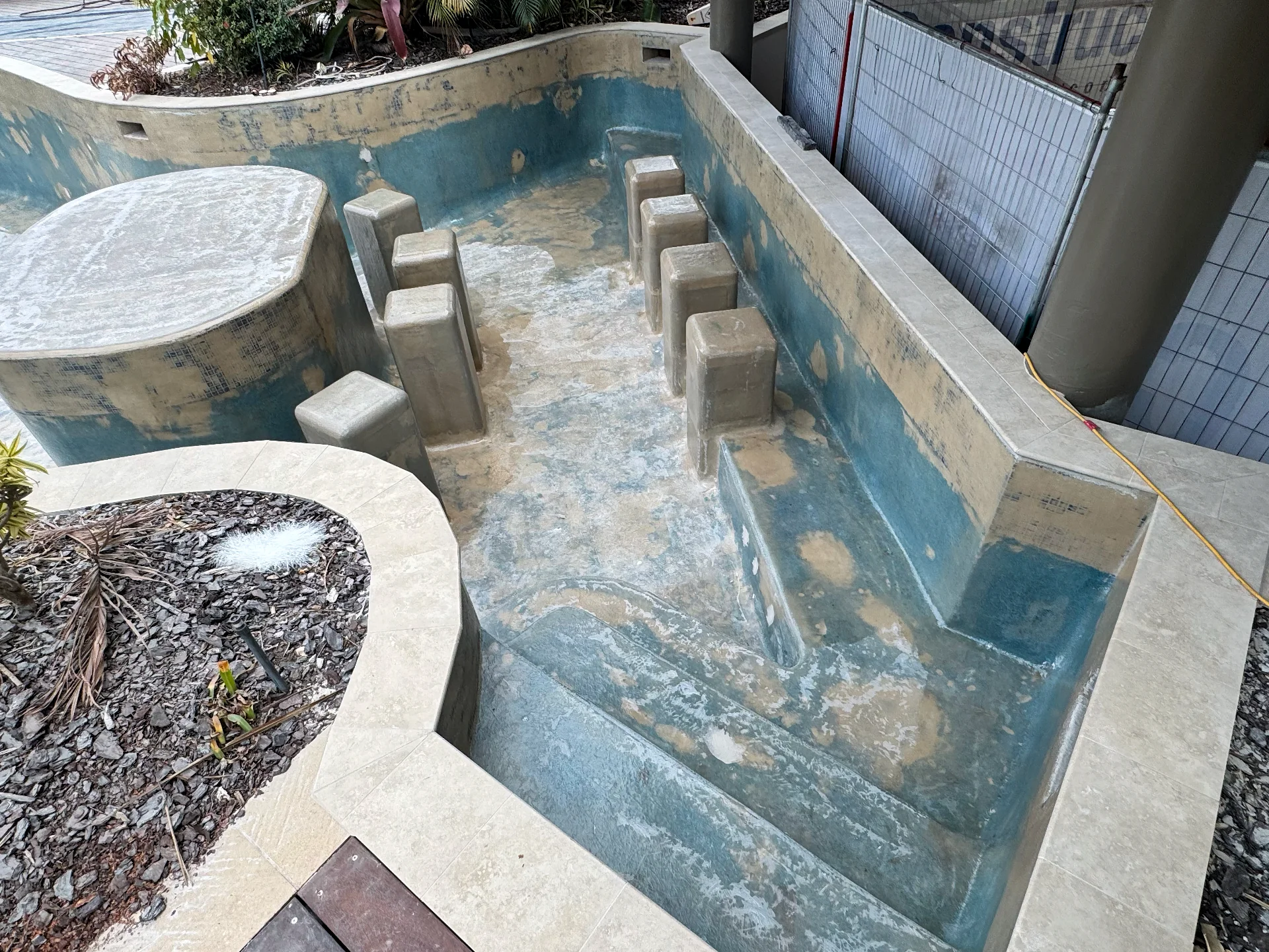
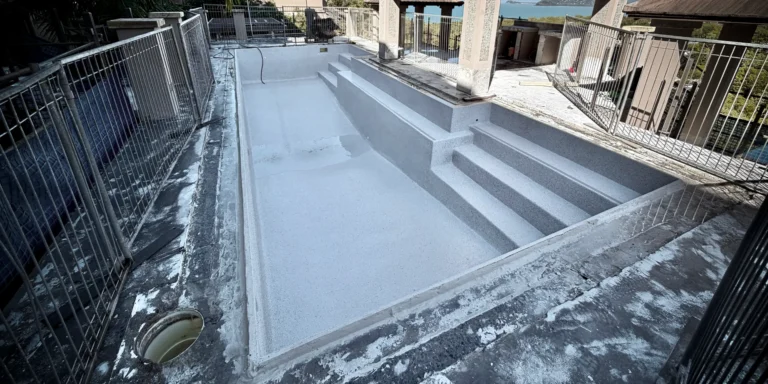
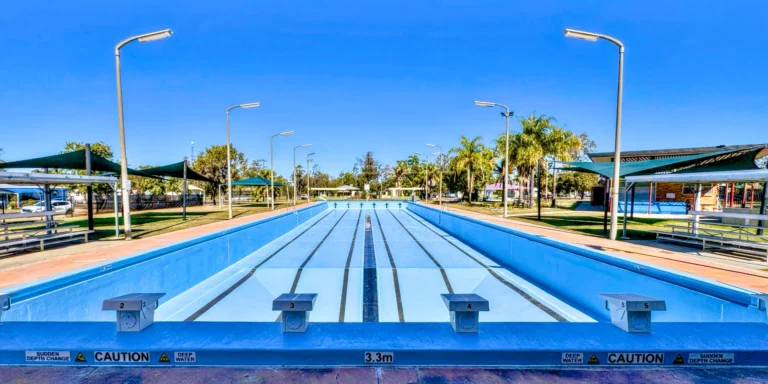
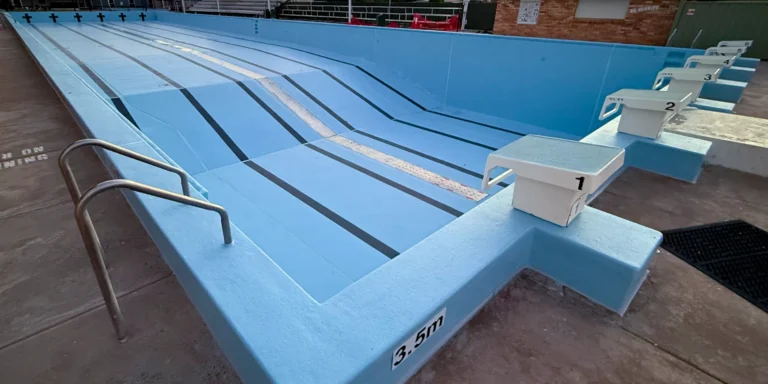
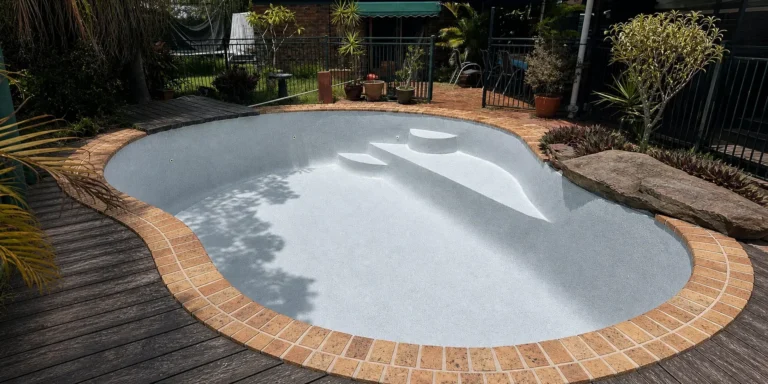
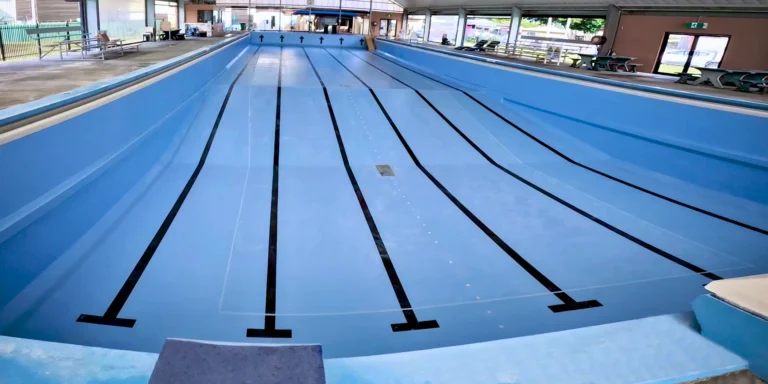
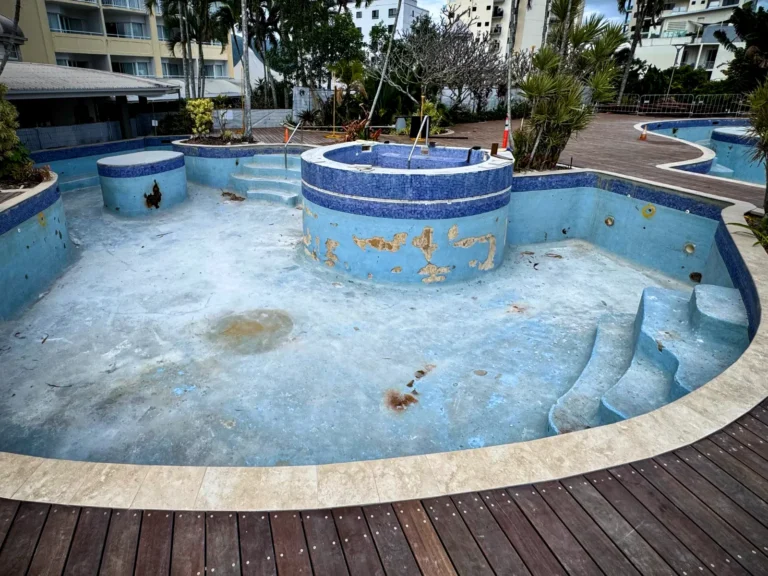
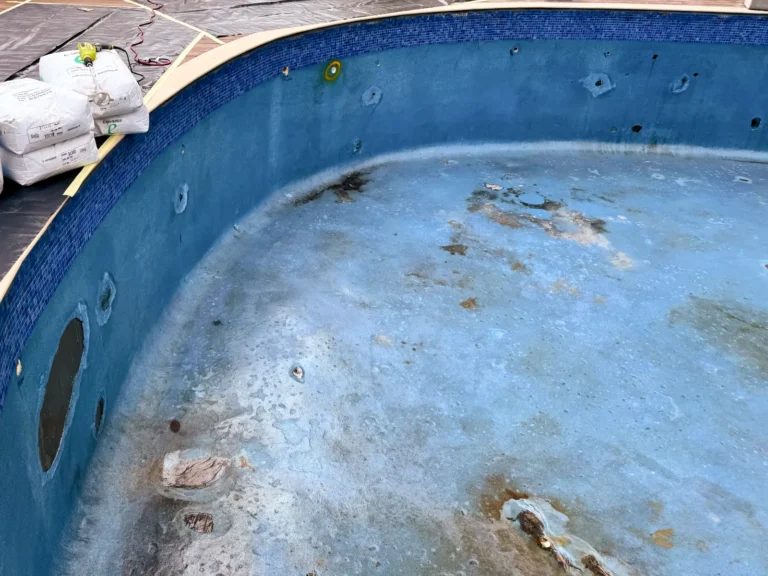
In July 2025, Fibreglaze restored the north and south resort pool basins on the level-three pool deck at Pullman Cairns International. The existing Marblesheen surface showed extensive wear and staining, areas of delaminated render, localised rust-affected patches and failure around the waterline tile band associated with expansion cracking.
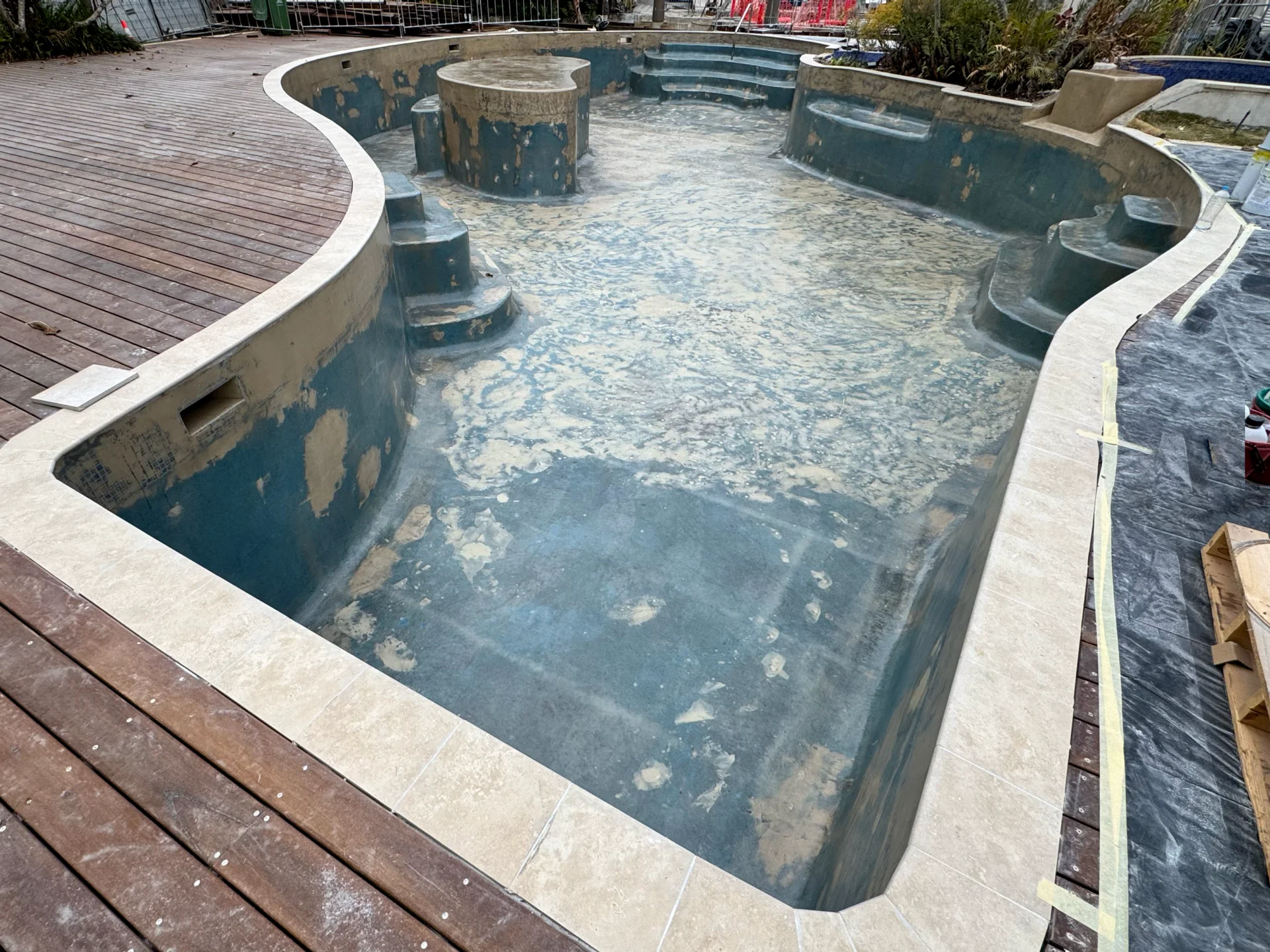
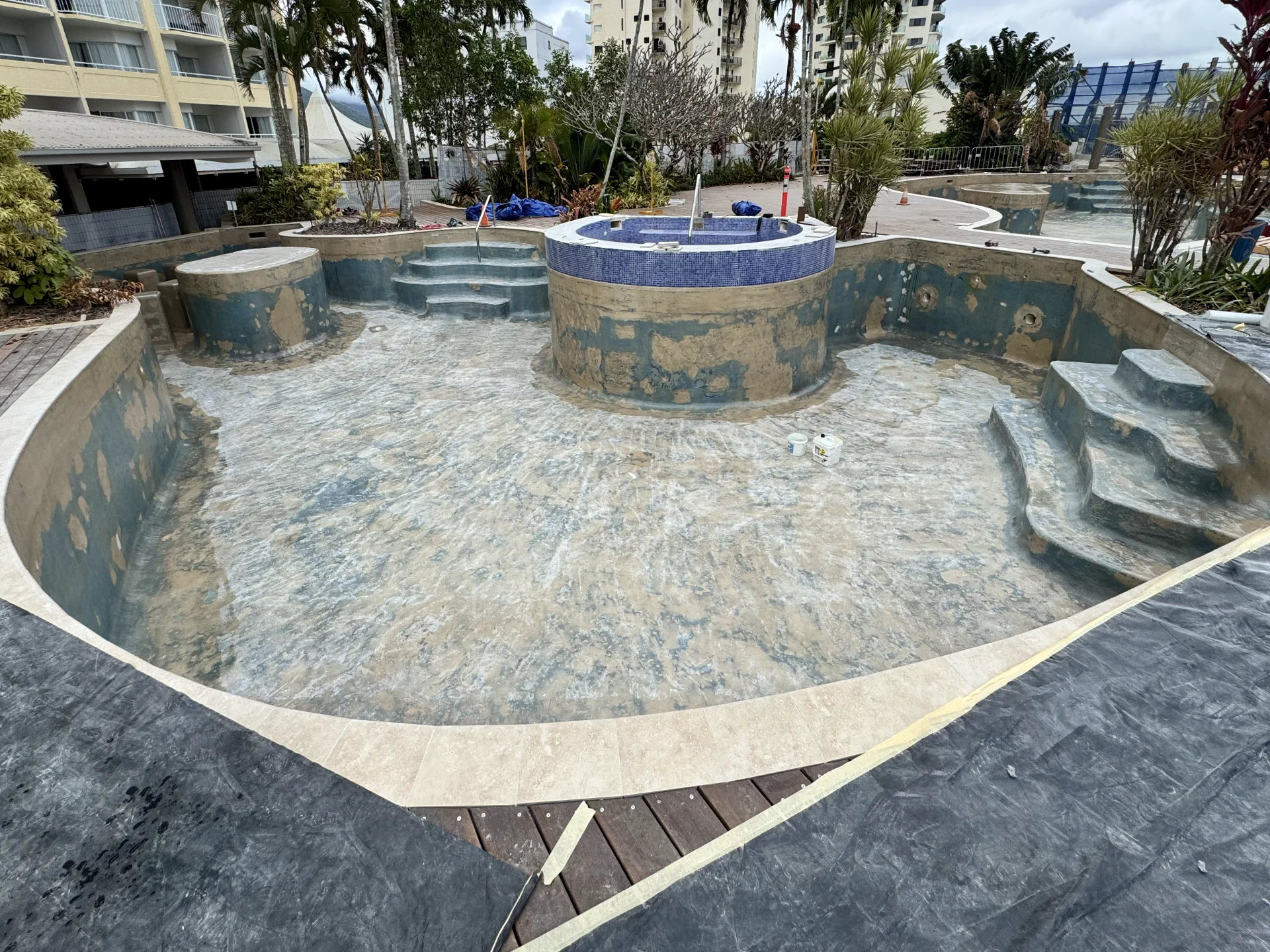
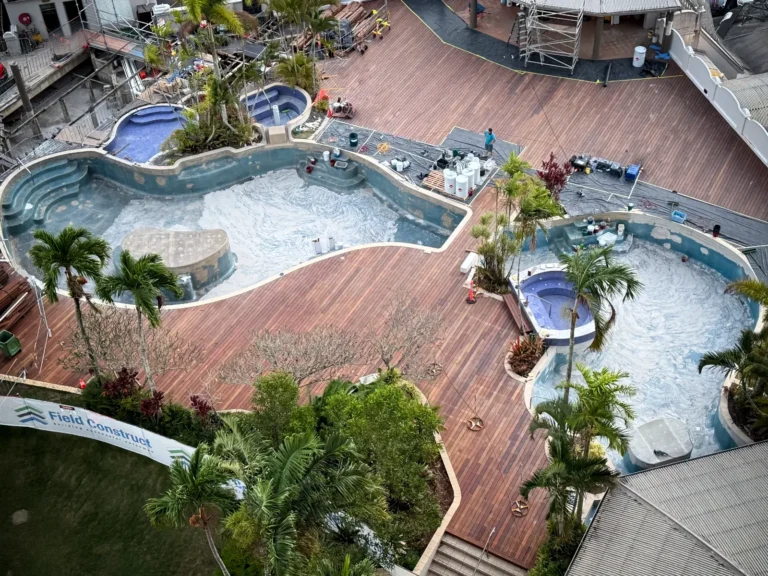
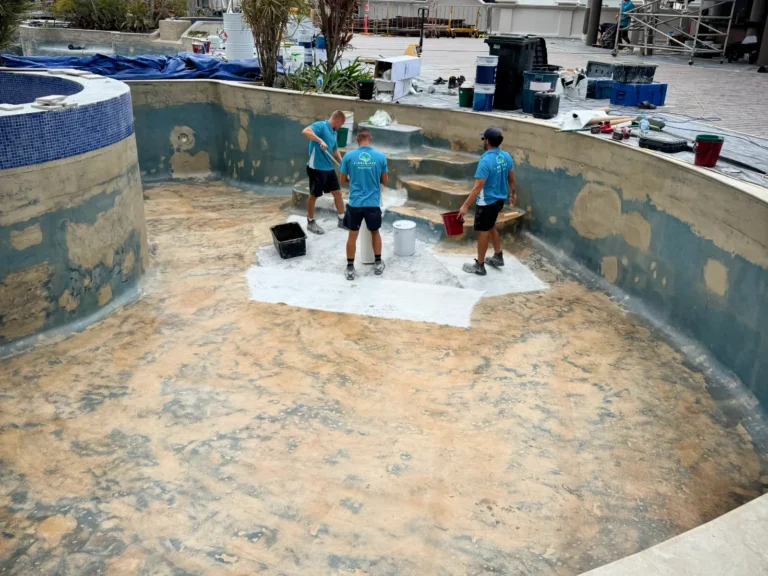
Across approximately 450 m², the pools were acid washed and mechanically prepared before localised defects were treated, repaired and levelled with resin-based filler screed. The waterline tile band was incorporated into the new surface, followed by a vinyl ester fibreglass laminate and AquaGuard Dove Grey Speckle finish.
The project also included ten new white in-wall pool lights, two resurfaced island tops, eight custom in-pool pod seats and a formed infill to the spa-waterfall structure. The works were coordinated with the hotel project team, builder, designer and electrical trades as part of the wider pool-deck refurbishment.
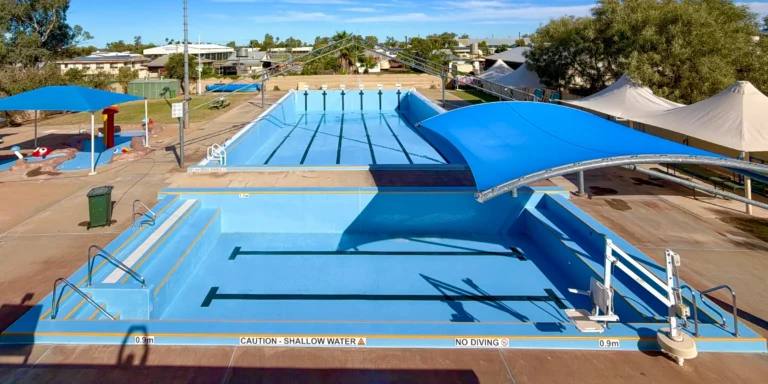
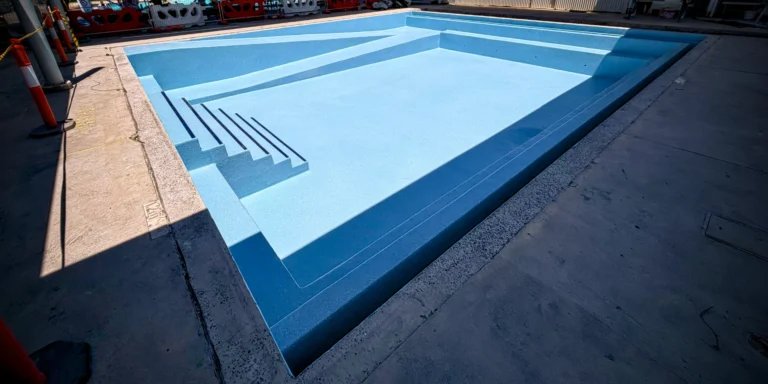
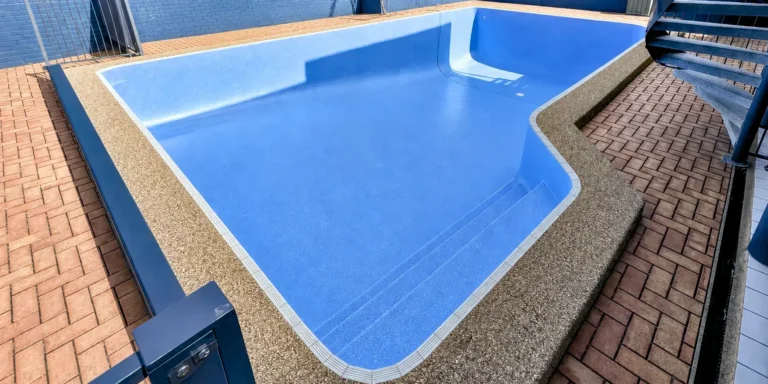
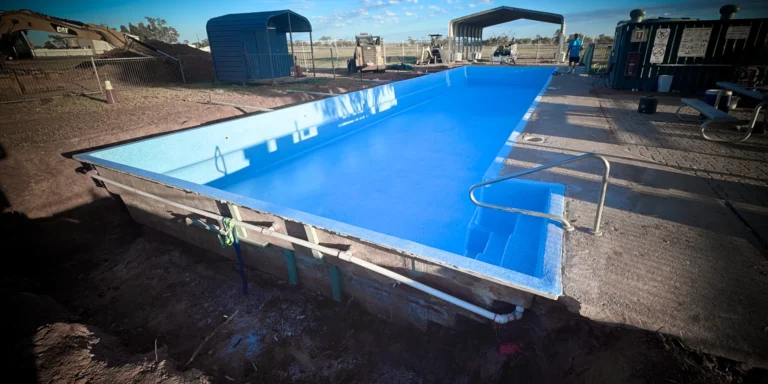
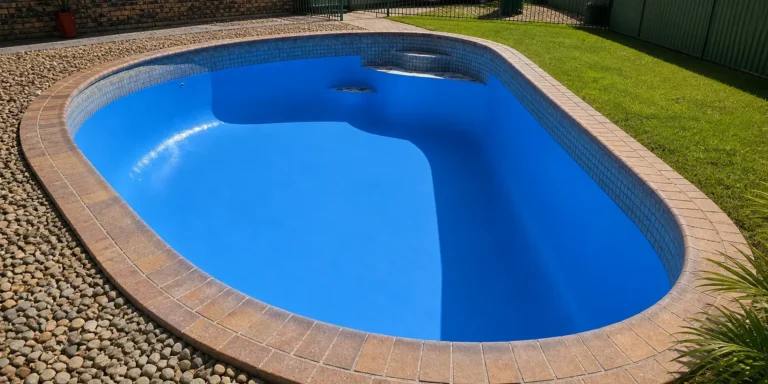
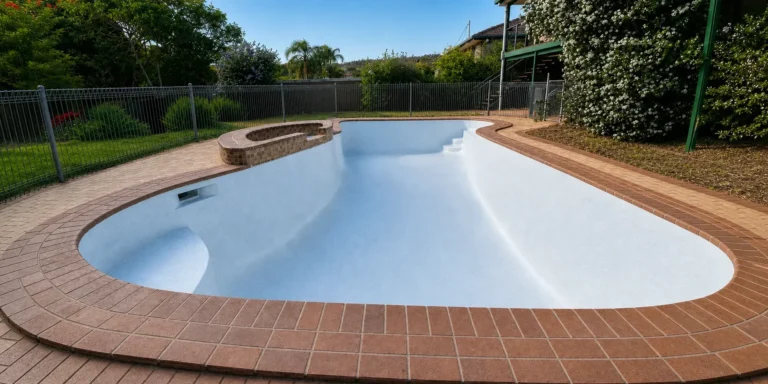
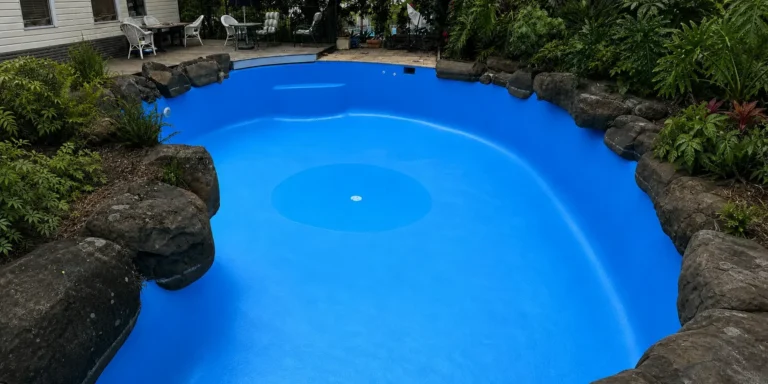
These photographs follow the work from the pool’s original condition through preparation and repair to the completed finish.
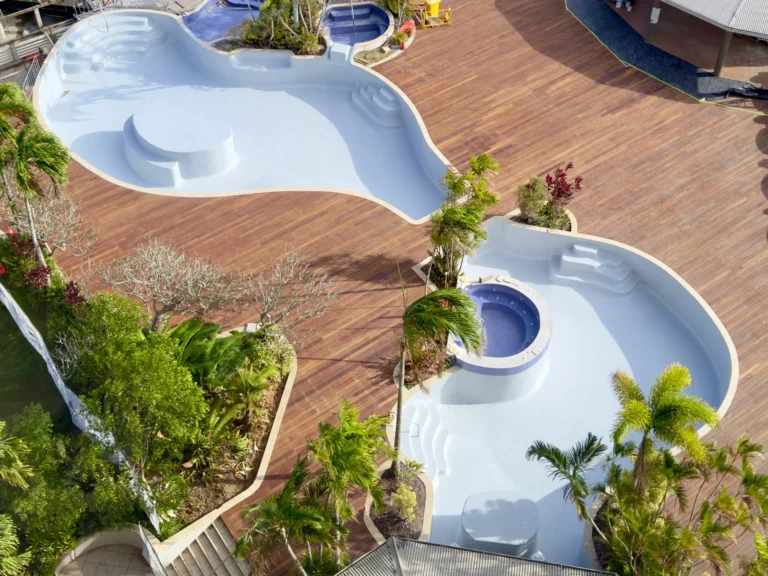
These were the main pool conditions recorded for this project. Select an issue to learn more about its common signs, possible causes and repair considerations.
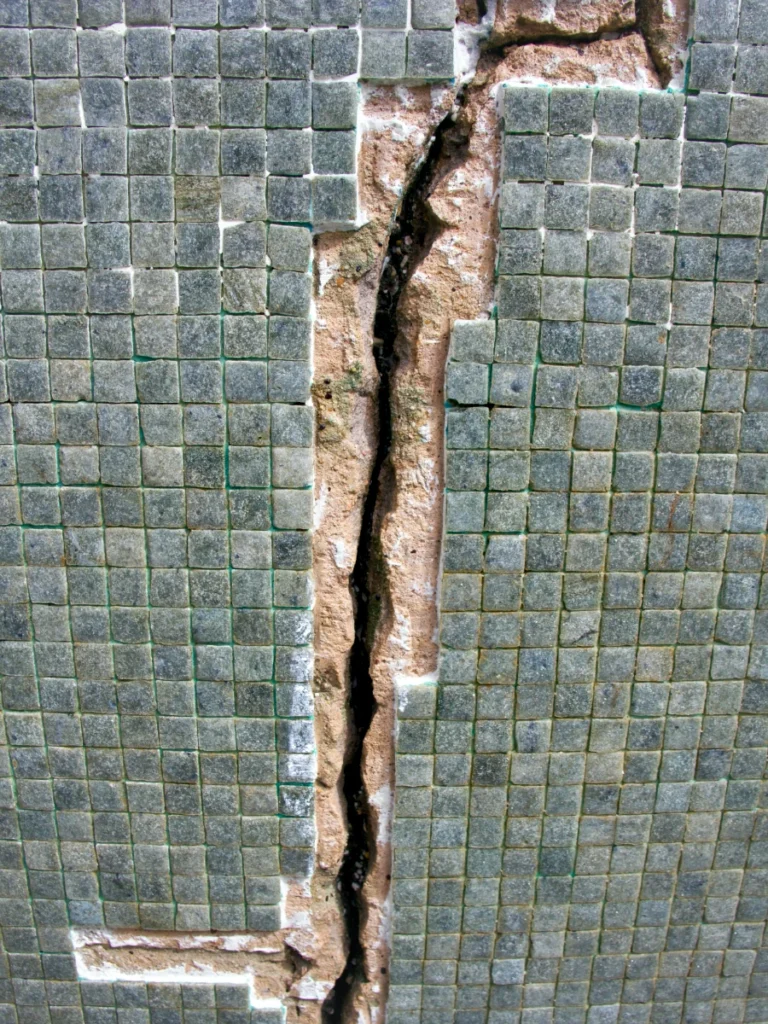
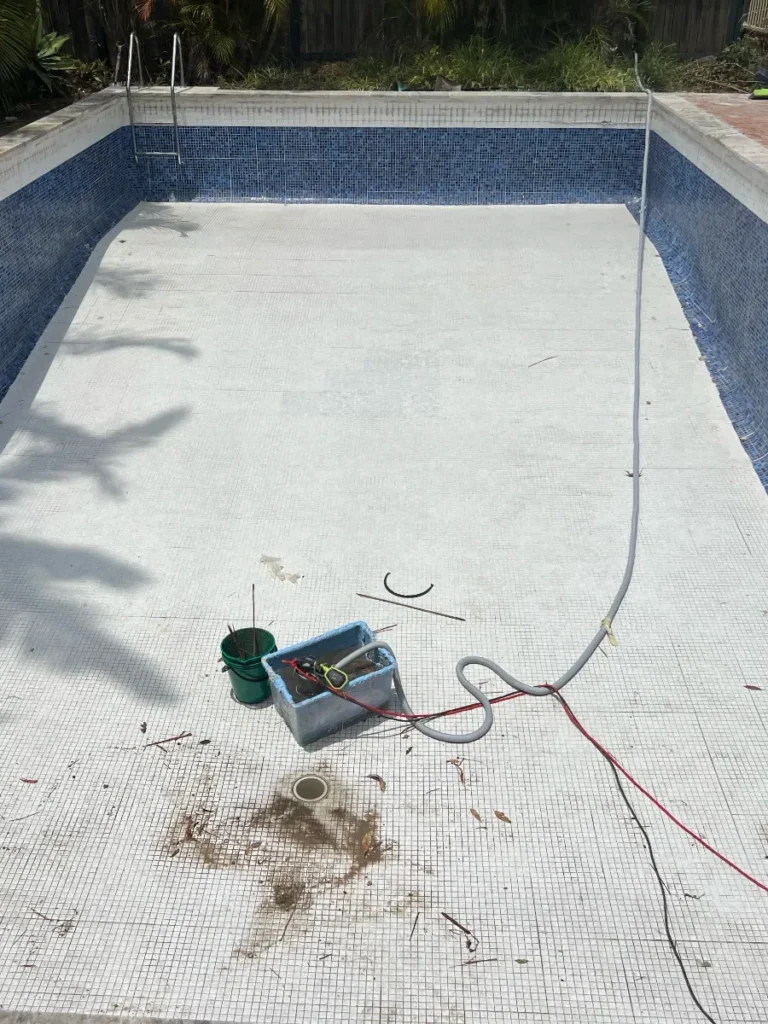
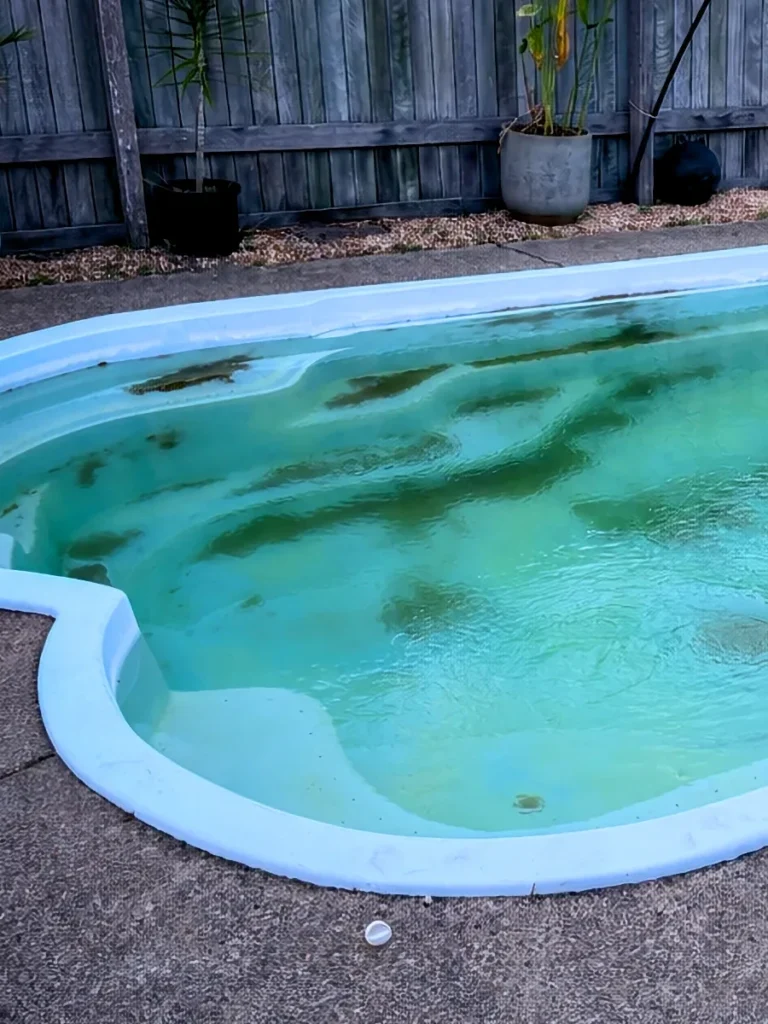
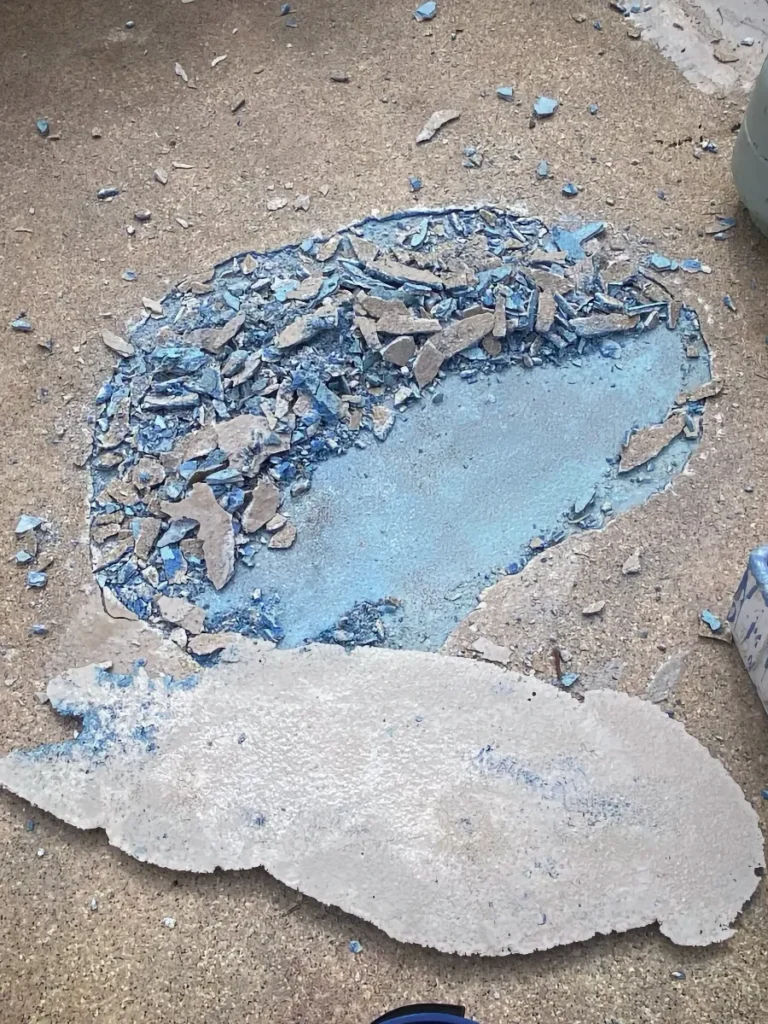
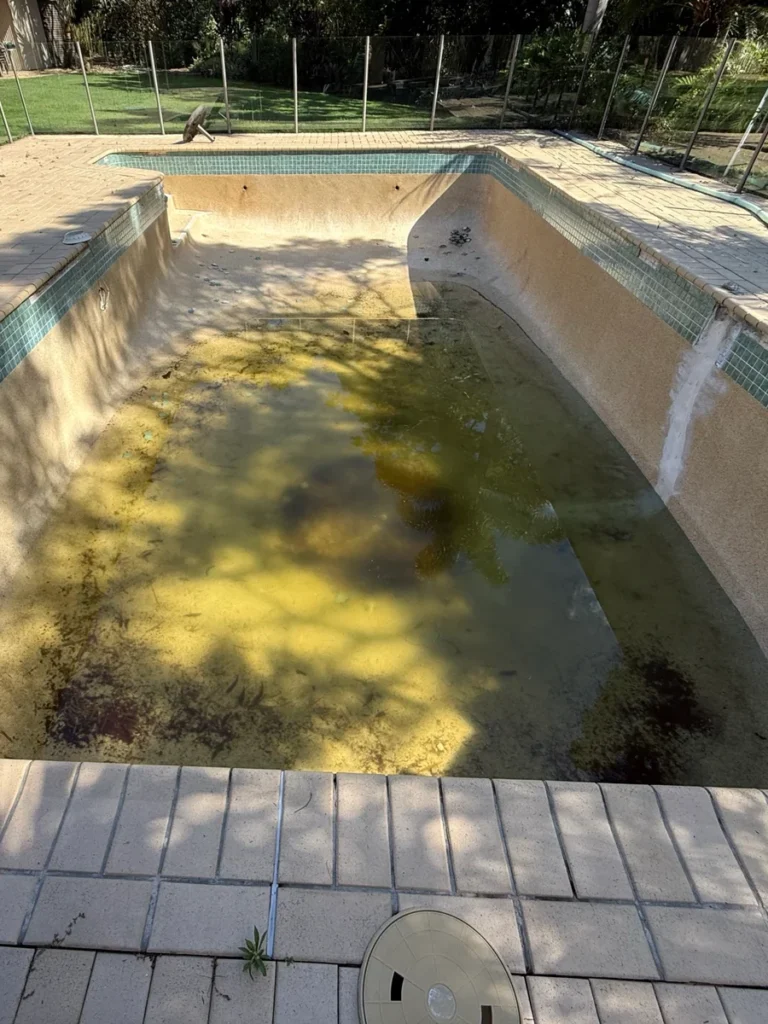
Additional views of the preparation, repair work and completed finish.
Everything looked and felt very good, including the step-tread grip. (July 2025)
The Pullman pool continues to look excellent. (March 2026)
Answers to common questions about the pool conditions and restoration work shown in this project.
These are common signs that the existing gelcoat is oxidising or wearing away. If the surface is faded, difficult to clean, rough underfoot or no longer holding its colour, resurfacing will restore a smooth, fresh-looking finish.
A pool surface described as hollow or drummy makes a noticeably different sound when lightly tapped because the render, plaster, Pebblecrete, Marblesheen or earlier levelling layer may no longer be fully bonded to the concrete shell. The surface can still look intact, so tapping is only a screening check; it does not show the full boundary or cause. The empty pool should be systematically surveyed, with loose areas opened back to sound material so moisture, cracks, contamination and movement in the substrate can be assessed before resurfacing.
A fine hairline crack is not automatically structural, but its width alone does not determine the risk. Location, depth, direction, displacement, moisture, surrounding soundness and whether it is growing are all important. Fine crazing may be limited to the surface, while a crack through the shell can admit water or indicate movement. Photograph and mark the crack so changes can be monitored, and arrange an assessment if it is widening, leaking, recurring through repairs or associated with movement.
Pool stain colour alone does not confirm the cause. Brown or rust-coloured marks may involve iron or organic debris; green, grey or black marks can involve algae, copper, manganese or material trapped in a rough surface. Location, texture, recent water changes and the way a small test area responds are more useful than colour by itself. The source also needs attention, such as metals in fill water, corroding equipment, poor circulation or debris, otherwise the stain can return after cleaning.
Tiles and grout can deteriorate because of inadequate original bonding, poor preparation, water entering behind the finish, unsuitable grout, aggressive water chemistry, shell movement or missing movement allowance. A tile face may look sound even when the adhesive behind it has failed. Repeated grout loss, cracks and hollow-sounding areas suggest that more than the visible joint may be affected. The cause should be identified before tiles are reset so the same movement or moisture problem does not continue beneath the repair.
Oxidised gelcoat commonly looks faded, patchy or chalky and may leave a powdery residue when rubbed. Calcium scale is a mineral deposit added to the surface, so it is more likely to feel raised, crusted or sandpaper-like, particularly around the waterline and high-evaporation areas. Staining and scale can also sit over a worn finish, making visual diagnosis difficult. Check the water balance and have the surface assessed before using aggressive chemicals, because a treatment suited to scale can further damage ageing gelcoat.
Send us a few photos and our team can help identify the likely issue and the most suitable next step.