Finish :
Pool Type :
Location :
Size :
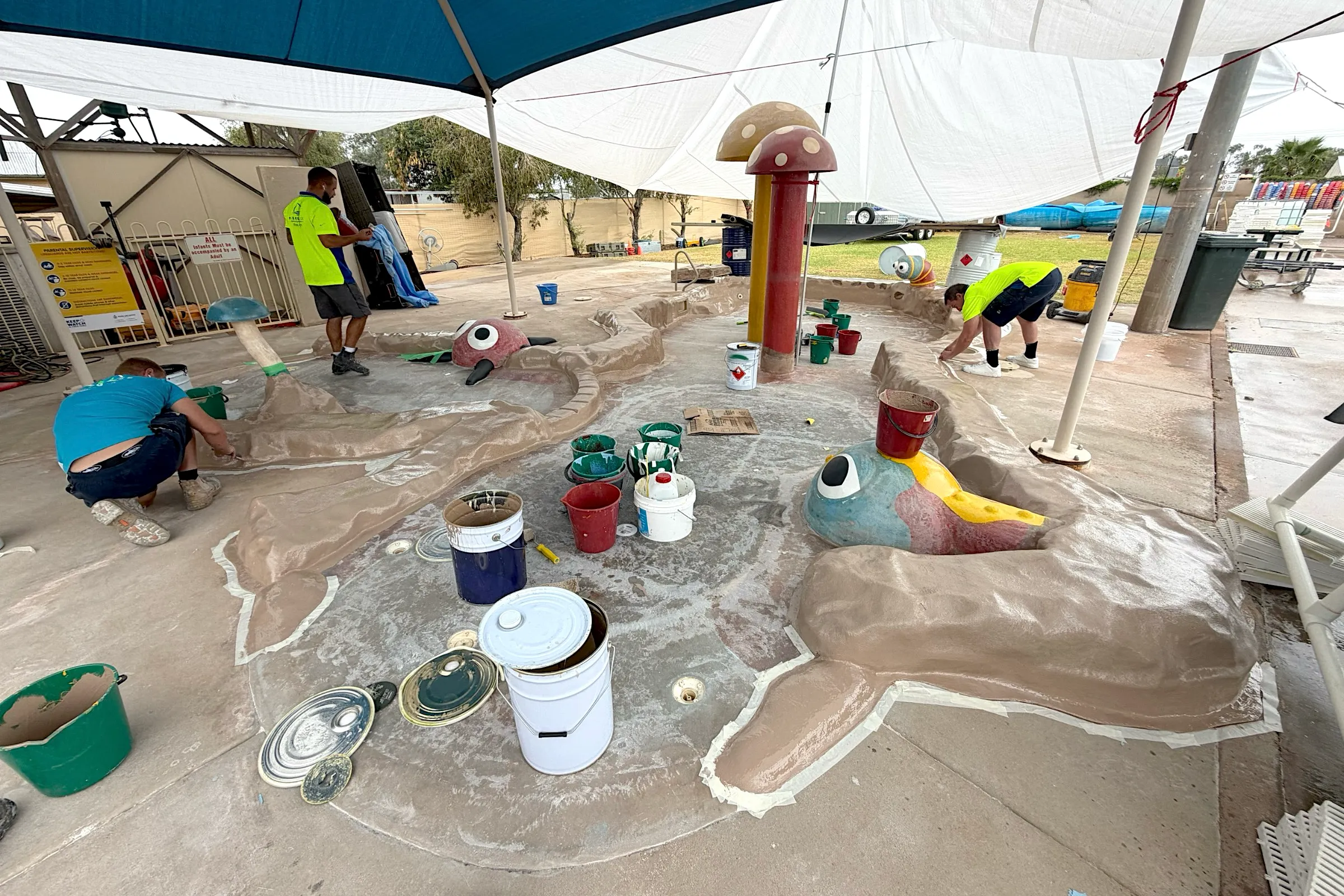
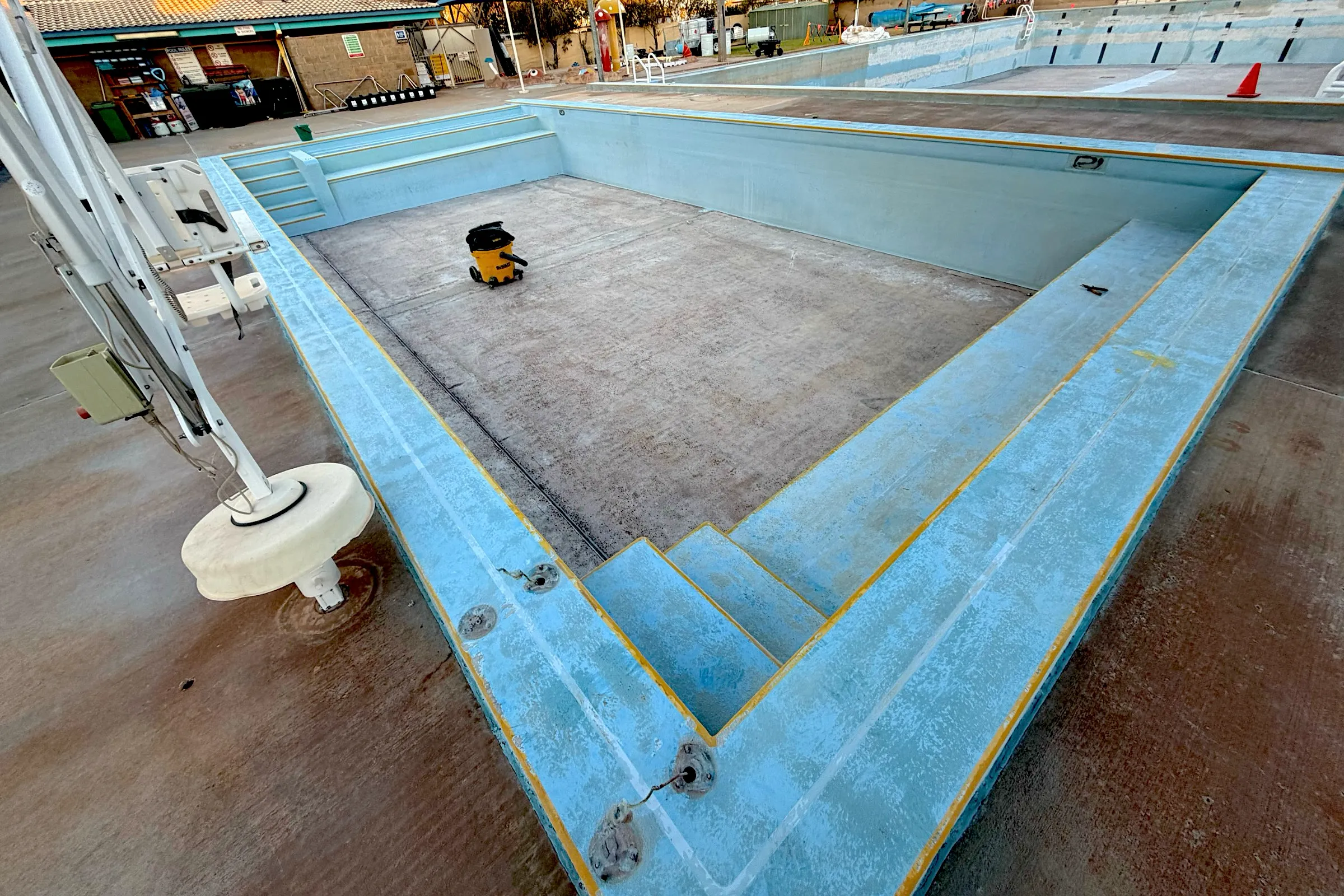
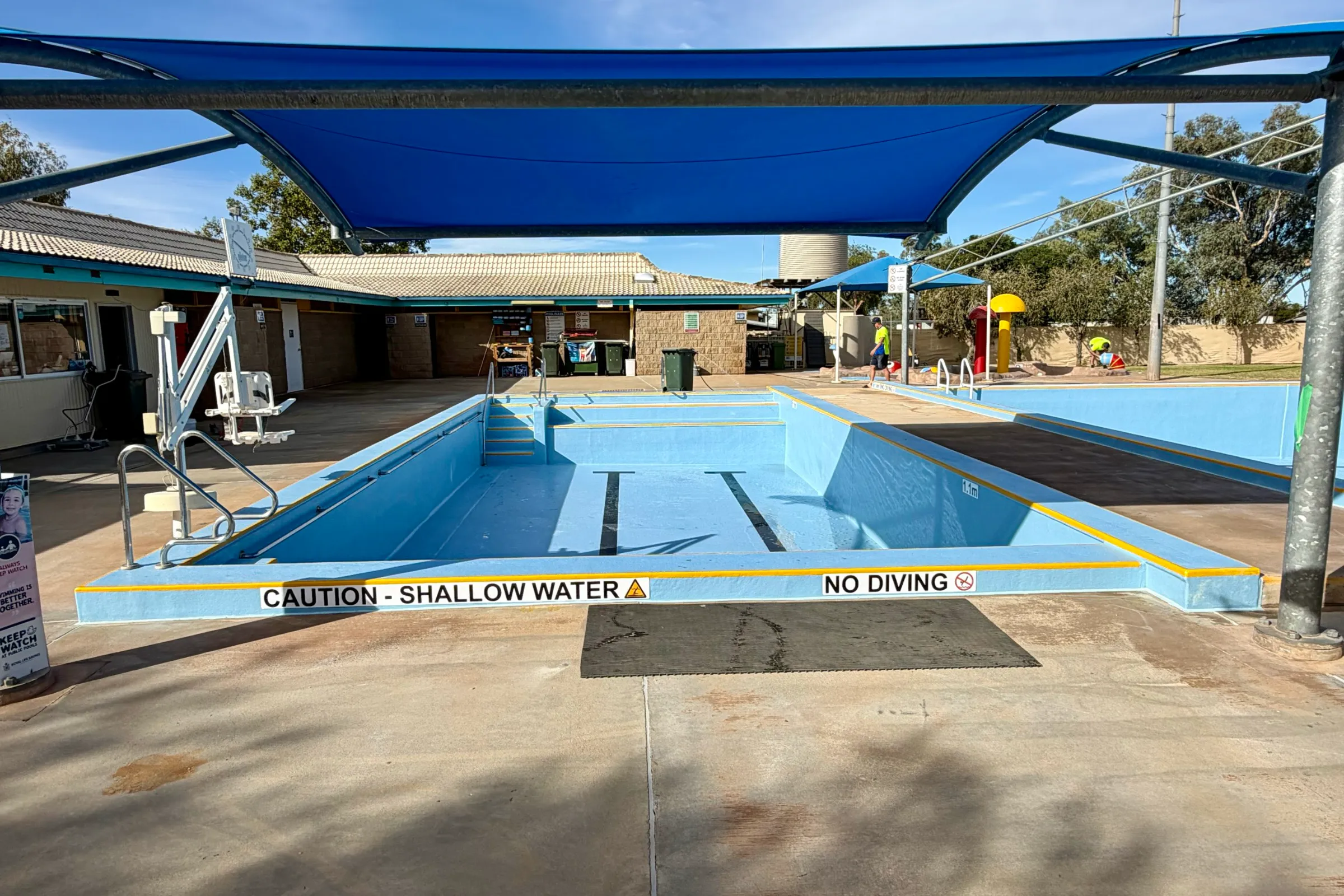
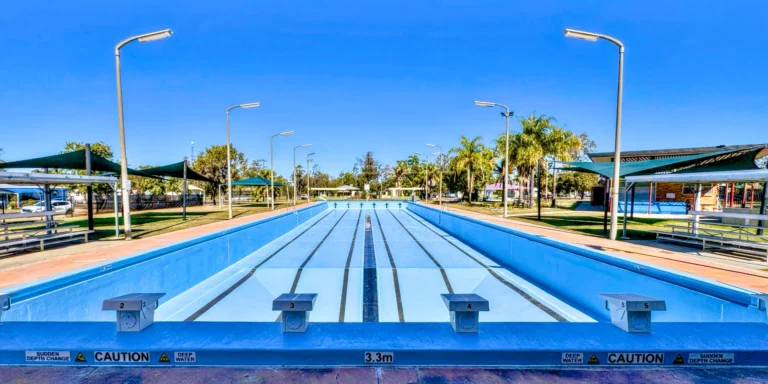
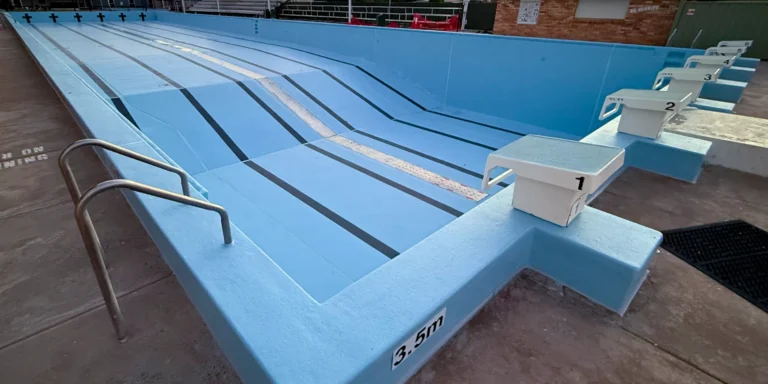
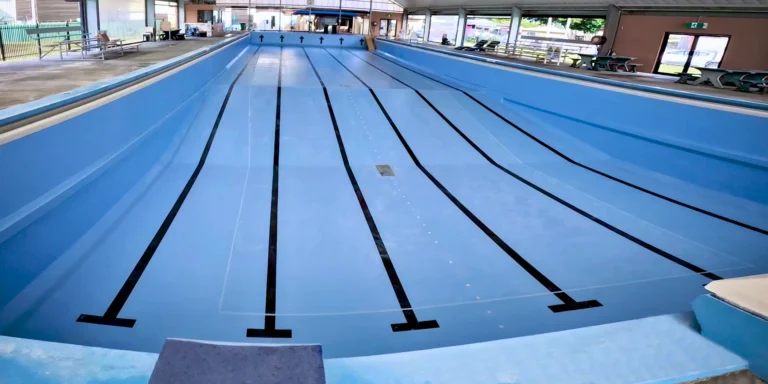
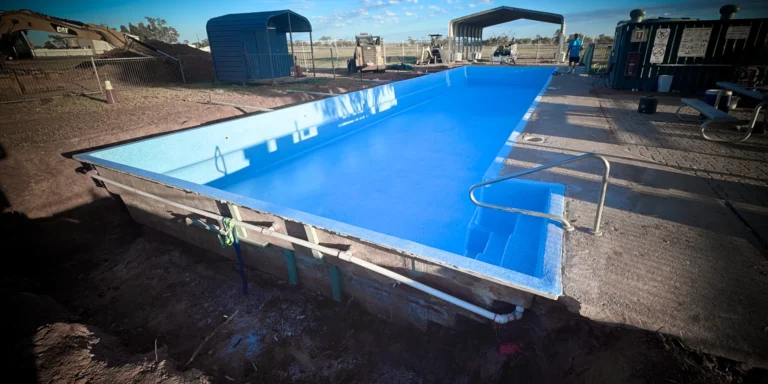
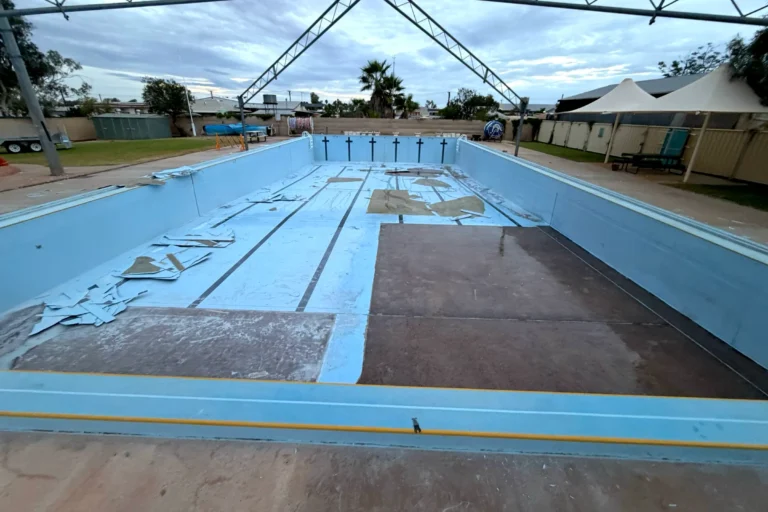
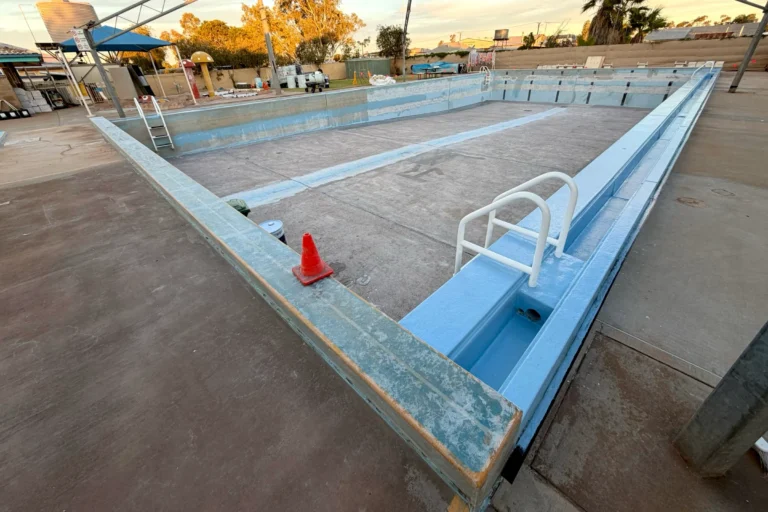
In May 2026, Fibreglaze resurfaced three public pools for Quilpie Shire Council in Quilpie, Queensland: the 25 m pool, children’s splash pool and 10 m Hydrocool wader. Each concrete pool had an existing fibreglass lining, with delaminated floor laminate that required complete removal. The pools also had faded, worn, stained, rough and dated surfaces, while repaired and rebuilt concrete areas required preparation before lining. At the 25 m pool, severe cracking in the wet-deck drainage channel caused significant water loss, and the surrounding deck was out of level, preventing water from draining evenly into the channel.
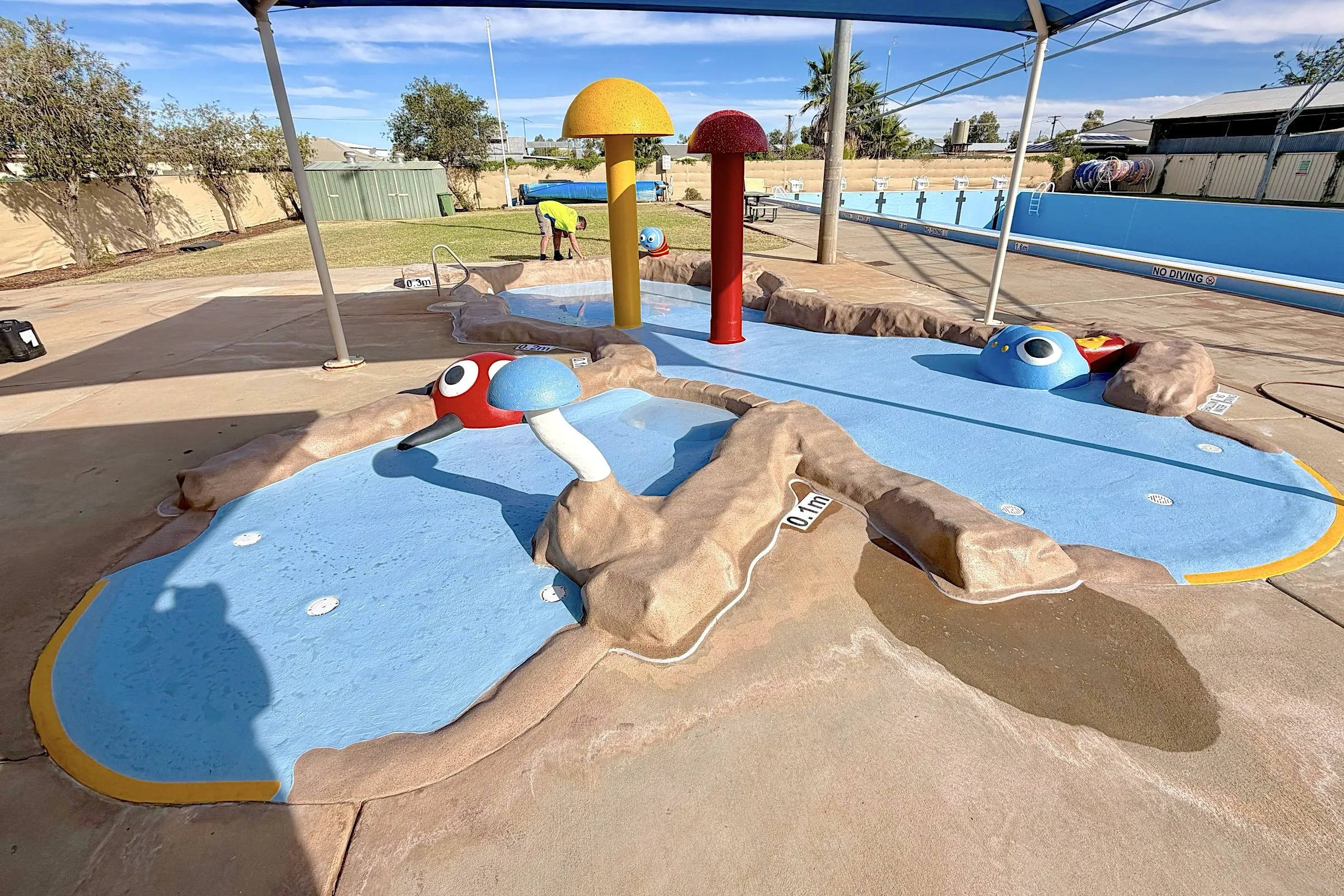
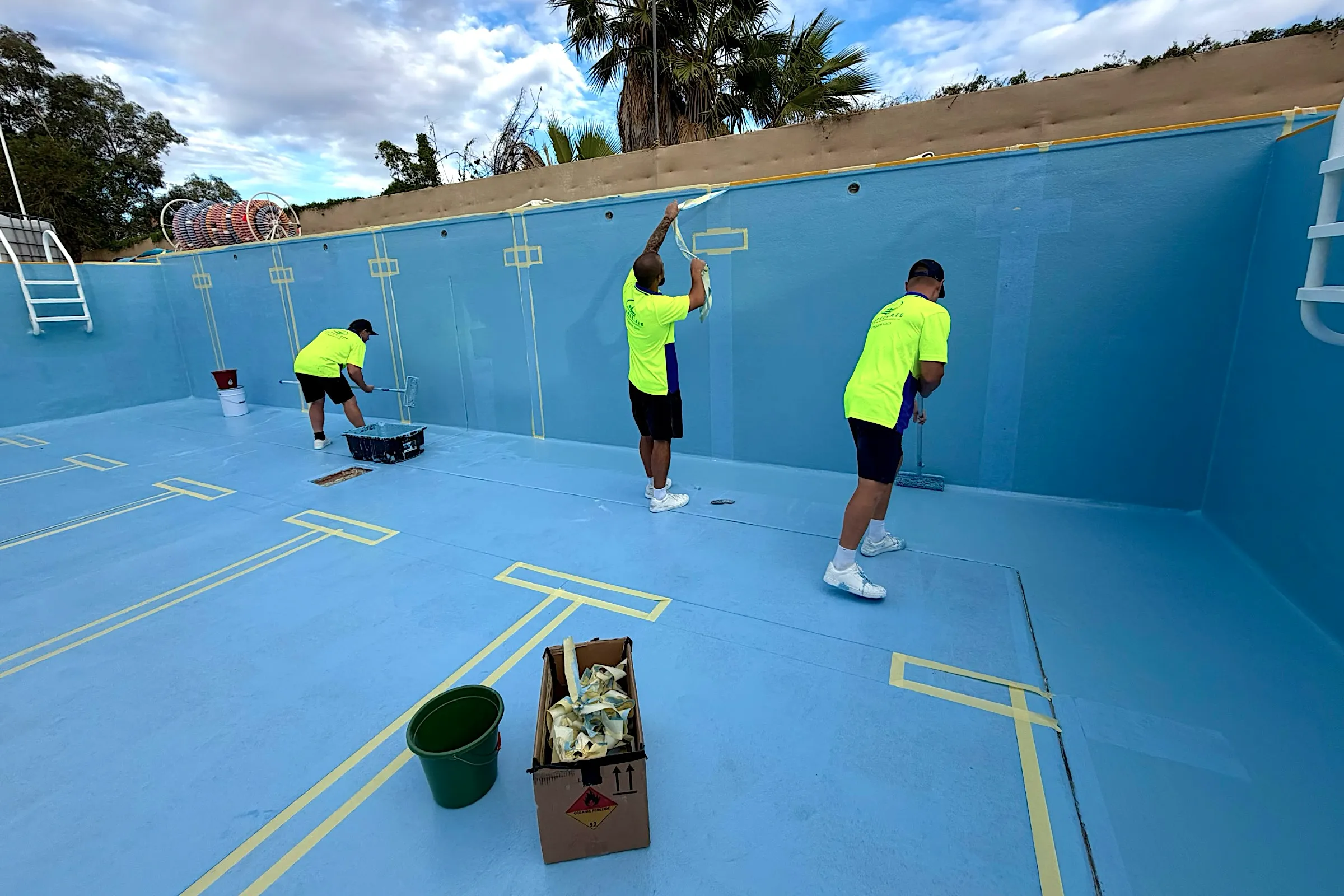
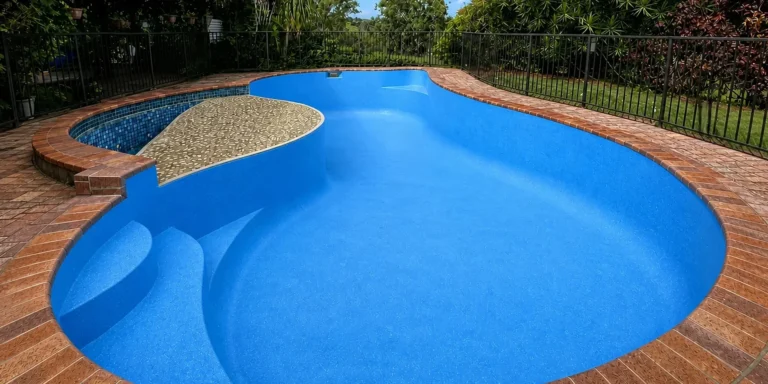
Fibreglaze removed the failed laminate, repaired and reinforced the cracked drainage channel, added expansion joints and corrected the wet-deck levels. The prepared concrete structures were then resurfaced with the Enduratec System, and the children’s splash-pool water features received fibreglass and multi-coloured resin topcoats. Both Fibreglaze directors and two senior branch managers worked on site and oversaw the project from preparation through to handover.
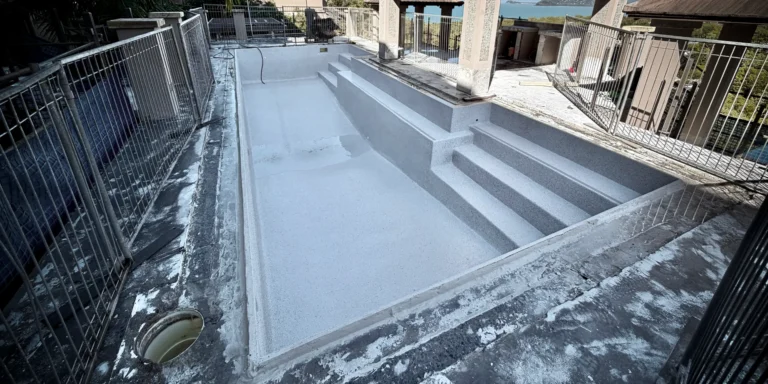
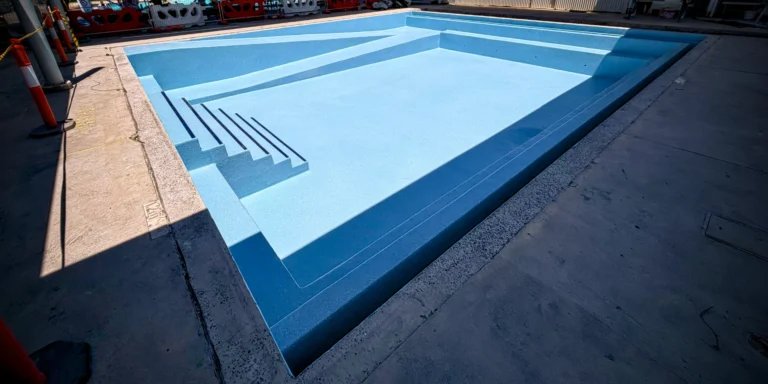
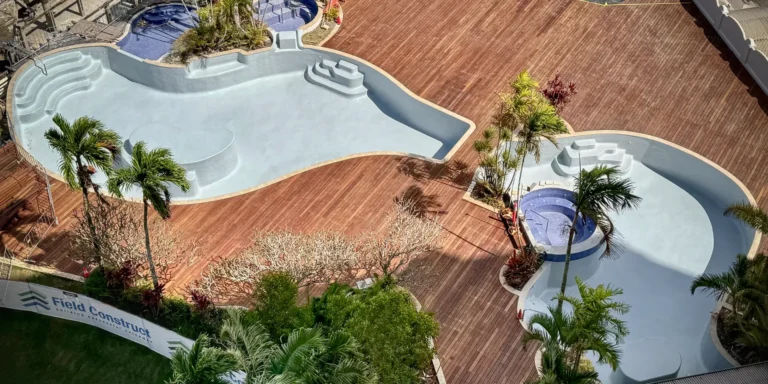
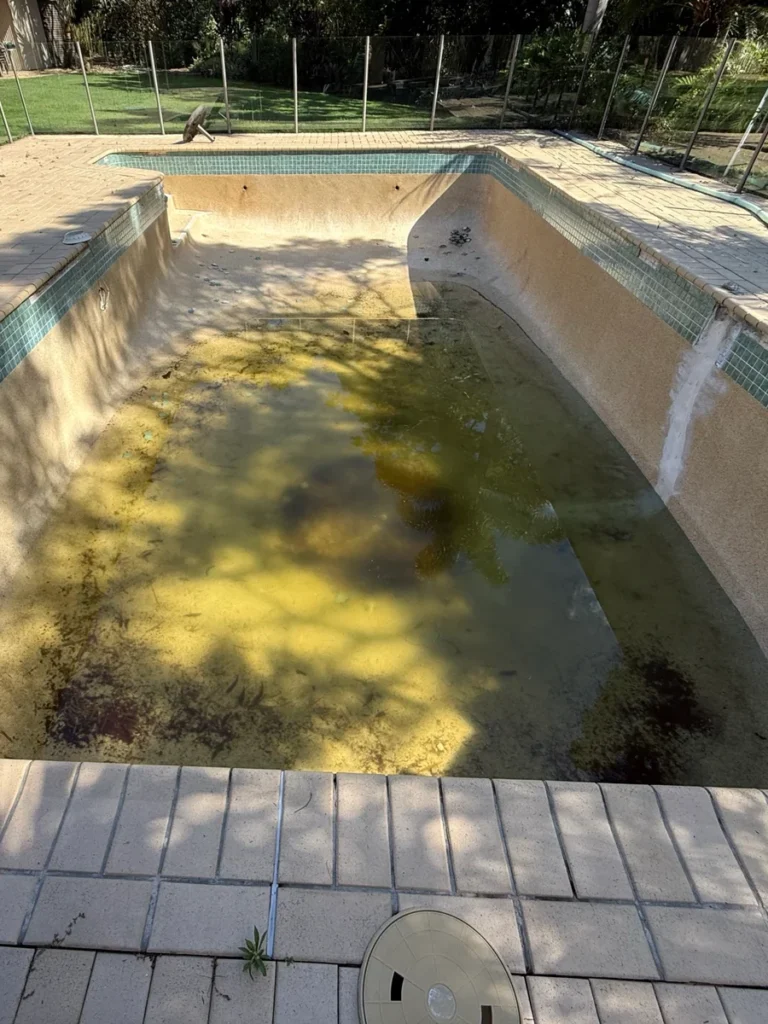
These photographs follow the work from the pool’s original condition through preparation and repair to the completed finish.
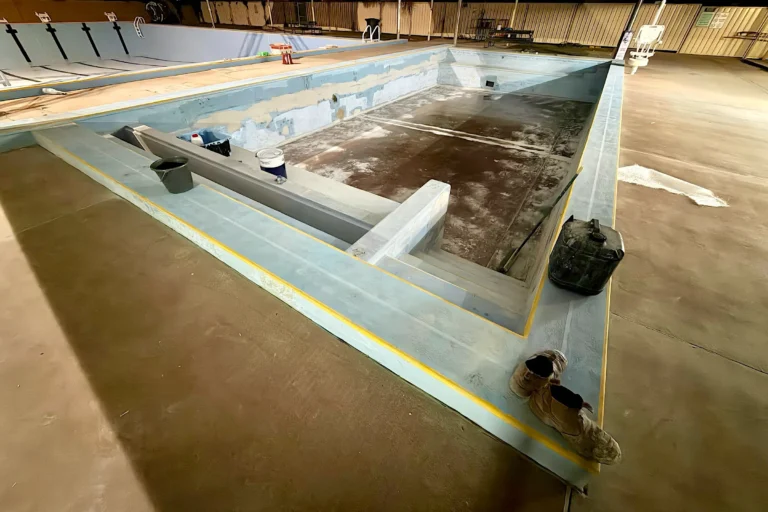
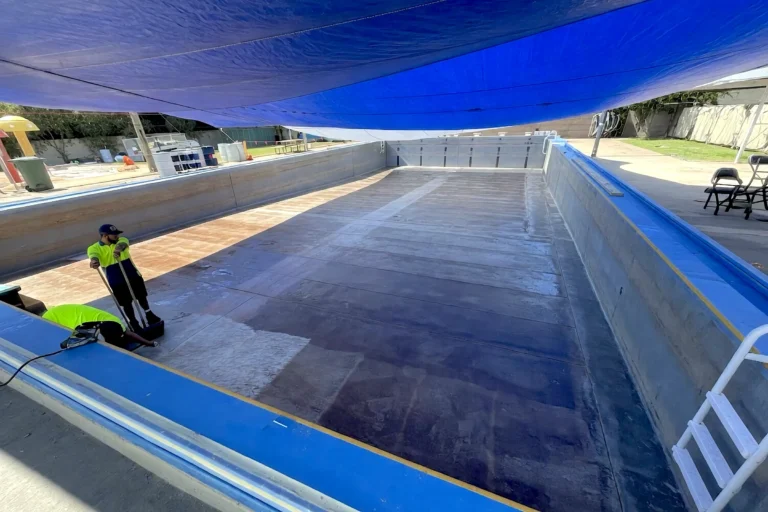
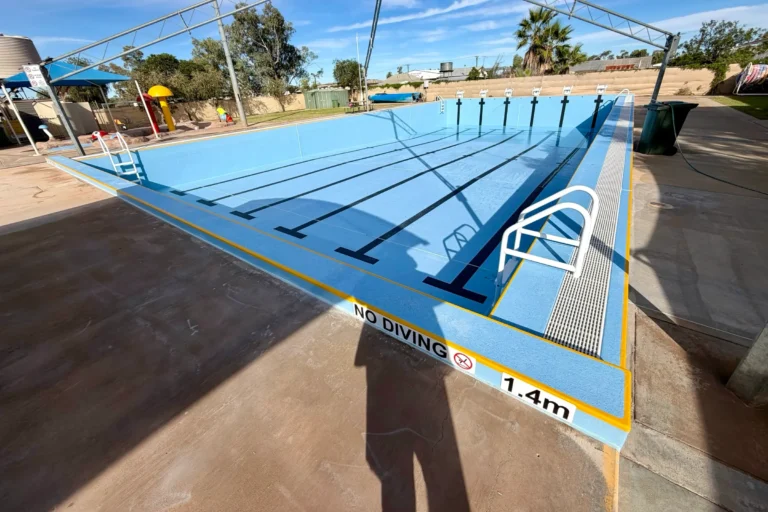
These were the main pool conditions recorded for this project. Select an issue to learn more about its common signs, possible causes and repair considerations.
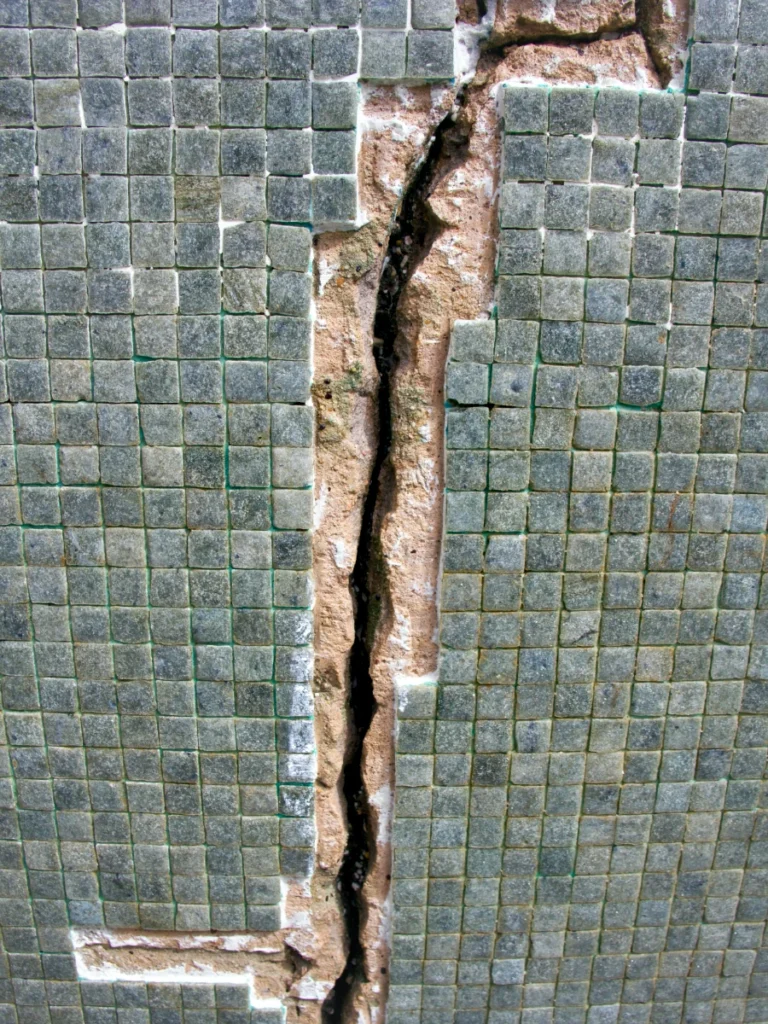
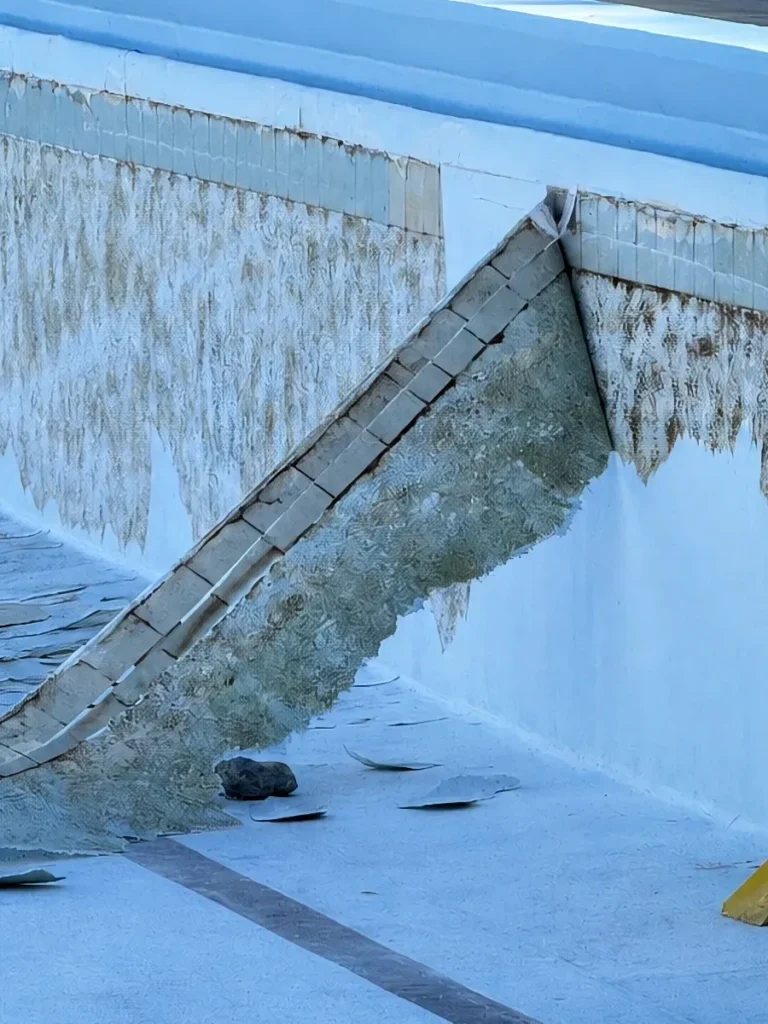
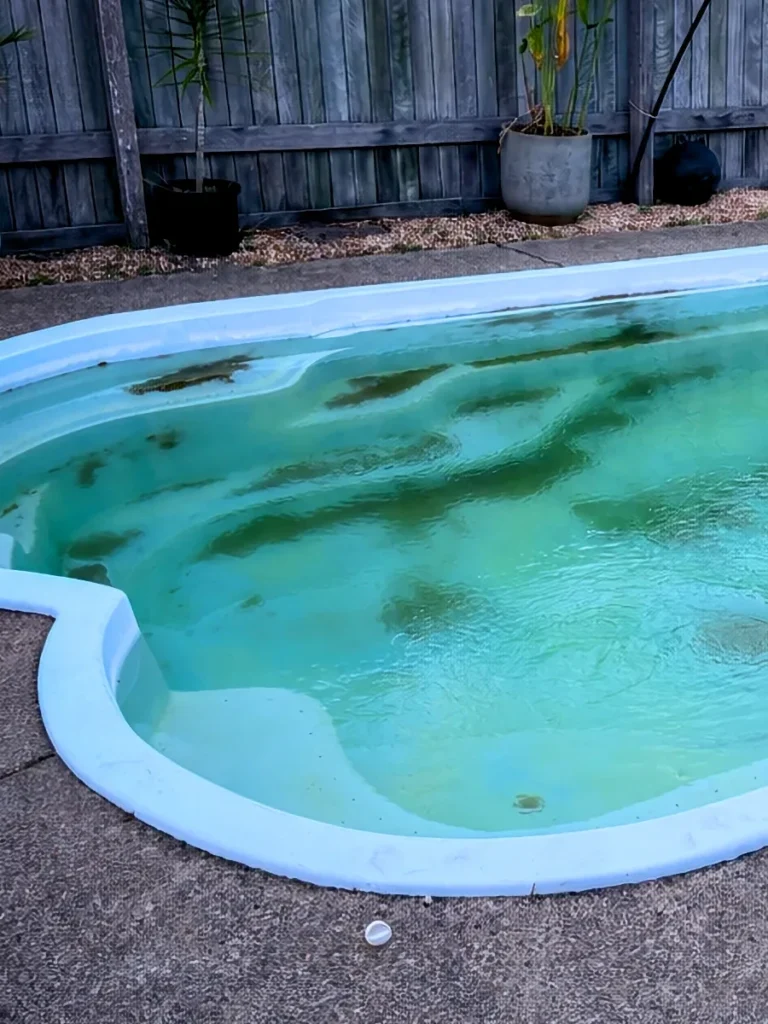
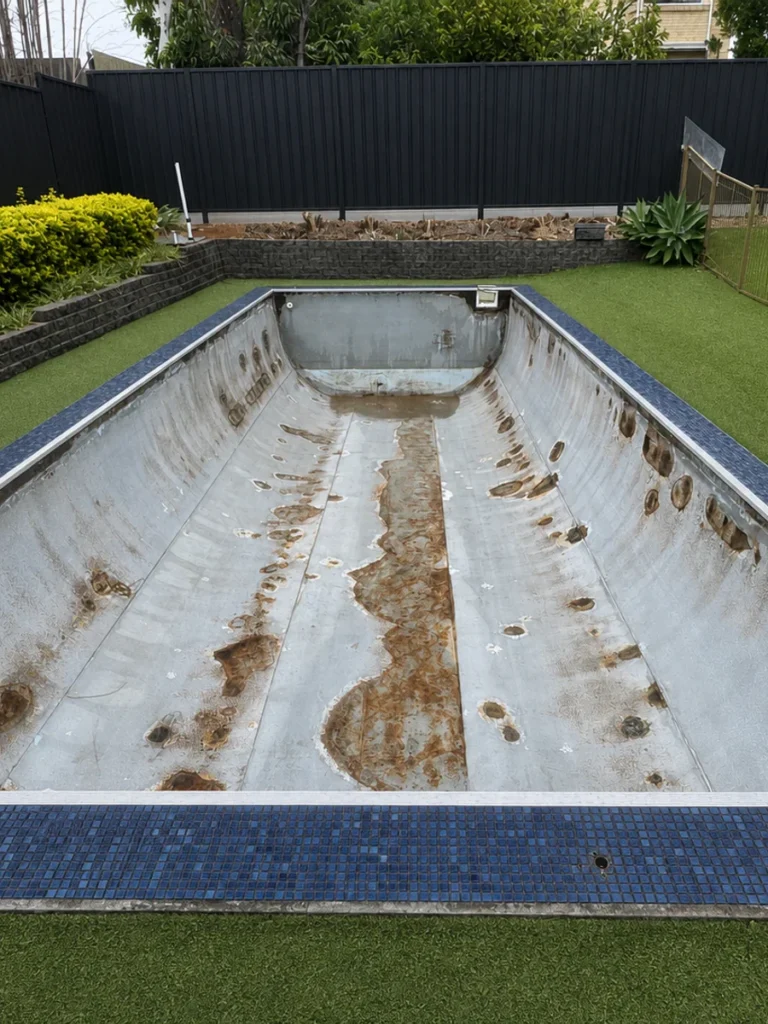
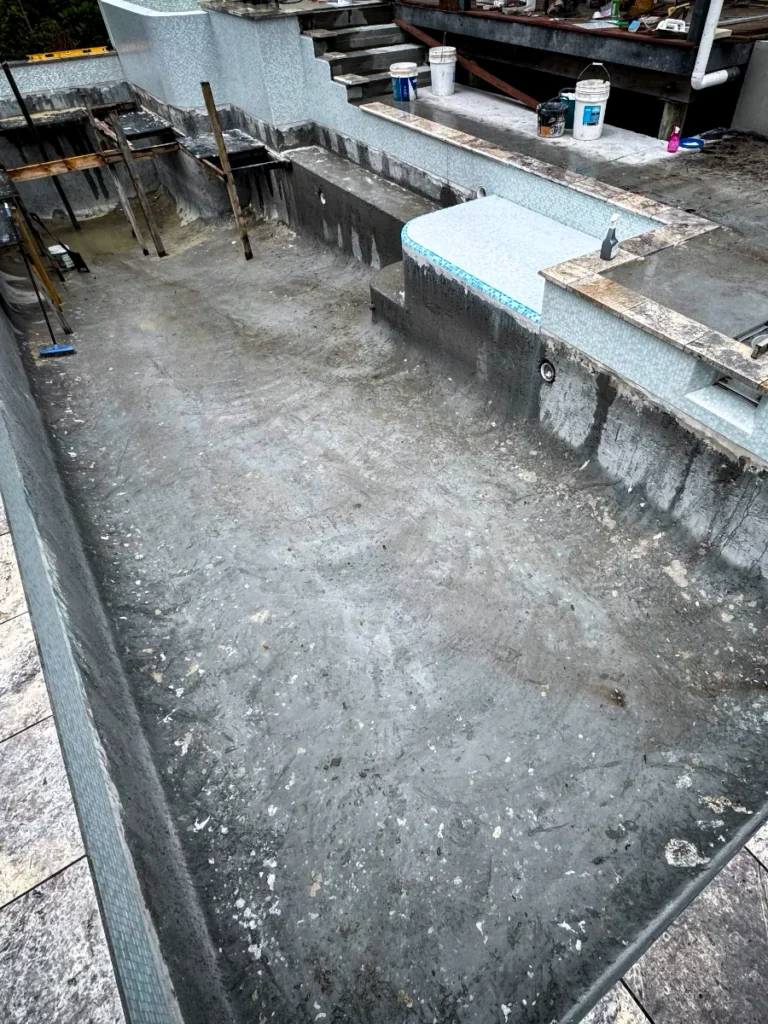
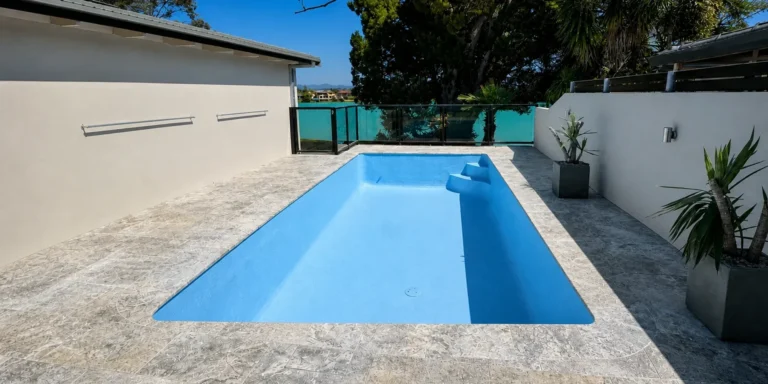
Additional views of the preparation, repair work and completed finish.
Answers to common questions about the pool conditions and restoration work shown in this project.
A 24-hour bucket test can compare pool water loss with normal evaporation. Fill a bucket with pool water, place it securely on a pool step and mark the water level inside the bucket and the pool level outside it. Keep normal circulation running, avoid swimming, backwashing and water features, then compare both levels after 24 hours. If the pool falls noticeably more than the water inside the bucket, a leak is likely. Repeat the test if it rains or the test conditions change.
Delamination may appear as a raised sheet or bubble, a soft or flexible area, flaking around an edge, or a section that sounds hollow when lightly tapped. Water may be released when a failed area is opened. The visible boundary can be smaller than the separation underneath, so tapping alone cannot confirm the full extent. A systematic inspection is needed to map unstable areas and determine whether the separation is limited to the surface or extends into the original laminate.
These are common signs that the existing gelcoat is oxidising or wearing away. If the surface is faded, difficult to clean, rough underfoot or no longer holding its colour, resurfacing will restore a smooth, fresh-looking finish.
A fine hairline crack is not automatically structural, but its width alone does not determine the risk. Location, depth, direction, displacement, moisture, surrounding soundness and whether it is growing are all important. Fine crazing may be limited to the surface, while a crack through the shell can admit water or indicate movement. Photograph and mark the crack so changes can be monitored, and arrange an assessment if it is widening, leaking, recurring through repairs or associated with movement.
Pool stain colour alone does not confirm the cause. Brown or rust-coloured marks may involve iron or organic debris; green, grey or black marks can involve algae, copper, manganese or material trapped in a rough surface. Location, texture, recent water changes and the way a small test area responds are more useful than colour by itself. The source also needs attention, such as metals in fill water, corroding equipment, poor circulation or debris, otherwise the stain can return after cleaning.
Age alone does not confirm readiness. The concrete needs to meet the pool design and lining-system requirements, with moisture, curing, laitance, cracks, penetrations, joints and surface tolerances assessed before work begins. Weak, contaminated or excessively damp areas can affect the bond of an applied finish. Fibreglaze should coordinate with the pool builder or designer to confirm the shell is released for surfacing, then mechanically prepare and test the actual substrate rather than relying only on a nominal cure date.
Send us a few photos and our team can help identify the likely issue and the most suitable next step.